Sanofi faces EU investigation over flu shot marketing
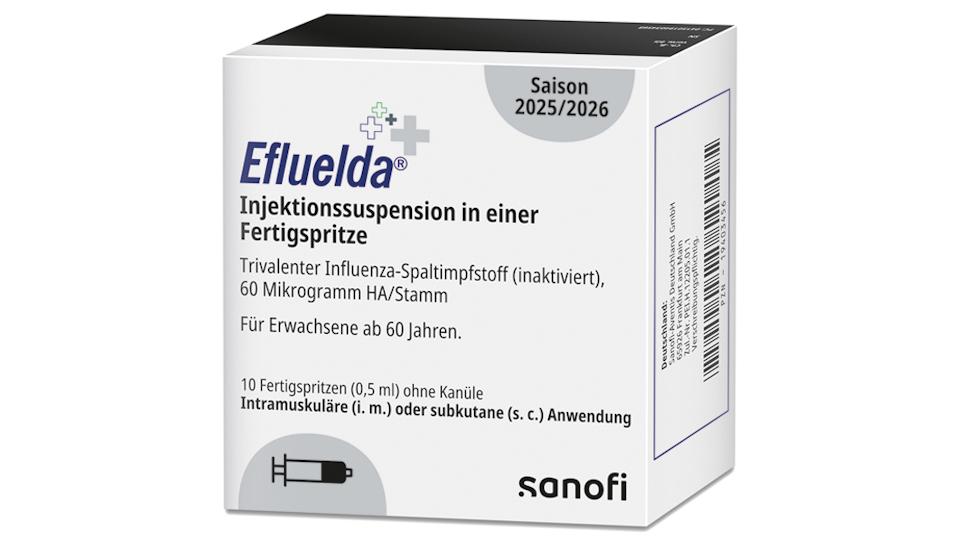
The European Commission has opened an investigation into a marketing campaign run by Sanofi for an influenza vaccine, and whether it disparaged its only rival in the market.
Specifically, it is looking into promotional activities for Sanofi's enhanced flu vaccine Efluelda, which is used to protect vulnerable patients with risk factors for severe flu aged over 60. At the moment, the only direct competitor to Efluelda is CSL Seqirus' Fluad vaccine.
In a statement, the EC said it is "concerned that Sanofi pursued a misleading communication campaign to disparage Fluad by portraying it as inferior to Efluelda, going against national vaccination recommendations in several member states."
The campaign under scrutiny, which ran during the 2025 flu season, primarily targeted healthcare professionals in Germany and France, added the Commission, which suggested that Sanofi "holds a dominant position" in those markets.
Efluelda – a quadrivalent vaccine sold as Fluzone High-Dose in some markets, including the US – has been approved in the EU since 2020. A trivalent version of Fluad has been on the European market since the late 1990s, and was joined by a quadrivalent shot in 2020 that was withdrawn from sale earlier this year, at the request of CSL Seqirus, for commercial reasons.
The Commission said it was concerned with claims in Sanofi's campaign suggesting that the evidence for Fluad's efficacy was weaker, which it believes contradicts the findings of the European Centre for Disease Control and national immunisation technical advisory groups in Germany and France.
It is also looking into what it thinks may be misleading and/or inaccurate representations of national vaccination recommendations and claims, in Germany, that the national recommendation for Fluad "remains subject to unresolved scientific objections from medical professional societies."
The investigation follows unannounced inspections of Sanofi offices in France and Germany last September, which the EU said took place because of concerns that Sanofi had violated EU antitrust rules that prohibit abuses of a dominant market position. Under EU law, companies can be fined up to 10% of their global turnover if it is proved they have committed anticompetitive actions.
There are a couple of recent examples of the EC taking action on this in the pharma sector, including the finding last year that Teva had carried out a "systematic disparagement campaign" against an approved generic of its multiple sclerosis therapy Copaxone (glatiramer acetate) whilst also delaying the entry of cheaper generics of the drug using a patent thicket.
Similarly, CSL Vifor was taken to task last year for competition concerns over the alleged disparagement of its closest competitor in Europe for intravenous iron treatment Ferinject, Pharmacosmos' Monofer. That case was resolved after Vifor implemented a major communications campaign to clarify the situation and agreed that it would be monitored for 10 years.