Novartis' new SMA gene therapy cleared in EU
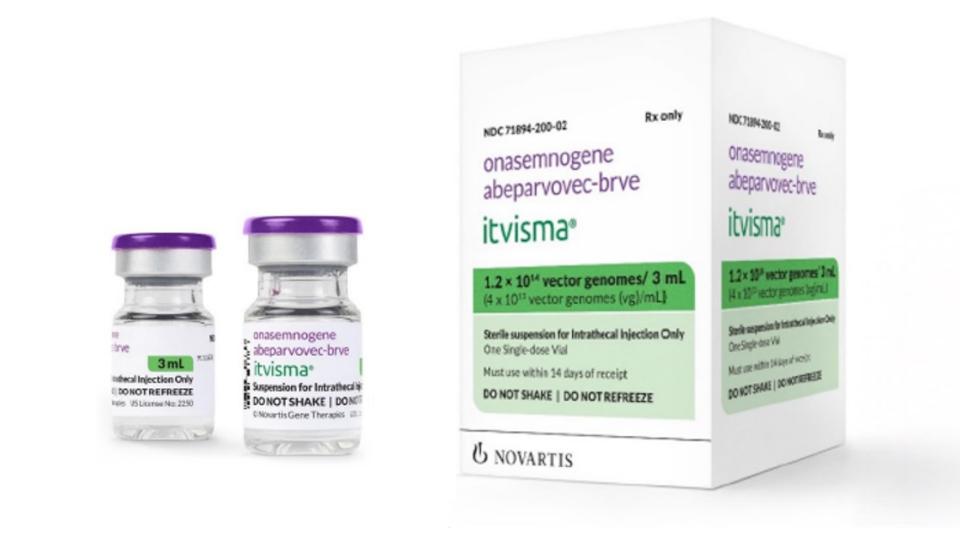
Novartis has secured EU approval for Itvisma, a new intrathecal formulation of its spinal muscular atrophy (SMA) gene therapy onasemnogene abeparvovec that can extend its use into a broader patient population.
The European Commission has cleared Itvisma for use in SMA patients from the age of two upwards, including adults, unlocking a much larger population than can be treated with its current intravenously administered version, sold as Zolgensma.
Zolgensma is only an option for babies and young children under a certain weight, generally up to 21kg, due to the risk of liver side effects. Because Itvisma is administered as a fixed dose by an injection given directly into the cerebrospinal fluid through the lower back, it sidesteps that issue and is an option for all patients, regardless of their age.
Its approval in Europe raises the prospect of a one-off treatment for older patients with the genetic neuromuscular disease, potentially freeing them from the need to take regular, lifelong SMA treatments like Biogen's Spinraza (nusinersen) and Roche's Evrysdi (risdiplam).
The EU approval is based on the phase 3 STEER study, which involved treatment-naïve patients with SMA aged from two to 17 who were able to sit, but had never walked independently, and the phase 3b STRENGTH trial in a similar group who had previously been treated with Spinraza or Evrysdi.
"European approval is an important milestone for the SMA community," commented Nicole Gusset, chief executive of patient advocacy organisation SMA Europe.
"Beyond the scientific achievement, it brings the prospect of a new treatment option closer to people and families who are looking for choices that reflect their individual needs and circumstances," she added. "We welcome today's decision and hope it translates into timely and equitable access across Europe."
Meanwhile, for Novartis, the expansion of the eligible patient population for onasemnogene abeparvovec, already in place in the US after an FDA approval for Itvisma last November, could drive "multibillion-dollar" sales, according to the company.
Last year, Zolgensma group sales – which included some preliminary Itvisma sales after its launch in December – came in at $1.23 billion, adding another $302 million in the first quarter of this year. Sales have started to contract in the last couple of quarters, mainly because the pool of eligible patients for the IV formulation is starting to dry up.
Aside from a large patient population to address, Itvisma also has a slightly higher list price in the US, at $2.59 million compared to $2.1 million for Zolgensma. Launch timings and pricing in Europe will depend on national reimbursement negotiations.