NICE aims to cut funding for Amgen lung cancer drug Lumykras
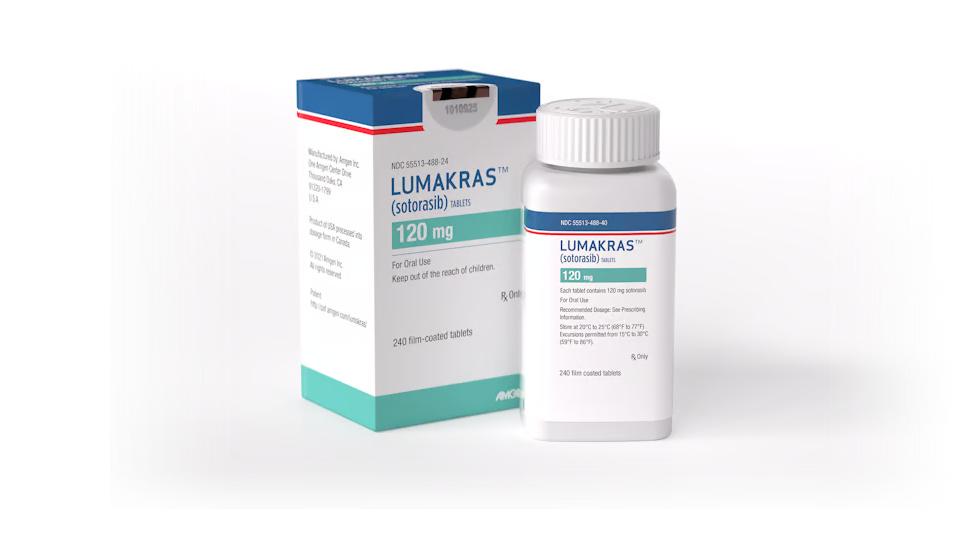
Lumykras, which is known as Lumakras in some markets, will no longer be covered by the Cancer Drugs Fund, according to the health technology assessment (HTA) agency.
Amgen has reacted with consternation to the news that treatment with its KRAS inhibitor Lumykras will no longer be funded in England and Wales, saying the decision does not reflect experience with the lung cancer therapy since it was first made available four years ago.
Funding for Lumykras (sotorasib) has been covered by the Cancer Drugs Fund since 2022 as a treatment for adults with KRAS G12C mutation-positive, locally advanced or metastatic non-small-cell lung cancer (NSCLC) after progression on chemotherapy or immunotherapy, while additional information on its clinical profile was gathered.
Now, final draft guidance from reimbursement authority NICE, published today, has concluded that Lumykras should not be commissioned by the NHS in England and Wales "because of…limitations in the clinical evidence [and] uncertainty in the economic model, including how to model the long-term benefits of sotorasib."
It also said its cost-effectiveness estimates for the drug "are much higher than the range that NICE considers an acceptable use of NHS resources," and its appraisal committee had concluded that "the benefits of sotorasib were small relative to its costs."
The list price of Lumykras in the UK is £6,907.35 for a 30-day supply of 120 tablets, but it has been provided by Amgen to the CDF since 2022 at a confidential discount. The drug is sold as Lumakras in some markets, including the US.
Lumykras was the first inhibitor of KRAS to reach the market, ending decades of attempts to develop a therapy against a target once considered undruggable, although its sales have not lived up to initial expectations.
It has since been joined in the market by Bristol Myers Squibb's Krazati (adagrasib), but NICE's appraisal of that drug in a similar NSCLC indication was terminated last year while the company gathered additional survival data from its clinical trials programme.
"It is disappointing that sotorasib will no longer be available for eligible lung cancer patients in England and Wales on the NHS," commented Dr Tom Newsom-Davies, a thoracic medicine oncologist at Chelsea & Westminster Hospital in London, who is also chair of the British Thoracic Oncology Group.
"This means that at present there are no options for patients with KRAS G12C mutations to receive targeted therapy against this, despite this drug being licensed and widely used internationally," he added.
There are around 50,200 people diagnosed with lung cancer in the UK each year, of whom 80% to 85% have NSCLC. Among these, around 13% have a KRAS G12C mutation.
Amgen UK & Ireland's executive medical director, Dr Tony Patrikios, said: "We do not believe NICE's decision fully reflects the breadth of real-world evidence, including NHS experience over the last four years, clinical expert perspective and the impact on lung cancer patients who have limited treatment options."
The company has pledged to continue engaging with "NICE, the NHS, clinicians and patient organisations to explore all available options to support continued access for eligible patients."
A consultation on the final draft guidance has been opened and will continue until 23rd July.