Trump sets course for 100%, then 200%, tariffs on generics
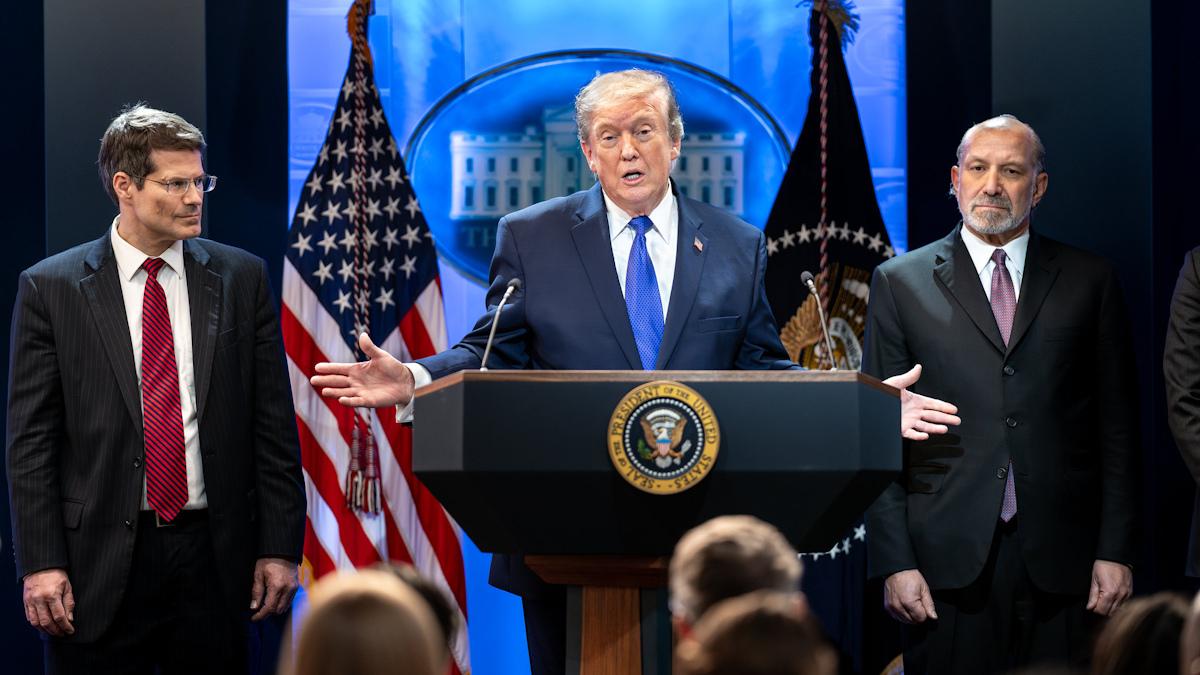
President Donald Trump delivers remarks on the Supreme Court ruling on tariffs on 20th February, 2026
Donald Trump has said he intends to impose tariffs of 100% on generic drugs imported into the US from 2028, as part of a drive to reduce the country's reliance on imported medicines.
One might be forgiven for thinking that the era of Trump tariffs was on the way out after the US Supreme Court ruled many of them unlawful, forcing the US government to repay $81 billion in duties. Still, the generics proposal, along with the imposition of a 50% rate on a wide range of goods imported from Canada, makes it clear they remain a key part of the US President's economic plans.
In a social media post, Trump said that the current zero tariff rate on generic medicines will extend to the start of August 2028, when it will be raised to 100% for one year, and then leap to 200%.
"This is done in order to RESHORE Generic Pharmaceutical Production into America, with a penalty to those Companies that decide not to build Plant and Equipment within the stated period of time given to them," he continued.
The move is an extension of the policy implemented by the Trump administration for in-patent, brand-name medicines, in which major pharma groups gave in to the threat of tariffs and pledged tens of billions of dollars in facility manufacturing investments in the US.
It also follows an executive order, published in April, which said that tariffs on generics were being assessed on the grounds that the US was too reliant on imports of finished medicines as well as active pharmaceutical ingredients (APIs).
According to FDA estimates, generics account for around 90% of prescriptions filled in the US, and 70% of them come from overseas, so the timeline gives little time for the far-reaching changes in the supply chain that would be required to implement the policy without the risk of interruptions in medicines supply.
For now, there is no indication whether the tariffs plan will apply to biosimilars – close copies of biologic drugs – or be extended to include APIs. According to the US Pharmacopeia (USP), excluding intravenous fluids, only 12% of total prescription API volume is currently manufactured in the US.
It is also unclear what legal authority Trump will use to impose the planned tariffs on generic drugs, particularly the projected 200% tariff, which would take effect in August 2029, several months after the end of what should be his final term in office.
The Association for Accessible Medicines, which represents the interests of generic drugmakers in the US, said it was waiting for details of the policy beyond a social media post but said it is committed to policies that maintain access to affordable medicines for patients.
One major generics company – Switzerland-based Sandoz – told the AWP news agency that "it is too early to assess the potential implications, as further details on the implementation and scope of this measure are still required," according to a SwissInfo report.