Judge backs Lilly in Novo lawsuit over weight-loss drug ads
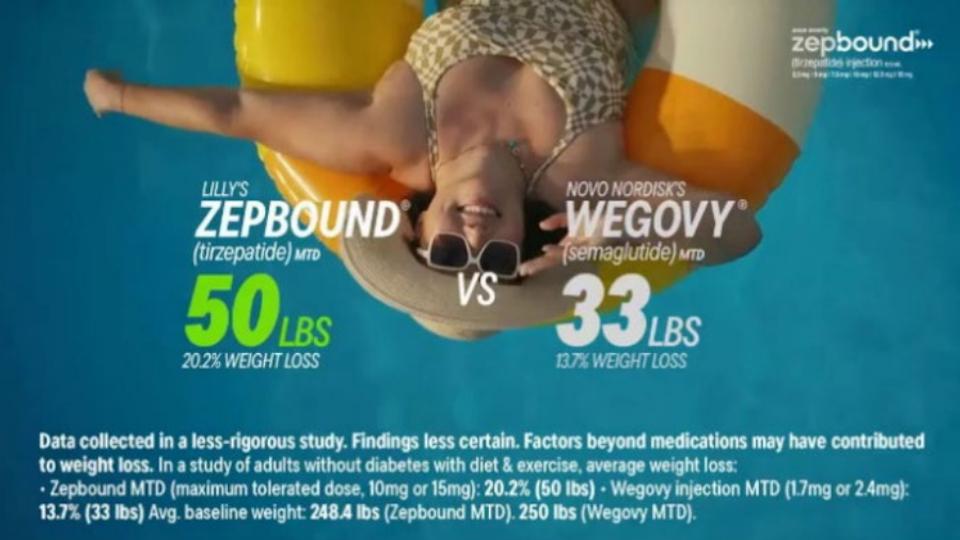
A US judge has blocked Novo's request for an injunction on Eli Lilly's advertising for weight-loss and diabetes drugs, rejecting its complaint that they make false and misleading claims.
Novo filed its lawsuit in the summer, accusing Lilly of a "nationwide pattern of deceptive advertising" for its obesity therapy Zepbound and type 2 diabetes (T2D) drug Mounjaro, both based on the dual GIP/GLP-1 agonist tirzepatide.
Specifically, Novo complained that direct-to-consumer ads for Lilly's drugs misrepresented its rival Wegovy and Ozempic therapies, based on GLP-1 agonist semaglutide, by omitting relevant information about their efficacy.
Hearing the case in a district court in Trenton, New Jersey, Judge Zahid Quraishi did not agree with that assessment, ruling that Novo (formerly operating as Novo Nordisk) failed to prove that Lilly's ads had threatened its sales, undermined goodwill for its products, or caused lasting damage to its reputation.
The lawsuit was filed amid a high-stakes marketing battle between Novo and Lilly in the market for incretin therapies for obesity and T2D.
While Novo has dominated the category for years, head-to-head clinical trials showing that Lilly's rival therapies were more effective have tilted the balance, and Mounjaro and Zepbound are now outselling Ozempic and Wegovy in the US market for injectable incretin therapies.
It's a different picture in the daily oral category, where Novo's pill formulation of Wegovy currently remains the market leader over Lilly's GLP-1 agonist Foundayo (orforglipron).
Judge Quraishi's judgment acknowledged that Lilly's promotional campaigns had made comparative claims about the efficacy of its drugs versus Novo's products, but said Novo's arguments of irreparable harm were "inadequate to warrant the extraordinary relief it seeks" and that the company had failed to show it had suffered commercially, as prescribing rates for its products remained largely stable during Lilly's campaign.
He also concluded that Novo's claim that Lilly had relied on outdated trial results – referencing the efficacy of the original formulation of Wegovy and not a newer, high-strength version approved later – was not defensible given Novo's past activity.
Novo had also run similar ads in the past comparing Ozempic to Lilly's older GLP-1 agonist Trulicity (dulaglutide), said Quraishi, and "in making this assertion…turns a blind eye to its own advertising history."
Novo said that the initial knockback is not the end of the matter as "today's ruling did not decide the question of whether Lilly's advertising is false and misleading, and this litigation is still ongoing," and added: "Everyone deserves clear, accurate and up-to-date information when making decisions about their health."