Italy leads the way on child genetic disease diagnosis
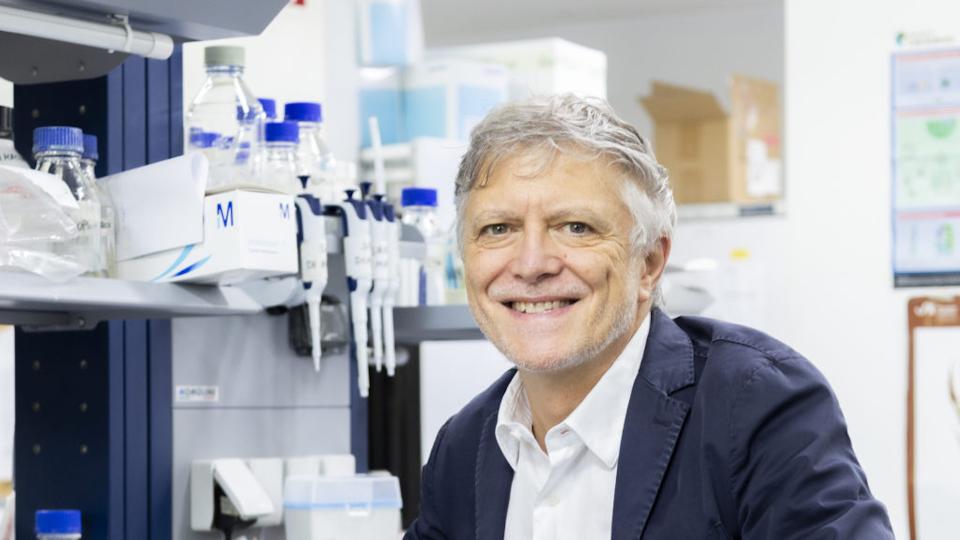
Vincenzo Nigro, coordinator of the Telethon Undiagnosed Diseases Programme (TUDP).
10 years after being set up, an Italian drive to increase diagnosis rates in children with severe genetic disorders is achieving transformative results.
The Telethon Undiagnosed Diseases Programme (TUDP), run by the Naples-based biomedical charity Fondazione Telethon, has delivered a molecular diagnosis to around half of the children it has enrolled, in most cases within 18 months of the first appointment, and could serve as a scalable, cost-effective template for national initiatives.
A progress report on the first eight years of the TUDP, published in the journal Genetics in Medicine OPEN, notes that rate is higher than with other undiagnosed disease initiatives worldwide and – arguably, most importantly – has carved around eight years off the time it typically takes for patients and their families to arrive at a definitive diagnosis.
"For these families, the diagnosis has changed their lives, not only in terms of preconception counselling but, above all, in terms of giving a name to the disease and being part of a group of patients around the world who share the same desire to receive targeted therapy," write the researchers in the paper.
Putting a name to the condition can guide clinical management and genetic counselling; for example, by establishing what the implications may be for having children in future. And, in a growing number of cases, the diagnosis also opened up access to "targeted therapies, such as antisense oligonucleotides, gene therapy, and precision pharmacology," according to the charity.
These technologies are raising the possibility of individualised treatments even for ultra-rare genetic diseases, something that the FDA recently recognised with draft guidance that charts a potential route to market for therapies, provided there is a clear genetic, cellular, or molecular abnormality to address.
TUDP is a structured national genomic programme for children with severe, multisystemic disorders that relies on standardised case-submission criteria, ensuring consistent clinical data collection, rather than the patchwork of clinical efforts often implemented by national health authorities.
In its first eight years, 1,300 children were evaluated at 22 specialist centres in Italy, with a genetic diagnosis achieved in 49% of them. In addition, pathogenic variants were identified across 330 genes, of which around 70% had no prior family history. Genes previously not known to be associated with disease included 16 that have already been validated in model organisms, with another 14 undergoing that testing.
"Behind every percentage point there is a child and a family who have waited, sometimes for a decade, for a single word: a name," said corresponding author Vincenzo Nigro, a professor of genetics at the University of Campania 'Luigi Vanvitelli' and TUDP coordinator at Telethon Institute of Genetics and Medicines (TIGEM).
"A molecular diagnosis changes the trajectory of a life, not only in terms of medicine, but in terms of hope, identity, and connection to a global community of patients and researchers working on the same diseases," he added.
For the 51% of children who have not had a diagnosis, there is still hope, according to Nigro.
"Unsolved cases are not failures. They represent an important scientific resource and a shared responsibility. As genomic technologies and biological knowledge evolve, many of today's unsolved cases are likely to become tomorrow's diagnoses and, in some instances, the basis for new therapies."