Ionis' Tryngolza claims critical label expansion in US
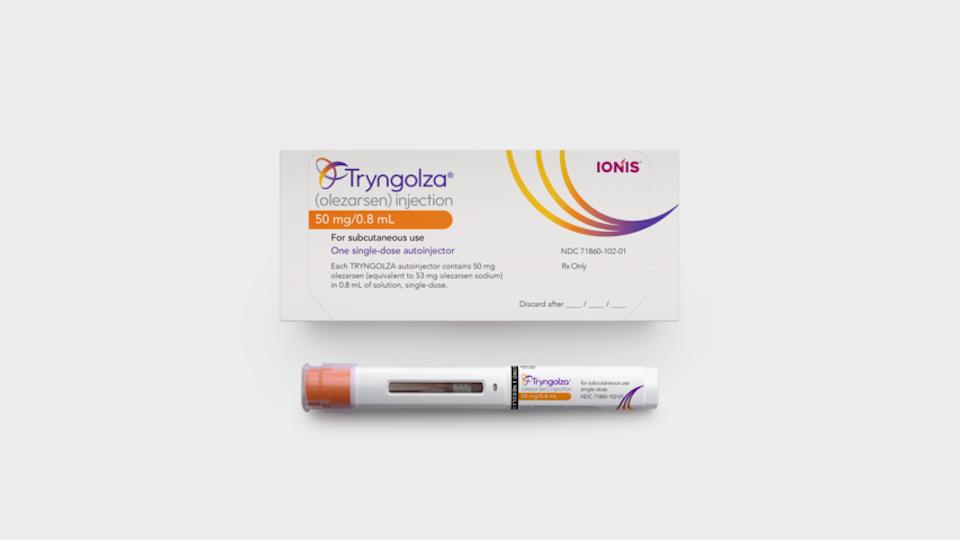
Two years after its first approval for an ultra-rare lipid disorder, Ionis' Tryngolza has been approved by the FDA for severe hypertriglyceridaemia (sHTG), a much larger patient population, which is viewed as key to meeting blockbuster sales expectations for the drug.
The US regulator has cleared Tryngolza (olezarsen) to reduce triglycerides (TG) and the risk of acute pancreatitis in adults with sHTG, targeting a US patient population of around 3 million people, including approximately 1 million who are considered at high risk of complications.
Acute pancreatitis is a medical emergency that causes debilitating abdominal pain, often requires prolonged hospitalisation, and can lead to permanent and life-threatening organ damage. Each year in the US, acute pancreatitis is implicated in approximately 2,500 to 3,200 deaths.
In the pivotal CORE and CORE2 clinical trials, Tryngolza lowered fasting triglyceride levels by up to 72% compared to placebo at six months and sustained those reductions at 12 months, and is the first treatment shown to reduce acute pancreatitis in sHTG patients, according to the FDA.
"With limited options to lower triglycerides, people living with sHTG often face a constant and real fear that a debilitating acute pancreatitis attack could strike at any time without warning," said Emily Draud, interim executive director of the National Pancreas Foundation in the US.
"The availability of Tryngolza for sHTG represents an important new option for this community, offering hope for people who have been waiting for a new treatment to reduce the risk of acute pancreatitis by significantly lowering their triglyceride levels."
Tryngolza's first approval towards the end of 2024 was for familial chylomicronaemia syndrome (FCS), a condition that affects around 3,000 people and is chronically under- and misdiagnosed, but still resulted in sales of $108 million last year.
The drug is already a major product for Ionis as it is the first that the company is commercialising without a commercial partner. Now, with the sHTG approval in hand, it could be truly transformational as Ionis sets off in pursuit of a $3 billion annual peak sales target.
Tryngolza is given as a self-administered injection once a month and acts by inhibiting the body's production of apoC-III, a protein that regulates triglyceride metabolism in the blood, and will be available for sHTG patients in July, according to Ionis.
It plans to concentrate its commercial activities initially on the high-risk sHTG category, via around 20,000 cardiologists, endocrinologists, and lipidologists in the US.
When it was available only as a treatment for FCS, Ionis adopted typically premium pricing for the drug, setting its list price at $595,000 per year at launch. Earlier this year, however, in anticipation of the sHTG decision and the altered value calculations for a much more widely-used therapy, the company slashed that to $40,000 a year.
Alexander disease drug licensed to Recordati
In other news, Ionis has reached an agreement to license zilganersen, an experimental therapy for the rare neurological condition Alexander disease, to Italy's Recordati in all countries outside the US.
Zilganersen is another of the four products that Ionis plans to self-market in the US to build its commercial presence, and recently generated positive results in a pivotal trial. It is under FDA review, with a decision due in September.
Under the terms of the agreement, Ionis is getting an upfront payment of $30 million and is eligible to receive additional, undisclosed payments, based on achievement of milestones. It is also in line for a tiered royalty rate on ex-US sales that could reach the mid-20% range.