GSK to quit Stevenage for new R&D site in Cambridge
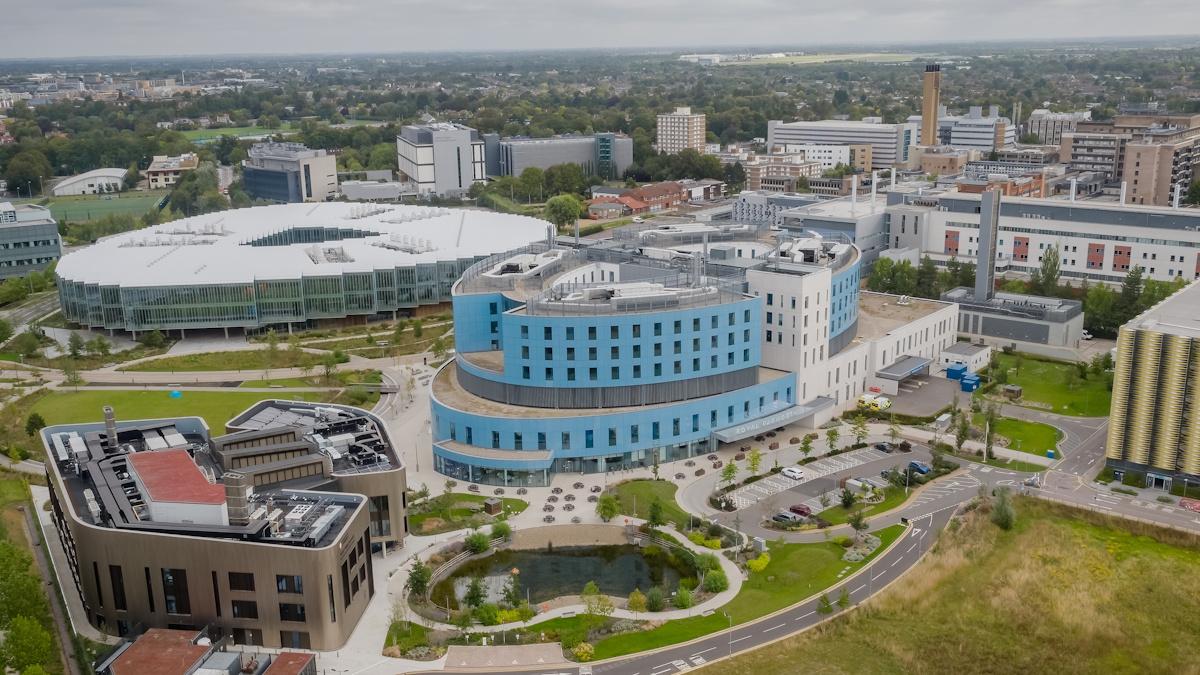
The new facility is being constructed at Cambridge Biomedical Campus, also home to AstraZeneca's flagship Discovery Centre.
In a major shake-up of its UK operations, GSK has started building a brand new R&D centre in Cambridge and will transfer operations there from its current site in Stevenage, Hertfordshire, which has been in operation for decades.
The plan – which the company said will cost around £400 million ($531 million) over three years – includes a 300,000 sq ft facility on the Cambridge Biomedical Campus in the heart of the UK's life sciences 'Golden Triangle' between Cambridge, Oxford, and London, that will house more than 1,000 researchers.
The facility, which is currently under construction, will give GSK's scientists "direct access to a world-class ecosystem of biomedical research, patient care, and academia, enabling translational research by bridging laboratory science with clinical practice," said the group in a statement.
The current main campus in Stevenage, which dates back more than 30 years, will close down in 2029, according to GSK, which is also planning to upgrade facilities in Ware (also in Hertfordshire) and move some of its Stevenage employees there.
As recently as five years ago, GSK was talking about expanding Stevenage as the centre of its international R&D network, whilst also selling off around a third of the campus to house a new life sciences cluster, dubbed the Elevate Quarter, in 2022. Now, the cluster will lose proximity to GSK as a draw for attracting tenants.
"Cambridge has built one of the world's best life sciences ecosystems, with leading universities, hospitals, and biotech companies," said GSK's chief scientific officer, Tony Wood. "The campus provides exceptional opportunities for collaboration."
The decision to close Stevenage was announced as GSK revealed a 5% rise in second-quarter sales to £8.4 billion, alongside a steep decline in operating profit that resulted mainly from a £1.3 billion charge relating to the demise of cough drug camlipixant.
Alongside the financial results, chief executive Luke Miels has announced a three-year cost-reduction programme at GSK, with the savings reinvested into its late-stage pipeline and R&D as it contemplates the loss of patent protection for HIV blockbuster dolutegravir from 2028 onwards.
Miels is targeting £1.9 billion in annual savings by 2029 for costs of £2.4 billion from the "Accelerate Growth" programme. It will be "enabled by technology and AI," according to the company, and while there's no word yet on the impact on GSK's headcount losses are expected worldwide.
He also said GSK is investing in a big expansion of its pipeline of new drugs by starting 20-plus new phase 3 trials this year, twice the number previously planned.
New UK Prime Minister Andy Burnham praised the investment plan, saying it represents "a vote of confidence in British business, a boost for home-grown innovation and expertise, and a step toward more people getting access to new medicines and cutting-edge treatments that will change lives for the better."