FDA clears first all-oral combo for first-line CLL treatment
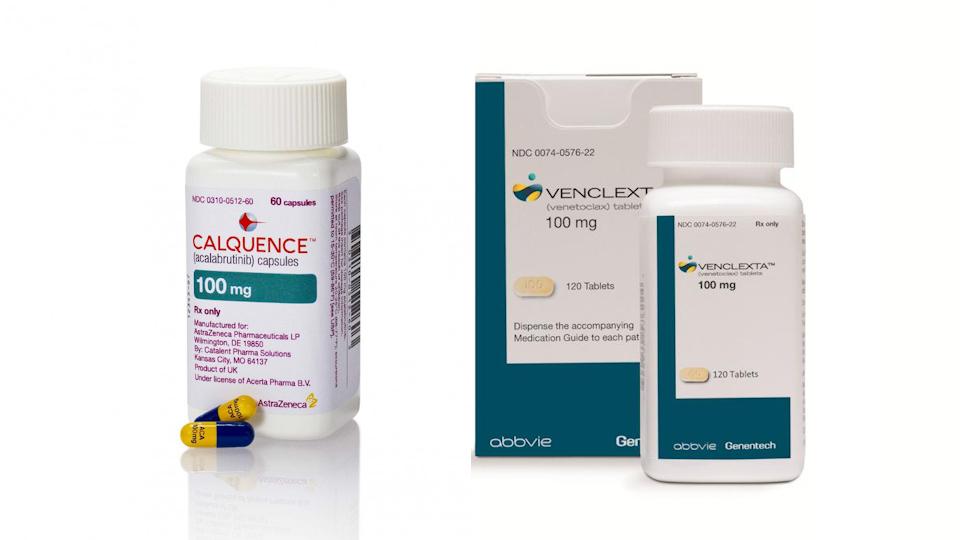
The combination of AstraZeneca's Calquence and AbbVie/Roche's Venclexta has become the first all-oral, fixed-duration regimen for patients with newly-diagnosed chronic lymphocytic leukaemia (CLL) in the US.
The FDA cleared the regimen of BTK inhibitor Calquence (acalabrutinib) and BCL-2 inhibitor Venclexta (venetoclax) on the strength of the AMPLIFY trial, which enrolled adult CLL patients without del(17p) or TP53 mutations.
The results of the trial caused quite a stir when they were reported at the ASH congress in 2024, although the competitive landscape has shifted, with strong sales growth for BeOne's BTK inhibitor Brukinsa (zanubrutinib) after a green light in first-line CLL in 2023, and the prospect of further competition from Eli Lilly's rival Jaypirca (pirtobrutinib), which recently cleared a phase 3 trial in this setting.
Both Brukinsa and Jaypirca were shown in comparative studies to be more effective than AbbVie/Johnson & Johnson's older BTK inhibitor Imbruvica (ibrutinib), while Calquence only demonstrated equivalence in its comparative trial.
For now, though, the Calquence and Venclexta regimen offers patients the opportunity to avoid chemoimmunotherapy (CIT), which currently consists of a regimen of fludarabine, cyclophosphamide, and rituximab (FCR) or bendamustine plus rituximab, depending on their age.
Moreover, while Calquence was already approved for first-line CLL in combination with CIT, based on the ECHO trial results, these regimens require treatment to continue until disease progression. In contrast, Calquence/Venclexta can be given for a fixed 14-month period, potentially allowing patients to take breaks from therapy, reducing the risk of long-term side effects, as well as treatment resistance.
"The continuous regimens frequently used to treat [CLL] often come with side effects that may become burdensome to patients over time," commented AMPLIFY principal investigator Jennifer Brown, of the Dana-Farber Cancer Institute in the US.
"The US approval of the Calquence combination offers patients [a] treatment option that is highly effective and well-tolerated, and gives physicians greater flexibility to tailor treatment plans for individual patient needs and goals," she added.
In AMPLIFY, treatment with the two-drug regimen reduced the risk of disease progression or death by 35% compared to CIT, with more than three-quarters (77%) of patients progression-free at three years versus 67% of the control group.
The frontline Calquence/Venclexta regimen is also approved for CLL in the EU, Canada, UK, and other markets, said AZ. The new indication helped drive a 12% increases in sales of Calquence to $3.5 billion last year, while Venclexta grew 8% to just under $2.8 billion.
BeOne, which recorded a 51% leap in Brukinsa sales to $1 billion in the third quarter of 2025, is carrying out late-stage testing of the BTK inhibitor in combination with its own BCL-2 inhibitor, sonrotoclax, in treatment-naïve CLL patients.