Expanded US Imaavy approval first ever for wAIHA
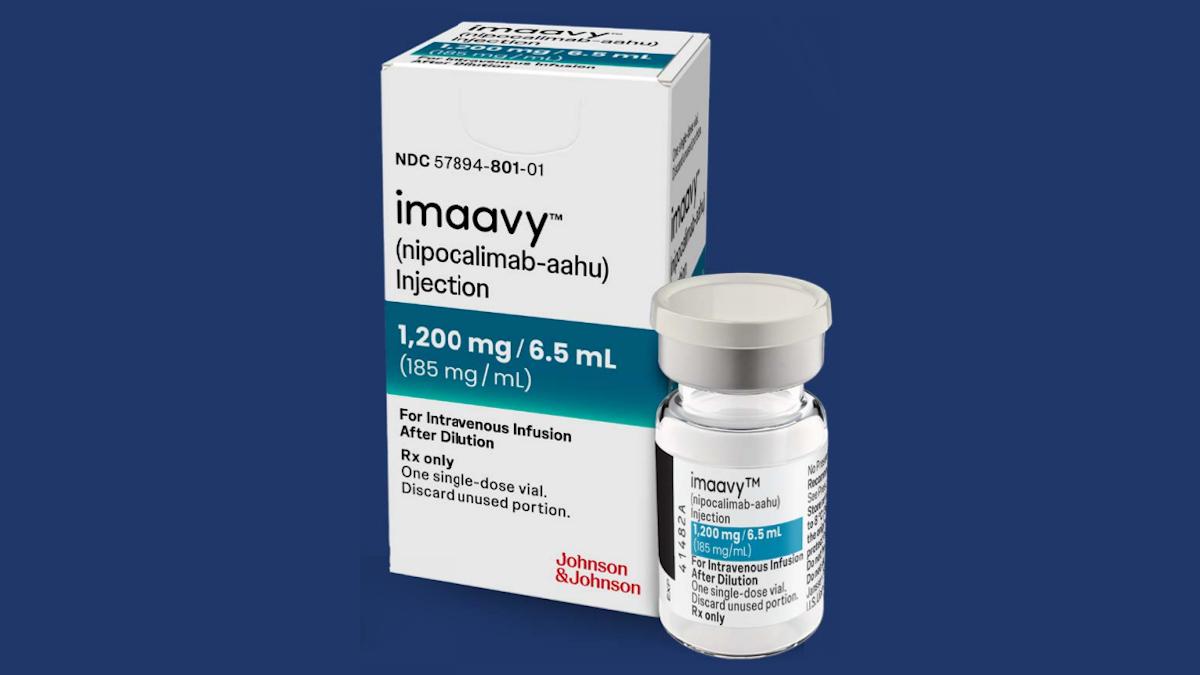
Johnson & Johnson has announced that the US Food and Drug Administration (FDA) has approved Imaavy (nipocalimab-aahu) for the treatment of warm autoimmune haemolytic anaemia (wAIHA) – a rare, life-threatening autoantibody disease – in adults and paediatric patients 12 years of age and older currently or previously treated with corticosteroids.
The approval, which follows FDA Priority Review, marks the first time a therapy was proven safe and effective specifically for the treatment of wAIHA.
In wAIHA, which impacts approximately 1 in 8,000 people, pathogenic immunoglobulin G (IgG) autoantibodies attach to and destroy red blood cells, causing severe anaemia, profound fatigue, and a significantly increased risk of morbidity and mortality.
“Living with wAIHA often means relentless fatigue and the constant uncertainty of not knowing what tomorrow will bring,” said Karen Jones, president and executive director of wAIHA Warriors. “For the first time, our community has a treatment specifically for our disease.”
The primary endpoint of the Phase 2/3 ENERGY study was durable haemoglobin (Hgb) response, a stringent endpoint definition that reflects meaningful increases in Hgb levels over time. The randomised, placebo-controlled trial demonstrated approximately three times as many patients receiving the approved dose of Imaavy achieved durable Hgb levels versus placebo by 24 weeks. Overall, patients in this treatment group showed a mean increase in Hgb of 1g/dL at Week 1.
In addition, Johnson & Johnson’s ‘Swiss army knife’ drug Imaavy was associated with a 3.5-point higher mean FACIT-Fatigue score versus placebo at Week 24, with higher scores defined as less fatigue. In the ENERGY study, Imaavy demonstrated a safety profile consistent with the established safety profile of Imaavy in generalised myasthenia gravis (gMG).
The full results of the ENERGY study were presented at the European Hematology Association 2026 meeting in June 2026.
“Today’s announcement marks the second approval for Imaavy and is an extraordinary milestone for people living with warm autoimmune hemolytic anaemia, an underserved community that has waited far too long for an FDA-approved treatment,” said David M. Lee, MD, PhD, global immunology therapeutic area head at Johnson & Johnson. “This milestone reinforces our motivation to continue pursuing advanced therapies for people living with allo- and autoantibody diseases like wAIHA.”
Imaavy awas approved in the United States in April 2025 for the treatment of gMG in adult and paediatric patients 12 years of age and older who are acetylcholine receptor (AChR) or muscle-specific kinase (MuSK) antibody positive.
There was more good news for patients with wAIHA earlier this year when Hutchmed reported positive phase 2/3 results with its oral Syk inhibitor sovleplenib, which is now being prepared for filing in China.
Meanwhile, other drugs in clinical development for the disorder include Sanofi's BTK inhibitor Wayrilz (rilzabrutinib) and Zenas BioPharma's CD19xFcγRIIb bispecific antibody obexelimab.