J&J gets EU approval for Imaavy in gMG
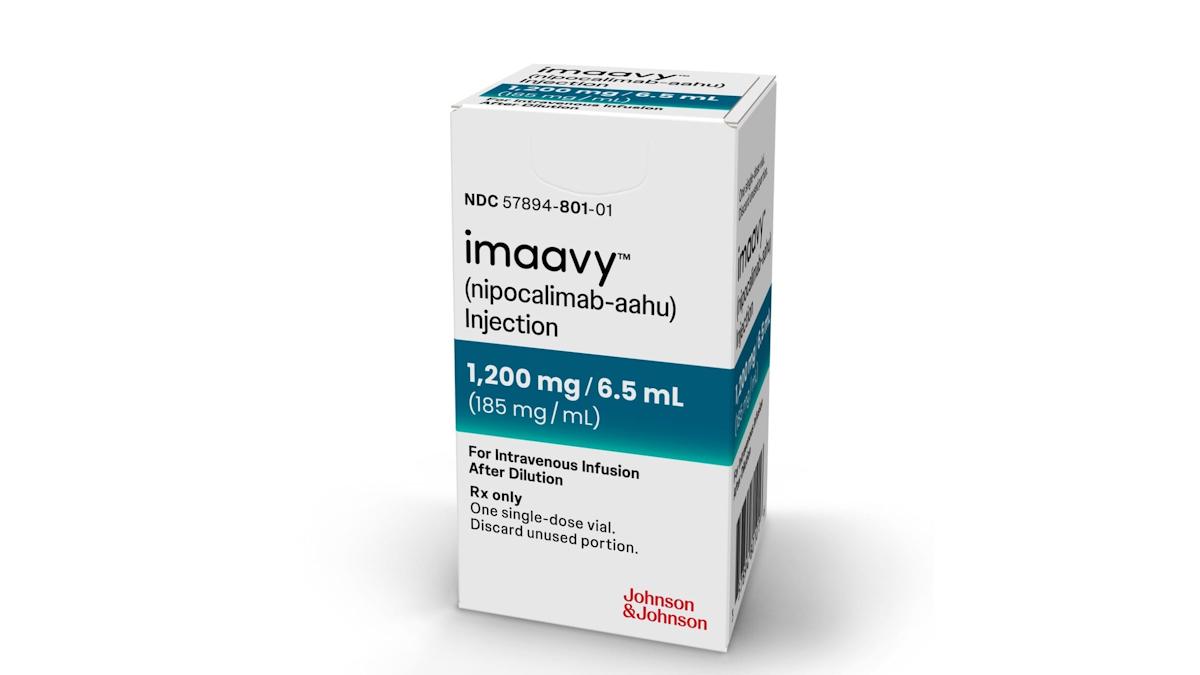
Johnson & Johnson's Imaavy has become the first FcRn blocker to be approved in the EU as a treatment for both adolescent and adult patients with generalised myasthenia gravis (gMG), taking on rivals in the class from Argenx and UCB.
The European Commission has cleared the use of Imaavy (nipocalimab) in patients aged 12 and over with the chronic autoimmune disease who are anti-AChR or anti-MuSK antibody-positive, making FcRn inhibition an option for adolescent gMG patients for the first time. The drug has also been approved in the US, Brazil, and Japan for the treatment of gMG.
Argenx's Vyvgart Hytrulo (efgartigimod alfa) and UCB's Rystiggo (rozanolixizumab) are currently both approved in the EU for use in adults with gMG only. That aside, Argenx and UCB's drugs are administered by subcutaneous injection once a week, while Imaavy requires an intravenous infusion every two weeks.
The EU approval is based on the results of the phase 3 Vivacity-MG3 study in adults, and the Phase 2/3 Vibrance-MG study in adolescents, which showed that Imaavy was effective in reducing the levels of auto-antibodies when added to standard therapies.
An estimated 56,000 to 123,000 people across Europe are affected by gMG, which causes symptoms like severe muscle weakness and difficulties with speaking, swallowing, and breathing. Anti-AChR and anti-MuSK antibody-positive individuals comprise more than 90% of the total antibody-positive gMG population.
"Even with advances in treatment, people living with generalised myasthenia gravis continue to experience unpredictable symptom fluctuations that can disrupt daily life," said Prof Francesco Saccà, a neurology specialist at University Federico II of Naples in Italy.
"With strong data from the Vivacity-MG3 and Vibrance-MG studies, nipocalimab provides an important new option that could help achieve sustained disease control and support greater stability for patients managing this challenging condition."
J&J acquired nipocalimab when it bought Momenta Pharmaceuticals in 2020 for $6.5 billion, saying at the time that around 240 million people worldwide suffer from some form of auto-antibody-driven disease, many with no approved treatments.
Along with gMG, it is being tested in rheumatoid arthritis, systemic lupus erythematosus (SLE), Sjogren's disease (SjD), idiopathic inflammatory myopathies (IIMs), and haemolytic disease of the foetus and newborn (HFDN).
The company has previously suggested that nipocalimab could eventually become a $5 billion-a-year product which, if achieved, would help it weather the impact of patent expiries on some of its biggest sellers.
Those include immunology blockbuster Stelara (ustekinumab), which made more than $10.4 billion in global sales last year, but has started losing market exclusivity in some markets, including the US which accounts for around two-thirds of its turnover.