ESMO26: Sac-TMT delivers the goods in PD-L1-negative NSCLC
Kelun-Biotech's TROP2-directed antibody-drug conjugate sacituzumab tirumotecan (sac-TMT), licensed to MSD, has delivered an important phase 3 win in non-small cell lung cancer (NSCLC).
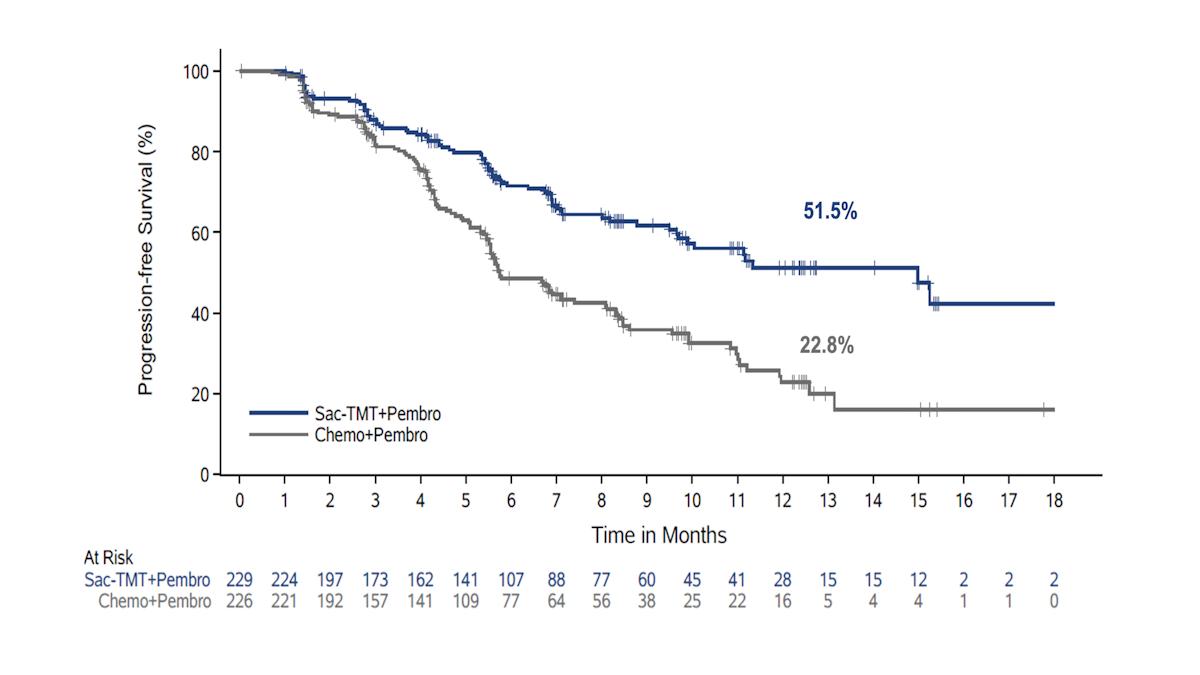
In the phase 3 OptiTROP-Lung06 study, which was run by Kelun in 455 Chinese patients, sac-TMT reduced the risk of disease progression or death by 51% when added to MSD's PD-1 inhibitor Keytruda (pembrolizumab) as a first-line treatment for PD-L1-negative nonsquamous NSCLC.
That improvement in progression-free survival (PFS – from 5.7 months to 15.0 months – was accompanied by a trend towards improved overall survival (OS), which was 42% higher with sac-TMT at the data cutoff point. The median duration of response came in at 13.6 months and 6.8 months in the two groups, respectively, a 53% improvement.
It's a landmark result as the first phase 3 trial of an ADC combined with an immune checkpoint inhibitor to hit its primary endpoint in first-line, PD-L1-negative nonsquamous NSCLC, according to Prof Caicun Zhou of the Shanghai East Hospital, Tongji University, in China.
"Together with the OptiTROP-Lung05 results previously presented at 2026 ASCO, this combination regimen has shown PFS benefit in patients with NSCLC without actionable genomic alterations, regardless of PD-L1 expression," he added.
While Keytruda plus chemo is the standard therapy for PD-L1-positive NSCLC, it performs much worse in PD-L1-negative patients, and the new result gives sac-TMT a chance of replacing platinum-based chemo as the go-to addition for these patients.
The ESMO presentation coincided with the publication of the OptiTROP-Lung06 results in the New England Journal of Medicine.
The results could influence MSD, which licensed rights to the ADC four years ago in a deal valued at up to $1.4 billion and is running an extensive phase 3 programme for the drug across multiple tumour types, to consider an ex-China trial in the first-line, PD-L1-negative NSCLC population.
At the moment, MSD – known as Merck & Co in the US and Canada – is building its first-line NSCLC efforts around the TroFuse-007 study of Keytruda plus sac-TMT in high PD-L1 expression NSCLC, due to generate results in 2028.
Commenting on the OptiTROP-Lung06 data, ESMO commentator Dr Giannis Mountzios of Henry Dunant Hospital Centre in Athens, Greece, said: "While OS data are awaited, the PFS data are highly clinically relevant and have the potential to be immediately practice-changing in patients with PD-L1-negative tumours who experience poor outcomes."