ESMO26: Bayer's Nubeqa finds new prostate cancer role
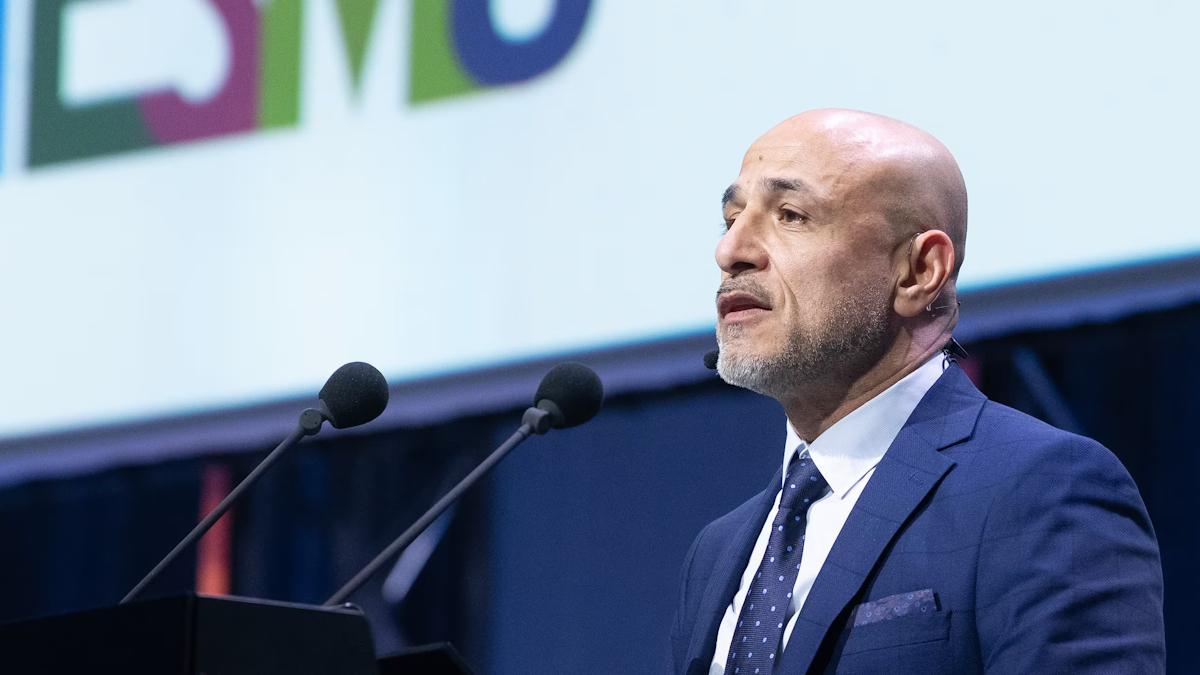
Dr Tamim Niazi, presenting the DASL-HiCaP results at ESMO.
A trial of Bayer's prostate cancer drug Nubeqa has revealed an impressive 58% reduction in the risk of the disease spreading or death in patients at high risk of disease recurrence.
Interim results from the investigator-led, phase 3 DASL-HiCaP study compared androgen receptor inhibitor Nubeqa (darolutamide) to placebo, on top of standard androgen deprivation therapy (ADT) and radiation therapy, in 1,106 patients with very high-risk localised or relapsed prostate cancer.
Metastasis-free survival (MFS) at four years was 95% with Nubeqa and 88% with placebo. This was accompanied by a non-significant trend towards improved overall survival (OS), which was extended by 12%, and will be tracked further as the trial continues, according to co-lead investigator Dr Tamim Niazi of the Jewish General Hospital in Canada.
"Prostate cancer patients at a high risk of relapse face a considerable risk of recurrence and metastatic spread, making early, highly effective intervention vital," said Niazi, who added that the DASL-HiCaP result suggests Nubeqa could "help prevent or delay disease progression in patients who are at high risk of progression despite receiving primary curative therapy."
There was also a lengthening of the time to patients needing to go back on hormonal therapy by 64%, while adding Nubeqa added limited side-effect burden to the treatment regimen.
"Darolutamide reduces the risk of relapse to a clinically meaningful degree," Niazi told ESMO delegates. "As such, it defines a new paradigm for the care of patients with prostate cancer at very high risk of recurrence and being treated with curative-intent radiotherapy."
At the moment, patients in this setting would often be offered abiraterone, which showed a benefit in the STAMPEDE trial reported in 2021, which showed a 47% reduction in MFS risk, and a 40% reduction in the risk of death over six years of follow-up.
Ahead of the OS data for Nubeqa becoming mature, it seems Bayer's drug could offer a better-tolerated alternative with efficacy that looks at least comparable and could be better.
"These new data highlight the potential of darolutamide to make a meaningful difference for patients earlier in the course of their prostate cancer," said Christine Roth, head of global product strategy and commercialisation at Bayer's pharma division.
"By advancing darolutamide into earlier disease settings, we aim to reach more patients across the prostate cancer care continuum," she added.
Nubeqa is a key growth product for Bayer, with sales up around 60% to €1.63 billion in the first half of this year from its current indications in advanced castration-resistant prostate cancer (CRPC) and castration-sensitive prostate cancer (CSPC).