ESC26: Can Arrowhead pierce Ionis' triglyceride armour?

Arrowhead Pharma is squaring up to rival Ionis in the severe hypertriglyceridaemia (sHTG) market, trumpeting new data for its RNAi therapy Redemplo at the ESC congress.
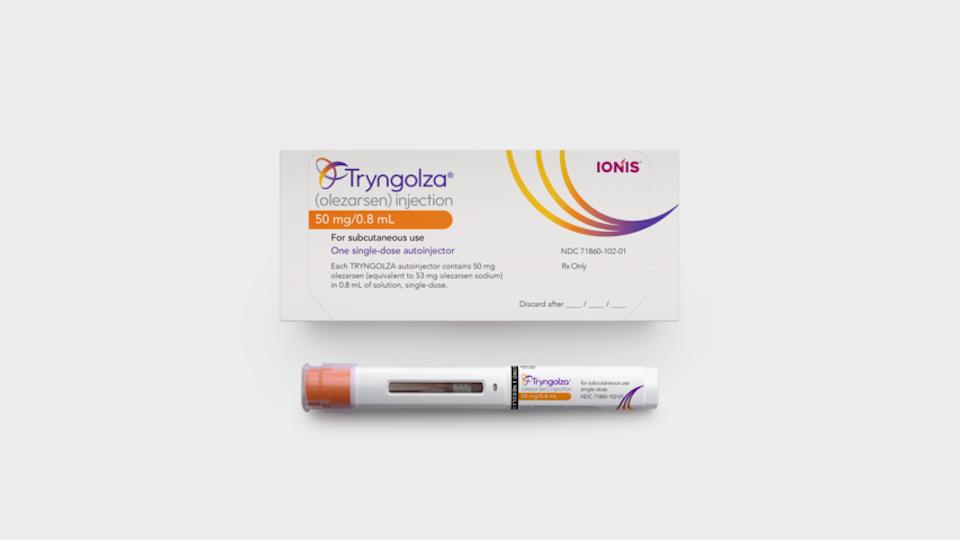
Data from the phase 3 SHASTA-3 and SHASTA-4 studies showed that Redemplo (plozasiran) showed efficacy that seems to be in the same ballpark as Ionis' Tryngolza (olezarsen) – which was approved by the FDA for sHTG in June – with what it claims is a better safety profile.
Both drugs act as apoC-III inhibitors, but Redemplo is dosed by subcutaneous injection once every three months while Tryngolza requires monthly shots.
Arrowhead's product is already competing with Ionis' drug as a treatment for the rare disorder familial chylomicronaemia syndrome (FCS) – the two drugs made $1 million and $5 million, respectively, in FCS sales during the second quarter – but sHTG represents a much larger opportunity as it affects millions of people in the US alone.
Arrowhead had already revealed that SHASTA-3 and SHASTA-4 met their primary endpoints, with significant reductions in triglycerides and cases of acute pancreatitis, which is a common complication of sHTG.
At ESC, the full dataset revealed triglycerides were cut by 79% and 81% at 12 months, respectively, in the two trials. That compares to reductions of up to 72% with Tryngolza in the CORE and CORE2 studies – with the usual caveat that it can be problematic trying to compare studies with different protocols.
The rate of all acute pancreatitis events was reduced by 78% versus placebo in a pooled analysis across the two studies, with a 91% fall among the nine out of 10 patients treated with Redemplo who achieved a triglyceride reduction to less than 500 mg/dL.
Analysts said both efficacy measures suggest there is little to choose between the two drugs, with some suggesting the safety data with Redemplo – including an 8.3% serious treatment-emergent adverse event (TEAE) rate compared with 10% for placebo – could lend a competitive edge to Arrowhead's drug.
TEAEs leading to study drug discontinuation were uncommon, occurring in 1.4% of plozasiran-treated patients and 0.8% of placebo-treated patients.
Eager to take on its competitor commercially, Arrowhead intends to file for approval before the end of the year, and will use a recently acquired priority review voucher (PRV) to reduce the FDA's review time to six months.
"The depth and consistency of triglyceride lowering across two large pivotal studies are impressive, but what may be most important for patients and physicians is the significant reduction in acute pancreatitis," said Arrowhead's president and chief executive Christopher Anzalone.
"The benefit was particularly pronounced among patients with a prior history of pancreatitis, a population with substantial ongoing risk," he added. "Combined with quarterly dosing and a favourable safety and tolerability profile, we believe these data demonstrate a highly differentiated profile for plozasiran."
sHTG affects around 3 million people in the US, including approximately 1 million who are considered at high risk of acute pancreatitis, an medical emergency that causes debilitating abdominal pain, often requires prolonged hospitalisation, and can lead to permanent and life-threatening organ damage.
Each year in the US, acute pancreatitis is implicated in approximately 2,500 to 3,200 deaths.
Photo by Phil Hearing on Unsplash