Brainomix AI lends weight to Endeavor Bio's IPF trial data
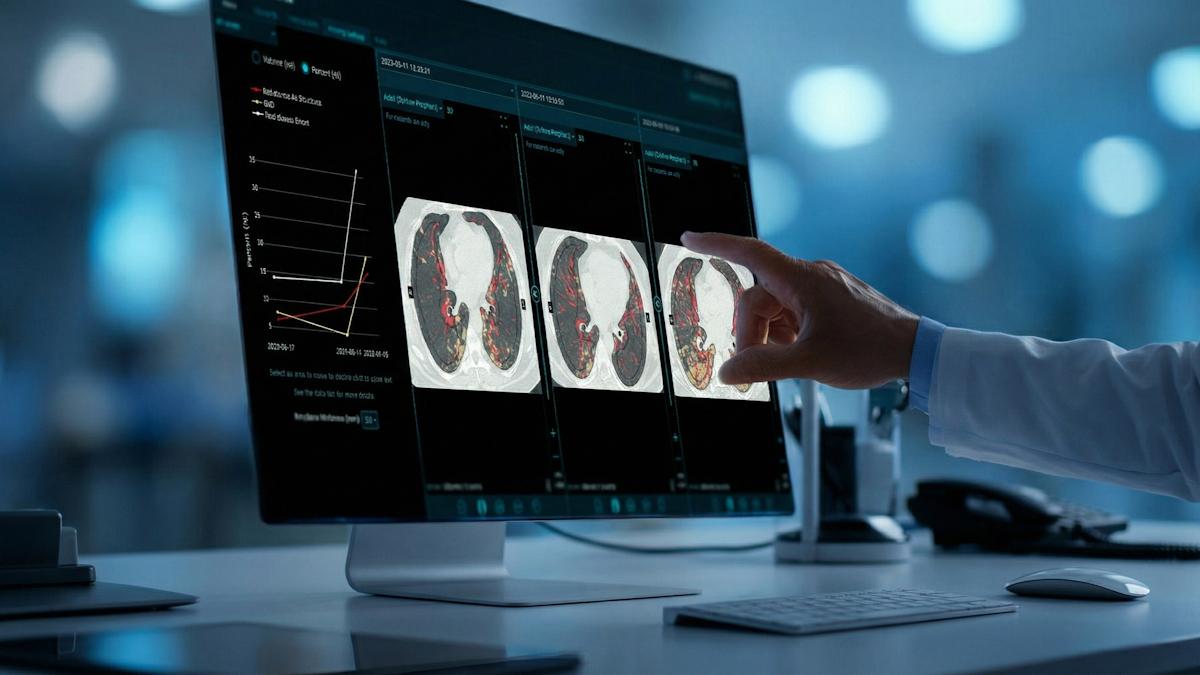
An AI-powered imaging tool developed by Brainomix has been used to enrich data from a phase 2a trial of Endeavor BioMedicines' hedgehog pathway inhibitor taladegib, in development for idiopathic pulmonary fibrosis (IPF).
The post hoc analysis of the study showed that taladegib (ENV-101) treatment led to significant improvements in lung volume, reductions in total disease extent (TDE), and reductions in quantitative measures of fibrosis severity in IPF, a serious and progressive lung disease.
Use of Brainomix's e-Lung AI to analyse CT images from 34 patients in the study adds a new dimension to the data and lends further support to taladegrib's proposed mechanism in addressing the underlying biology of IPF, according to Endeavor.
Among the new results presented at the European Respiratory Society (ERS) Congress in Barcelona, Spain, was the finding that patients treated with taladegib experienced a statistically significant 204 mL increase in lung volume, while the placebo group saw a 60 mL decline.
Meanwhile, the taladegib group saw an average 2.9% reduction in TDE – a measure of interstitial lung disease (ILD) – while those on placebo showed a 1% increase, also a significant difference.
"Our analysis with e-Lung was able to provide significant insights into the efficacy and mechanism of taladegib," said Brainomix' senior medical director Peter George, who is also a consultant pulmonologist at the Royal Brompton Hospital in the UK.
"Quantitative CT imaging offers a powerful approach to support earlier, faster, and more informed development decisions, ultimately helping promising therapies reach patients sooner," he added.
Brainomix said in a statement that the new data paves the way for further collaboration between Brainomix and Endeavor to advance the development of taladegib in IPF.
It's not the first time that e-Lung has shown its value in charting disease states in IPF, and Boehringer Ingelheim is using the AI in the phase 3 DROP-FPF study of its first-in-class PDE4B inhibitor Jascayd (nerandomilast), which was recently approved for both IPF and progressive pulmonary fibrosis (PPF).
DROP-FPF is testing Jascayd in individuals with a family history of pulmonary fibrosis and early signs of the disease to see if it can be used to delay disease progression.
AstraZeneca also used it to stratify patients according to their risk of decline in a mid-stage trial of its experimental therapy tralokinumab, although, that candidate was subsequently abandoned due to lacklustre clinical efficacy.
"The results of Brainomix's post hoc quantitative imaging analysis continue to support taladegib's potential to improve lung structure, reduce fibrosis, and improve lung function in patients with IPF," said Dr Lisa Lancaster, the company's chief medical officer.
"We are impressed with the technology's ability to detect statistically significant changes in a small cohort and over a short treatment duration."