Bayer hits "turning point" in recovery plan, says CEO
Bayer
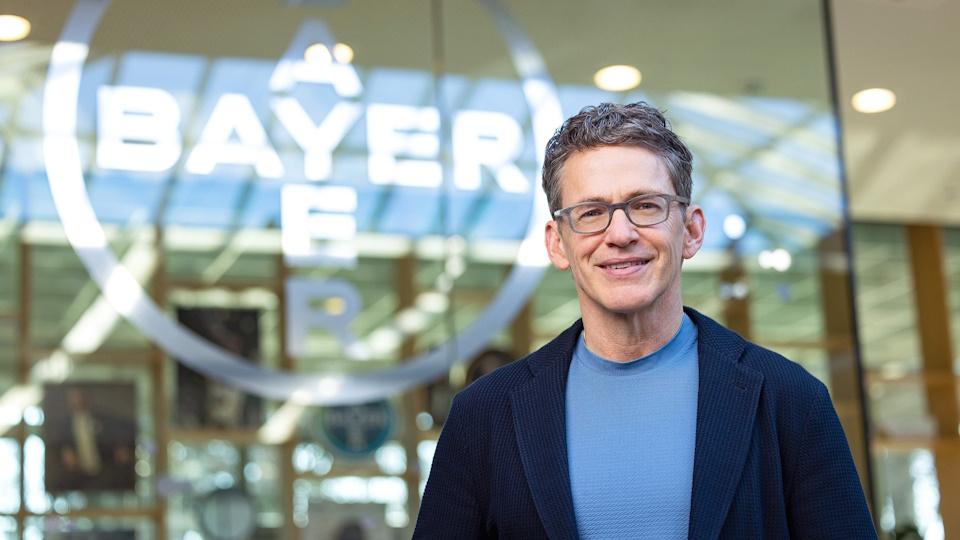
Bayer's pharma unit has reached a "turning point" in its growth trajectory as sales of new medicines rose 6.4% in the third quarter, according to chief executive Bill Anderson.
The rise in pharma revenues to €4.68 billion was driven by Bayer's two key launch products, prostate cancer therapy Nubeqa (darolutamide) and Kerendia (finerenone) for chronic kidney disease and heart failure, and was well ahead of analyst expectations. It was accompanied by a near-24% rise in the division's operating profit to €1.29 billion.
"We're beginning to see the other side," said Anderson, who was brought in to turn around Bayer's fortunes in 2023, after the company's takeover of agrochemical company Monsanto, which exposed it to expensive litigation. He saw his contract extended to 2029 last year after a wide-ranging drive to steady the ship by slashing costs and bureaucracy at the group.
Nubeqa grew 58% to €998 million in the third quarter, thanks to expansion of its label to include castration-sensitive prostate cancer (mCSPC) in addition to castration-resistant prostate cancer (CRPC) indications. Meanwhile, Kerendia shot up 65% to €374 million, setting up its first blockbuster year, and ATTR cardiomyopathy treatment Beyonttra (acoramidis) grew fivefold to €60 million.
The strong performance has led Bayer to upgrade its profit outlook for the year by around €200 million to €9.8-€10.3 billion, whilst keeping its group revenue guidance at €44.5-€46.5 billion. It also said its debt – which has been sky-high since the Monsanto acquisition – will fall more than expected this year.
Anderson also extolled the group's pharma pipeline, pointing to the recent first global approval in China for oral Factor XIa inhibitor Sunharbo (asundexian).
The first-in-class drug, which was cleared for secondary stroke risk reduction after a non-cardioembolic ischaemic stroke or a high-risk transient ischaemic attack (TIA), has been held up as a possible €3 billion-a-year brand for Bayer that could give it another major growth driver.
Anderson described asundexian as "the biggest news out of our pipeline," but warned in the second-quarter update that reforms to Germany's healthcare and drug reimbursement policies could jeopardise a launch in Bayer's home market.
He also said that there is still an appetite for bolt-on deals to expand Bayer's pipeline, such as its $2.45 billion play for eye disease specialist Perfuse Therapeutics, but with a focus on early-stage asset deals that tend to provide better return on investment.