AZ's Truqap and Roche assay cleared for PTEN prostate cancer
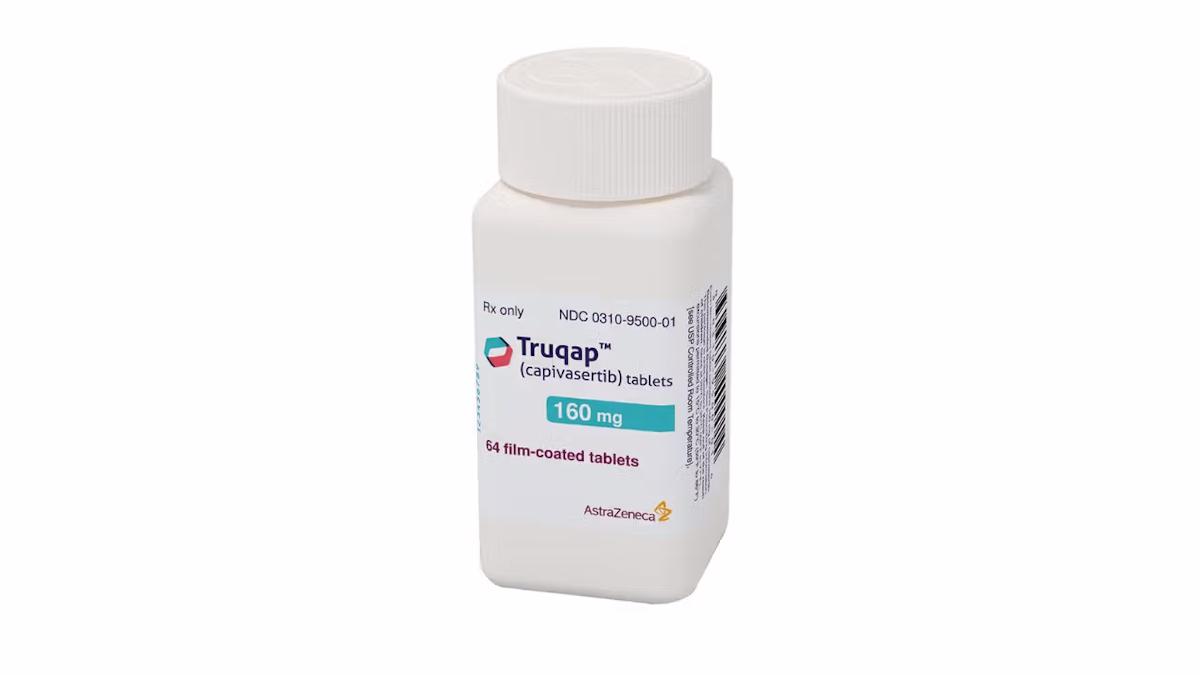
Men with a particular form of prostate cancer now have a targeted treatment for the first time, thanks to FDA approval of a drug/diagnostic combination from AstraZeneca and Roche.
The US regulator has cleared AstraZeneca's AKT inhibitor Truqap (capecitabine) alongside abiraterone and prednisone as a treatment for men with metastatic androgen pathway modulation-naïve or sensitive (mAPMN/S) prostate cancer – previously known as metastatic hormone-sensitive prostate cancer (mHSPC) – whose tumours have deficiencies in the PTEN protein.
The Truqap approval is accompanied by a green light for Roche's VENTANA PTEN (SP218) RxDx Assay, which can be used to identify prostate cancer patients who are eligible for treatment with Truqap, which becomes the first targeted therapy for this group of patients.
In prostate cancer, reduced activity of PTEN, a tumour suppressor protein, is associated with faster disease progression and reduced benefit from current standard-of-care treatments. Around a quarter of patients with mAPMN/S prostate cancer – around 200,000 new cases a year worldwide and 35,000 in the US alone – have PTEN-deficient tumours.
The approval is based on the phase 3 CAPItello-281 study, which showed that Truqap (capivasertib) reduced the risk of radiographic disease progression or death by 19% compared to placebo in patients with PTEN-deficient mAPMN/S prostate cancer.
The approval will help AZ build sales momentum for Truqap, which was the first AKT inhibitor to reach the market last year after being cleared in 2023 for use as a second-line or later treatment for some patients with HR-positive, HER2-negative locally advanced or metastatic breast cancer.
AZ had been hoping for an all-comer label for the drug in that type of breast cancer, but regulators restricted its use to patients with PIK3CA, AKT1, or PTEN alterations. Meanwhile, the AKT inhibitor disappointed in the CAPItello-290 study in triple-negative breast cancer (TNBC), after failing to show an improvement in overall survival.
Despite those setbacks, Truqap has started to build momentum, with sales rising 68% to $728 million last year, and analysts think extending its label to include prostate cancer will help it to break the $1 billion blockbuster threshold.
"CAPItello-281 showed that, for the first time, we can target a key driver of this disease to bring meaningful benefit to the one in four patients with this form of prostate cancer who urgently need biomarker-directed therapies," said Dave Fredrickson, head of AZ's oncology and haematology business unit.
"Today's approval makes clear the importance of testing for actionable biomarkers, including PTEN deficiency, in prostate cancer."