ASCO26: Verzenio gives hope of liposarcoma treatment advance
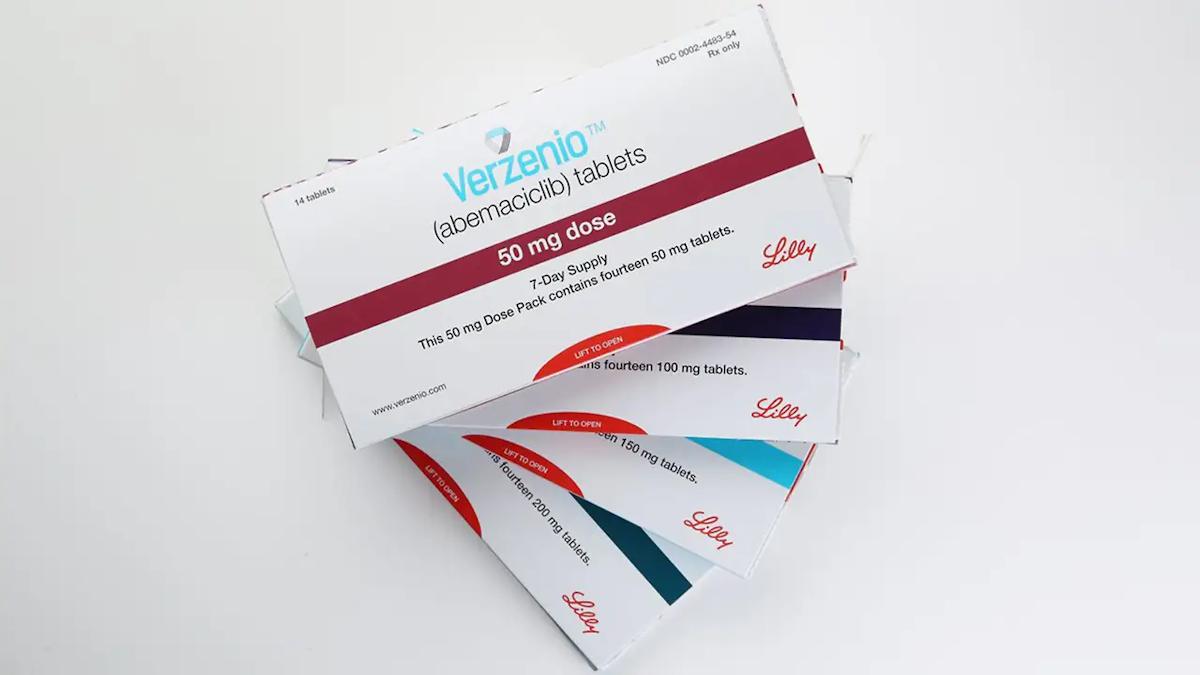
Eli Lilly's Verzenio could offer the first targeted therapy for dedifferentiated liposarcoma (DDLPS), an aggressive cancer that usually needs to be treated with chemotherapy, according to the results of an investigator-initiated trial.
The 108-patient SARCO41 trial, sponsored by the Sarcoma Alliance for Research through Collaboration (SARC) with funding from Lilly and other donors, has shown that CDK4/6 inhibitor Verzenio (abemaciclib) significantly improved progression-free survival (PFS) in people with advanced DDLPS, to 9.7 months compared with 1.5 months for placebo.
The study involved patients with DDLPS that recurred after surgery, which is the go-to initial treatment for the cancer. However, in around 40% of cases, the disease comes back within two years. Current chemotherapy regimens for DDLPS can keep the cancer from growing for two to three months, but it generally progresses quickly thereafter
There was also a hint that Verzenio may be able to extend survival in DDLPS, with more than half of the Verzenio group still alive at 25.5 months, which is the median overall survival time with placebo.
DDLPS is caused by a genetic change that almost always results in extra copies of the CDK4 gene and overactivation of the CDK4 protein, according to the investigators, led by Mark Dickson of Memorial Sloan Kettering Cancer Centre in New York.
"Liposarcoma remains a challenging disease with limited treatment options and poor response to conventional cytotoxic chemotherapy," commented Rodrigo Ramella Munhoz, an expert in sarcoma based at Sírio Libanês Hospital in São Paulo, Brazil.
"Following initial promising early-phase results, this phase 3 study of abemaciclib versus placebo confirms a significant gain in progression-free survival and a trend towards overall survival improvement, providing a new treatment option for patients," he added.
Liposarcoma has proved a tough nut to crack for drug developers, with a string of disappointing trial readouts for candidate therapies including older CDK4/6 inhibitor palbociclib and MDM2 inhibitors from Boehringer Ingelheim (brigimadlin), Daiichi Sankyo (milademetan), Sanofi (SAR405838), and MSD (MK-8242).
According to the investigators, the next steps in their programme will include sifting through the data to try to establish why some patients seem to respond better to Verzenio than others, in the hope of improving the obstinately low overall response rate in the trial, which came in at 9.3% with the CDK 4/6 inhibitor and 0% with placebo.
They will also look for biomarkers that indicate who may benefit most from the drug, and are looking at running additional trials to test if newer medicines that block CDK4 are more successful at controlling DDLPS.
The disease is rare, with an annual incidence of about 0.21 cases per 100,000 people in the US and fewer than 2,500 new diagnoses per year, according to a 2024 paper in Cancer Treatment Reviews.
That makes it a tiny indication for Verzenio, which is approved with a broad label across early and advanced forms of breast cancer and had revenues of more than $5.7 billion last year.