A dynamic moment for pharma pricing: Insights from PPIC
When it comes to global pharma pricing and market access, this moment is one of unprecedented change. As policy initiatives like Most Favoured Nations (MFN) and the EU’s Joint Clinical Assessment framework (JCA) reshape market forces around the world, AI is disrupting priorities and processes.
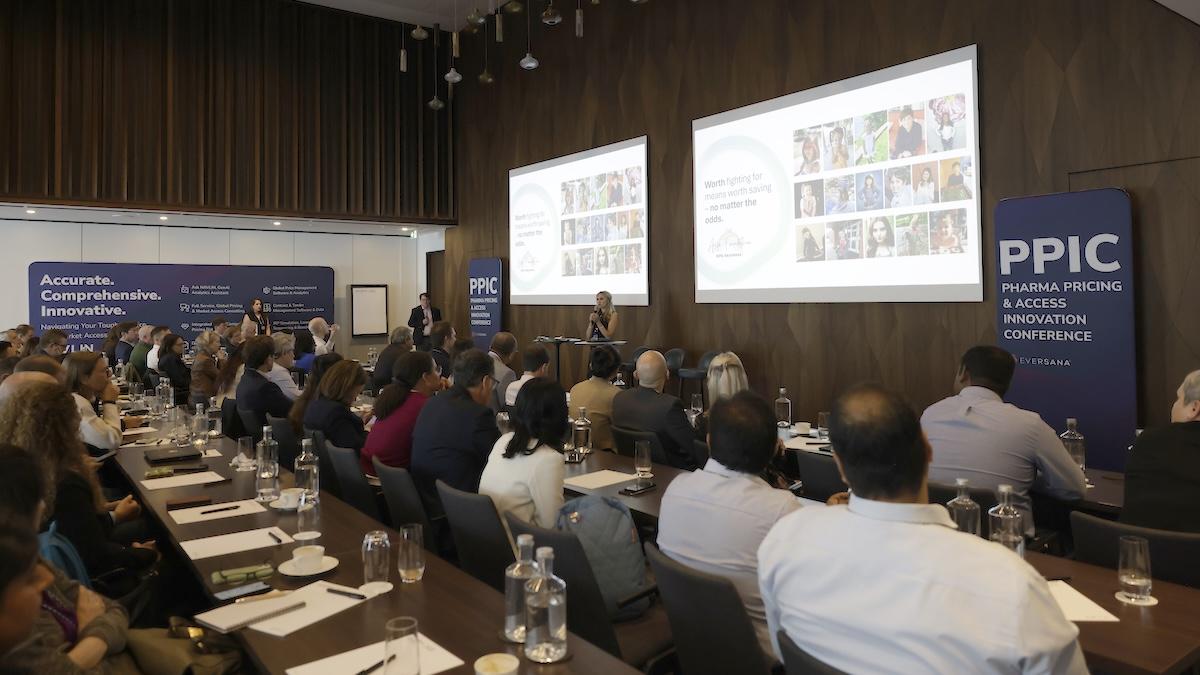
Against this backdrop, EVERSANA convened the 2026 Pharma Pricing & Access Innovation Conference (PPIC) in Basel, Switzerland, last month, bringing pharma stakeholders together to process this rapidly shifting landscape.
“We ran a small user conference before COVID. Then COVID came along, and it stopped. When it came back, we said, let's reinvent this,” Alan Crowther, EVERSANA’s general manager for global pricing and access, told pharmaphorum. “We said we're going to make sure that we give presentations that we want to listen to. … We're going to present alongside our customers so you can hear from your peers. And we're going to take away all the booths and carnival atmosphere that you have in traditional conferences and just make it an intimate conference with great food.”
The surprising effects of MFN
Crowther says one of the most interesting trends he’s observing is that Most Favoured Nations pricing is changing the calculus of where companies launch products, and creating some unexpected winners, like Brazil.
“One trend is large developed markets being bypassed first for emerging markets like Brazil. We covered that a couple of different ways, and we're seeing that show up in the in the data, where Brazil is launching ahead when compared against certain Western EU5 markets, which historically has never happened.”
For instance, Daiichi Sankyo launched Datroway in Brazil as its fourth market, ahead of larger European markets.
“There's nothing about that drug where the epidemiology, like sickle cell disease, says, oh, I must launch Brazil as soon as possible,” Crowther said. “And we heard at the conference other examples of products like Leqembi, Alzheimer's, doing very well in emerging markets like Brazil. And these are viable markets.”
Cash pay markets like GLP-1s could have even more interesting launch maps, he added.
But, Crowther warned, MFN today is a moving target, emphasising the need for regular gatherings like PPIC.
“MFN is not in a stable equilibrium today,” he said. “I mean, any policy that says, oh, in order to launch in the US, I must not launch in Germany and Japan, just is not a stable, sustainable policy. There’s too much revenue and patient impact and too many reputational considerations. So I think gravity is going to change that policy into something that works for the world.”
Policy complexity overload
As drug pricing and access policy become more complicated, it isn’t so much that one big thing is changing as that lots of little things are – which leads to a lot of complexity and logistical overhead, Crowther said.
“These policies are cross-border actions or cross-border reactions, and they're all so different that it's almost like threading the eye of the needle,” he said.
For instance, in the US, certain patient populations (like patients over 65) that are exposed to the CMS GLOBE programme are subject to certain pricing restrictions, while other patient groups with the same condition are not. Or in Germany, specific mechanisms of action are subject to different restrictions.
“You know, some markets are restricting confidentiality, some are expanding confidentiality,” he said. “All of a sudden, you have to take your drug and map it across your top 10 markets, [understand what] their policies are, where they're changing and figuring out the ins and outs. It means that companies really must have real-time, accurate handle on these things and they must map it into their forecast models, their assessment models, their launch models, their stage gating.”
All of that complexity has a real cost to organisations.
“The level of collaboration required from policy and its intersection of price and access has never been higher, more impactful, and required at every stage across the drug lifecycle,” Crowther said. “It's almost like a continuous input function that you need to have running all the time.”
AI opportunities and pitfalls
One tool that will help tackle that complexity, of course, is AI. At PPIC, presenters discussed how AI is changing pricing and access – changing it for the better, but also creating new pitfalls to watch out for.
“The productivity gains are real, and companies are actively benchmarking what they do head-to-head against AI-led projects,” Crowther said. “Let me compare consultancy projects against what the AI delivers. And when the gap gets close enough, they're flipping the switch, they're saying, we'll just deliver that internally on AI.”
That’s going to lead to a substantial decrease in what launch consulting companies can make from fees.
One big concern that not everyone is aware of is that AI systems that communicate with each other can turn afoul of anticompetition and collusion laws.
“There are parallels in other industries that are warning signs and […] it can move upstream to more innovative products over time,” Crowther said. “There are examples in the US PBM space, generics, analogue industries, and I think more things to come. So, I think everybody should educate themselves on what to look for and how to do vendor due diligence so that you protect yourself.”