12 Questions With Navdeep "Navi" Chadha
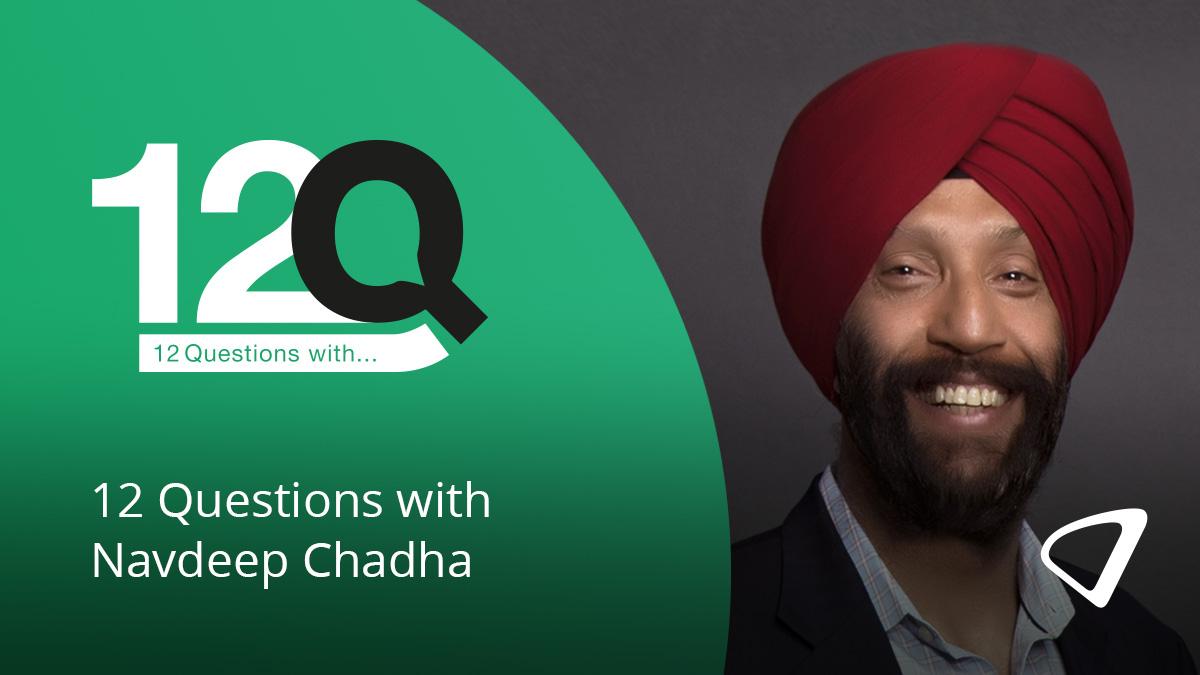
Navdeep "Navi" Chadha is co-founder and CTO of Axtria, a global provider of AI-powered data analytics and cloud software for the life sciences industry. With over two decades in pharma analytics, Chadha previously co-founded marketRx, acquired by Cognizant in 2007, before launching Axtria in 2010. He has been recognised as a Top Industry Leader by Life Sciences Voice and as an EY Entrepreneur of the Year.
What was your background prior to this role, and how did it prepare you for the work you do now? Honestly, a lot of it was following the problem, rather than following a plan. Early in my career, I was drawn to analytics because data can remove guesswork from big decisions. Life sciences sharpened that instinct. The problems are harder, the stakes are higher, and what you do directly affects whether the right treatment reaches the right patient. Co-founding marketRx, scaling it, and eventually seeing it acquired taught me that technical capability alone isn't enough. You have to understand how these organisations actually make decisions, and where they get stuck.
What are the main responsibilities of your current role? As CTO, I'm ultimately responsible for where our technology goes and how it gets built. But the part I find most energising is working at that edge between what's technically possible and what the industry actually needs. That means staying close to clients, staying close to our product teams, and making sure we're solving real problems, rather than impressive-sounding ones.
What motivates you about working in pharma? In most industries, better analytics means a better business outcome. Here, it can mean a patient gets a diagnosis earlier, stays on a therapy that's working, or gets access to a treatment they might otherwise have missed. That real-world feeling never gets old. It's what keeps this work meaningful even after 20-plus years.
What do you see as the biggest challenges facing the industry right now? Data fragmentation, without a doubt. Pharma organisations have more data than ever, but it's often trapped in disconnected systems and teams, or it’s in inconsistent formats. And that matters because the companies that are making the best decisions aren't necessarily the ones with the most data. They're the ones who've done the hard work of connecting it. So, until that foundation is solid, everything built on top is shakier than it looks.
What excites you most about current industry trends? I think it’s how AI and life sciences expertise have come together. Generic AI has been around for a while, but it doesn’t understand the regulatory environment, relationships with doctors or insurers, or even the complicated terminology in pharma. Specifically, domain-trained models fix that, and we're now at the point where that’s delivering real, measurable outcomes. That's the moment I've been building toward for a long time.
What has changed most about the industry since the start of your career? It’s the pace of data. When I started, the insight cycle for a commercial team might have been monthly or even quarterly. Now the expectation is real-time. That shift has been enormous. It changes what decisions are even possible, and how quickly companies can respond to what's happening in the market. Building an infrastructure to support that speed gives you a real competitive advantage.
What do you think pharma will look like in 15 years? 50 years? Over the next 15 to 50 years, pharma will shift to highly personalised, preventive therapies, powered by AI. We're talking about prescriptions and treatment plans tied directly to a patient's genetic profile, so, the efficacy has to be through the roof. Even something as routine as a child's cough or a case of bronchitis could be addressed with therapies customised to that specific patient.
And this works because intelligent systems will enhance clinicians. The right word to use is augmentation, not replacement. Imaging is a great example: AI will eventually detect things the human eye cannot, and that's something physicians should want working alongside them. The bigger point is that pharma, payers, providers, and patients all have to evolve together and adopt these tools. If they aren’t, any one of them can stall the whole system. As an industry, we have a responsibility to help providers through this transition.
Which area of your work do you find most underappreciated? Patient analytics, definitely. Everyone talks about adherence, but the real opportunity is understanding the full patient journey. Where people fall through the cracks, why, and what can actually be done about it. When that insight feeds back into commercial decisions, medical affairs, and clinical strategy all at once, the impact goes exponential. Most organisations are still treating it as a standalone function, and that's a missed opportunity.
What advice do you have for your pharma industry peers? I touched on this earlier, but it’s so important: start with the data foundation, not with the AI. I know that sounds counterintuitive right now, with all the AI chatter. But fragmented data doesn't go away because you layer a model on top of it. It just becomes a more expensive problem. The companies getting the most from AI are the ones that did the unglamorous work first. Get that right, and everything accelerates.
What do you look for when bringing someone new into Axtria, and what's the most common mistake candidates make? You have to have curiosity first. Someone who's technically brilliant, but who has no interest in why a commercial team makes the decisions it does will hit a ceiling here. The mistake I see most often is talking about credentials, but not connecting them to problems. What we're listening for is whether someone can think about a real business challenge and work backwards to see what data or technology needs to do.
What are your hobbies? What do you do in your free time? I find the outdoors to be therapeutic. I like to play golf with friends and family, ride a bike (bicycle and my Harley), run Spartan races, and love to ski with my family. The list goes on.
Do you have any pets? What are their names and what are they like? Our family added a wonderful member to the family few years back. Bear is a playful Australian Labradoodle. He adds so much joy and love. There is so much to learn from them!
Connect with Navdeep "Navi" Chadha on LinkedIn