Five dynasties that built modern pharma
As the old saying goes, “Rome wasn't built in a day” – and neither, it turns out, was the modern pharma industry. Over three and a half centuries, the industry has transformed from brick-and-mortar pharmacies and travelling apothecaries into a complex web of mega-mergers and billion-dollar pipelines, surviving global conflicts, financial crises, environmental disasters, and the odd scandal or two.
It began, like most great endeavours, with people. A pharmacist in seventeenth-century Germany passing his name and trade down to his children. Two young men who arrived in Brooklyn with little more than ambition and a loan from one of their fathers. Three brothers galvanised into action by a single speech. Each of them started small, driven by the same fundamental instinct to ease the suffering of those around them.
None of these men set out to build an empire of medicine. Yet, across more than three and a half centuries, the companies that bear their names have become five of the most powerful organisations in the history of healthcare. This is the story of MSD, Pfizer, Eli Lilly, Johnson & Johnson, and Roche.
The old world (pre-1900s)
Medicine, in some shape or form, existed long before the 17th century, with ancient Greek and Egyptian texts detailing remedies from bygone civilisations, however, the modern industrialised version of pharmaceuticals is commonly traced to a single German pharmacy.
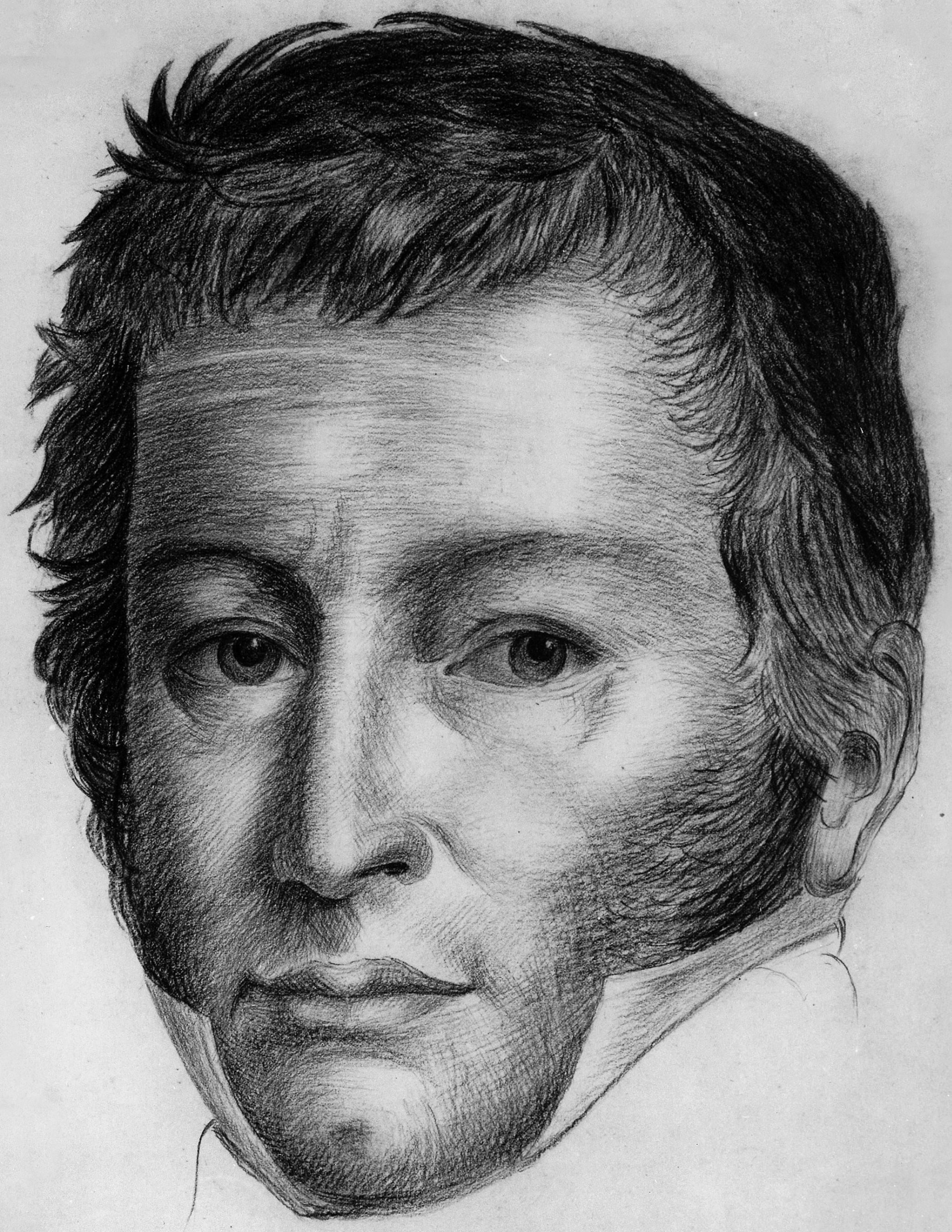
Pictured: Heinrich Emanuel Merck. Credit: Public Domain, Link
Founded in 1668, when Friedrich Jacob Merck purchased a pharmacy in Darmstadt, MSD – which was still combined with its former parent company the Merck Group – passed through generations of family hands, from Georg Friedrich Merck in 1678 to Emanuel, who earned a gold medal from the Société de Pharmacie in Paris in 1830 for his work on alkaloids. Notably, following her husband's death in 1805, Adelheid Merck stepped in as history's first female pharmaceutical CEO. In 1890, Georg Merck and Theodor Weicker extended the family's reach across the Atlantic, establishing Merck & Co (MSD) in New York.
_portrait.jpg)
Pictured: Carl Frederick Erhart. Credit: Public domain, via Wikimedia Commons
_portrait.jpg)
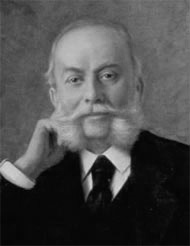
Pictured: Charles Pfizer. Credit: Public Domain, Link
Our second founding fathers, Charles Pfizer and Charles Erhart, set up their fine chemicals business in Brooklyn in 1849. Their first product – an anti-parasitic drug called santonin – was an early showcase of patient-centred drug development. Pfizer and Erhart focused on making the drug more palatable for patients by giving it a toffee flavour. Twenty years later, the American Civil War saw Pfizer's revenues double by 1868 thanks to surging demand for painkillers and disinfectants.
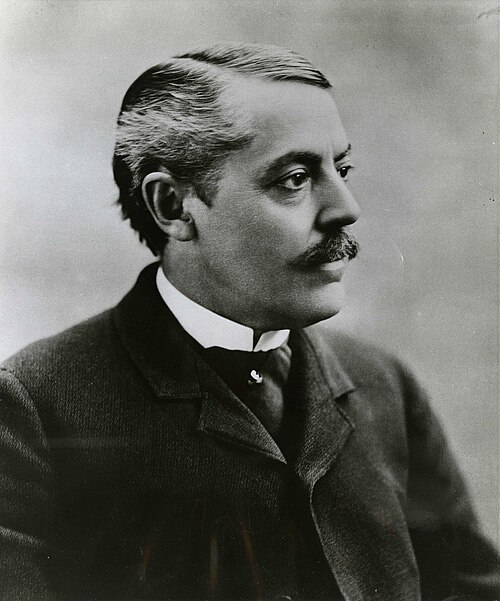
Pictured: Colonel Eli Lilly. Credit: Public domain, via Wikimedia Commons

Having witnessed the impact of low quality medicines used during the American Civil War, Colonel Eli Lilly was already a strong proponent of improving the quality of pharmaceuticals when he opened his own laboratory in Indianapolis in 1876, simply named "Eli Lilly, Chemist". Just three employees joined Lilly in his venture, including his 14-year-old son Josiah, who had quit school to work as his fathers apprentice. Lilly quickly gained a reputation for producing high-quality prescription medicines, a welcome break away from the common (and often ineffective) patent medicines at the time. This, combined with strong sales of the malaria drug, quinine, saw a ten-fold increase in sales.
.jpg)
Pitcured: Robert Wood Johnson. Credit: Public Domain, Link
Meanwhile, in 1886, the three Johnson brothers (Robert, James, and Edward) founded Johnson & Johnson in New Jersey. Inspired by Joseph Lister's radical advocacy for antiseptic surgery at the 1876 Centennial Exposition in Philadelphia, the three brothers opened the doors of their new factory with just 14 employees and set to work manufacturing the world’s first mass-produced sterile surgical supplies, including sutures, absorbent cotton, and gauze.
.jpg)
Pictured:Fritz Hoffman-La Roche. Credit: Public Domain, Link
Finally, in Basel, Switzerland in 1896, Fritz Hoffmann-La Roche founded Roche after witnessing a devastating cholera outbreak first-hand. His conviction was that medicines must be produced industrially and distributed internationally; a principle the entire industry would eventually adopt.
Roche’s non-prescription cough syrup was an almost immediate success. Launched in 1898, it quickly became Roche’s first bestseller, remaining in the market for 60 years and setting the company on the path for future medical breakthroughs.
1900–1945
The war years
A new century brought with it new opportunities for the five families to prove their worth. Unfortunately, two world wars and a great depression would test the limits of each in strikingly different ways.
The 1900s started off rather well for Roche, which had expanded operations employing more than 700 people across three continents by 1912. However, this was to be short lived, as the First World War and the Russian Civil War plunged the company into a deep financial crisis. To keep the doors open, Roche opted to become a limited stock company in 1919. Only a few months later, Roche founder Fritz Hoffman-La Roche died.
Before the First World War, there was just one Merck Group, with subsidiaries operating internationally under the brand name. But, when the US entered World War I in 1917, the company fell under the shadow of anti-German sentiment and it quickly became a target of the Trading with the Enemy Act of 1917, which allowed the US government to seize 80% of shares owned by the German parent company and auction them to the highest bidder.
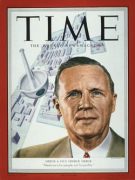
George Merck on the cover of Time magazine
It took until 1919 for George Merck, in partnership with Goldman Sachs and Lehman Brothers, to buy the company back at government auction for $3.5 million. But, while the family name was back at the helm, the separation was permanent. The American MSD (as it is known in all nations bar the US) and its German former parent Merck KGaA (or EMD Group, depending on what country you are in) have operated as entirely independent companies ever since, each holding rights to the Merck name in their respective territories, a division that would still be generating litigation a century later.
Innovation, meanwhile, came early and fast elsewhere. In the 1920s, Lilly researchers collaborated with the co-discoverers of insulin, Frederick Banting and American-Canadian medical scientist Charles Best, to isolate and purify insulin for the treatment of diabetes, which at the time was a fatal disease with no effective treatment options. The work they did together resulted in the world's first commercially available insulin product, Iletin, in 1923.
Five years later, the company would replicate this success with a liver-extract treatment for pernicious anaemia, based on research from George Whipple, George Minot, and William Murphy, who would later receive a Nobel Prize for their work in 1934.
By 1926, fifty years after it was founded, Lilly sales had reached $9 million and the company had produced over 2,800 different products. Despite the economic challenges that came with the Great Depression, Lilly's sales rose to $13 million in 1932. That same year, Colonel Lilly's eldest grandson, Eli Lilly, was named as the company president to succeed his father, Josiah K Lilly Sr.
The arrival of WWII accelerated everything. Pfizer's contribution was perhaps the most strategically significant. In an unprecedented collaboration with government scientists and researchers across the industry, Pfizer dramatically improved the efficiency of penicillin production, and by D-Day the majority of penicillin that went ashore with Allied forces had been made by Pfizer.
Meanwhile, in the US, when American doctors struggled to obtain a French-developed burn treatment for injured soldiers, they turned to Johnson & Johnson’s Redintol – a paraffin and resins compound that helped heal severe burns while minimising scarring. The war years also proved transformative in terms of scale. The company that had opened its doors with just 14 employees in 1886 emerged from the conflict operating 31 companies across the globe, with General Robert Wood Johnson II at its helm.
1945–1980
Mid-century medicine
After decades of navigating brutal conflict on a global scale, the pharma industry was ready to welcome a new era of health and healing. And the pipelines would soon be aflush with new treatments.
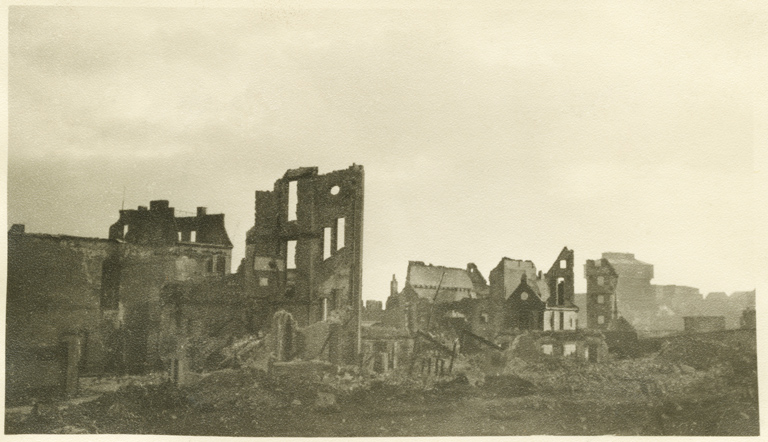
Pfizer moved fastest internationally, entering nine new countries in 1951 and establishing a UK site at Sandwich that rapidly outgrew its original purpose. By the 1960s, the company had interests stretching from pills to perfume, petrochemicals to pet products, and R&D spend climbed from 5% to 15% of revenue across the decade.
Eli Lilly matched that energy scientifically. The 1950s alone delivered vancomycin, erythromycin, and – perhaps most significantly – Lilly became the first company to manufacture and distribute Salk's polio vaccine globally. Diversification followed with a string of cardiovascular acquisitions in the late 1970s, and even a brief, profitable detour into cosmetics via Elizabeth Arden. In 1953, the appointment of the first non-family president signalled a future that extended beyond the family.
In 1953, MSD merged with Philadelphia-based Sharp & Dohme. The combined entity went on to develop individual vaccines for measles (ATTENUVAX in 1963), mumps (MUMPSVAX in 1967), and rubella (MERUVAX in 1969). A few years later, an initiative spearheaded by Dr Maurice Hilleman and Dr Eugene B Buynak would see the three standalone vaccines combined into a single, more convenient dose and licensed in the US as the combined MMR vaccine in 1971. The first approved pneumonia vaccine, PNEUMOVAX, followed in 1977, cementing MSD's growing reputation as a vaccines powerhouse.
At J&J, the 1961 acquisition of Belgium's Janssen Pharmaceuticals opened a new chapter for the business. Its founder, Dr Paul Janssen held over 100 patents, including HALDOL, a treatment for schizophrenia that allowed patients to be managed at home, rather than in institutional settings, easing pressure on an overburdened psychiatric system. The acquisition also laid the foundations for a research landscape that would eventually reach across gastroenterology, neurology, women's health, and HIV/AIDS.
In 1955, Hoffmann-La Roche chemist Leo Sternbach inadvertently identified the first benzodiazepine, chlordiazepoxide (Librium), while researching quinazoline-3-oxides as potential tranquillisers. This happy accident proved profitable for the company, which followed that discovery with Valium (diazepam) in 1963. Progress, though, was not without cost – a 1976 factory accident at a chemical plant in Seveso, Italy, owned by a Roche subsidiary, caused serious dioxin contamination in the surrounding communities, a reminder that the impact of drug manufacturing extends well beyond the laboratory.
1980–2000
The blockbuster era
Research investment accumulated over decades was finally crystallising into products of extraordinary commercial and clinical impact – and the five dynasties were at the centre of it.
Pfizer’s Feldene, launched in 1980, rapidly became one of the world's bestselling anti-inflammatory treatments. This success was a sign of things to come, however, the company’s next big launch wouldn’t be so straightforward. The statin Lipitor almost didn’t make it to market. Ineffective chiral isomers and efficacy issues in animal testing had fuelled serious concerns over the viability of the candidate. It had one major saving grace – the positive results in human trials were impossible to ignore. In 1997, Pfizer officially launched the drug. By the time its patent expired in 2011, Lipitor was the best-selling drug in the world, accounting for nearly one-quarter of Pfizer's total revenue at its height.
Then came Viagra. Originally developed at Sandwich in the UK as a treatment for hypertension, its "unexpected" side effects prompted a swift change of indication. In the years since, the little blue pill has taken on a life of its own, becoming one of the few drugs cemented in the cultural zeitgeist.
Not to be outdone, Eli Lilly kicked off the 80s with the world's first human healthcare product created using recombinant DNA technology. Prozac followed in 1986. As one of the first therapies to treat clinical depression by targeting serotonin uptake, this blockbuster soon became one of the most recognised pharmaceuticals ever made. Zyprexa and Gemzar rounded out a remarkable two decades of innovation.
MSD matched them milestone for milestone with the first FDA-approved recombinant hepatitis B vaccine in 1986, the first commercial statin in 1987, and a fast-tracked HIV treatment, Crixivan, approved after just 42 days of FDA review in 1995.
Roche, meanwhile, transformed its diagnostics division from a fringe effort into a global leadership position, culminating in the 1997 acquisition of Boehringer Mannheim. A Nobel Prize for immunology in 1984 and a landmark collaboration with Gilead Sciences on bird flu treatment oseltamivir in 1996 further the company’s position in the market.
For J&J, however, this period was defined by both crisis and conviction. At the beginning of the 1980s, Tylenol was the most successful over-the-counter product in the US, but in 1982 one malicious act would throw the household name into jeopardy. The 1982 Tylenol poisoning emergency prompted a recall of 31 million bottles. Suddenly, J&J was thrust into an uncomfortable situation, fighting to salvage the brand’s damaged reputation, and ease the minds of understandably panicked consumers.
Elsewhere, the company's innovative engine kept turning. The Janssen acquisition, made two decades earlier, was now bearing remarkable fruit, including Risperdal for schizophrenia, Reminyl for Alzheimer's disease, and Imodium.
2000–2015
Scale, scrutiny, and the mega-merger
If the 1990s were defined by the emergence of blockbusters, the 2000s were shaped by what happened when their patents ran out.
Pfizer led the consolidation charge, acquiring Warner-Lambert in 2000, Pharmacia and Upjohn in 2002, and Wyeth in 2009 – a series of mega-mergers that cemented its position as the world's largest pharmaceutical company. Yet, scale brought its own vulnerabilities. With drugs accounting for 40% of sales coming off patent simultaneously, and high-profile pipeline failures – most notably the anti-cholesterol drug torcetrapib, which increased patient deaths in trials – the pressure was immense. Legal costs only added to the challenge: in 2009, Pfizer faced over $2 billion in marketing practice settlements. The appointment of a lawyer, rather than a scientist, as CEO in 2006 spoke volumes about where the industry's centre of gravity had shifted.
Eli Lilly navigated the era with a mixture of innovation and controversy. Cialis, launched in 2003 as a longer-acting competitor to Viagra, and Cymbalta, introduced in 2004 for depression and anxiety, ranked among the most commercially successful drugs in industry history. Yet, in 2009, Lilly was handed the largest criminal fine in US history – $1.415 billion – for illegal marketing of Zyprexa.
Merck's landmark achievement came with the FDA approval of Keytruda, the first anti-PD-1 cancer immunotherapy. J&J, under successive CEOs, expanded aggressively into oncology with Zytiga for prostate cancer and Imbruvica for lymphoma, both benefitting from the FDA's Breakthrough Therapy Designation pathway.
Roche's biggest move was the $46.8 billion acquisition of Genentech in 2009. A flurry of further acquisitions in diagnostics and biotech followed, reinforcing a strategy built on sustaining innovation through targeted investment, rather than broad diversification.
2015–2025
AI and the GLP-1 revolution
By 2015, the industry's centre of gravity was shifting again. Blockbusters were giving way to precision medicines, artificial intelligence was moving from buzzword to boardroom priority, and an unexpected class of diabetes drugs was about to reshape both public health and financial markets on a scale nobody had predicted. Oh… and there was a global pandemic.
Merck's Keytruda led the precision medicine charge. First approved in melanoma in 2014, it accumulated approvals at a remarkable pace – five in 2017 alone, six in 2018 – expanding across lung, cervical, head and neck, and renal cancers, among others. By 2025, Keytruda remained the company's dominant asset, anchoring worldwide sales of $65 billion. Today, Merck has placed a significant bet on AI, signing a multi-year, $1 billion agreement with Google Cloud to embed agentic AI across its entire operation – from R&D to manufacturing.
Roche pursued a different kind of breadth. Tecentriq, Ocrevus, Hemlibra, and Vabysmo built a diversified specialty portfolio spanning oncology, neurology, haematology, and ophthalmology. In 2023, the acquisition of Carmot Therapeutics signalled an ambitious entry into obesity and metabolic disease – positioning Roche as a future challenger in what has become the industry's most contested arena.
That arena belongs, for now at least, to Eli Lilly. Mounjaro and Zepbound (both based on tirzepatide) generated nearly $19 billion in revenue, propelling Lilly past a $1 trillion market valuation in 2025, the first pharmaceutical company in history to reach that milestone. A decade earlier, its shares traded below $100. And in April this year, the FDA approved orforglipron under the Foundayo brand in just 50 days – extending Lilly's GLP-1 dominance into the oral category and directly challenging Novo Nordisk's recently launched Wegovy pill.
J&J, meanwhile, has set its sights on becoming the world's largest oncology company, targeting $50 billion in cancer drug sales by 2030. Darzalex, Imbruvica, and a growing CAR-T portfolio underpin that ambition. The company has also partnered with Isomorphic Labs (Alphabet's AI drug discovery engine) to accelerate biologics design, while simultaneously managing over 67,000 talc-related lawsuits that have resulted in damages running into the billions.
_C_(cropped).jpg)
"Pfizer-BioNTech COVID-19 vaccine (2020) C (cropped)" by U.S. Secretary of Defense is licensed under CC BY 2.0 
 .
.
Pfizer's post-pandemic chapter has been marked by reinvention. The rapid creation of the COVID-19 vaccine, developed with BioNTech and funded entirely without government support, illustrated just how far the industry had evolved over the last century – followed by the oral antiviral Paxlovid in 2021. A few years later, a $43 billion acquisition of Seagen in 2023 hinted at a major pivot into antibody-drug conjugates for cancer. And more recently, in 2025, a voluntary pricing agreement with the Trump administration (paired with a pledge of $70 billion in US manufacturing investment) reflected a new political reality for the industry's largest player.
Three and a half centuries is a long time for anything to survive, let alone to grow, to reinvent itself, and to remain consequential. Yet, the five companies at the heart of this story have done exactly that. While the families that gave their names to the industry heavyweights may play less of a leading role in the day-to-day operations, their contributions live on in the innovations and treatments we see today.

About the Author
Eloise McLennan is the editor for pharmaphorum’s Deep Dive magazine. She has been a journalist and editor in the healthcare field for more than five years and has worked at several leading publications in the UK.
Supercharge your pharma insights: Sign up to pharmaphorum's newsletter for daily updates, weekly roundups, and in-depth analysis across all industry sectors.
Click on either of the images below for more articles from this edition of Deep Dive: Market Access 2026


Want to go deeper?
Continue your journey with these related reads from across pharmaphorum


GLP-1s: Five years that changed metabolic medicine

A history of vaccination: How immunisation transformed public health

The AI drug discovery race: Who’s leading the charge?

Women who changed cancer research: A timeline