The Claude effect: In AI drug discovery, commoditisation leads to collaboration
Once the province of dedicated start-ups and secretive big pharma divisions, AI drug discovery is now being tackled by big tech, with headline-grabbing public efforts by Google, OpenAI, and, most recently, Anthropic.
Leveraging NVIDIA’s BioNemo Toolkit and a plethora of different software efforts, Anthropic’s Claude Science promises a seamless tool to connect researchers to everything that’s now possible in AI-assisted drug discovery, and even drug development.
So, it seems an opportune time to ask the big questions: after decades of efforts by dedicated start-ups and billions of dollars invested in the space, how close are we to handing this onerous and difficult process over to the robots? When will we see an AI-driven spike in new drugs coming to market? How is the ecosystem around this new research paradigm evolving, and who will the winners and losers be?
Deep Dive spoke with a range of experts with hands-on experience in the space to get their takes on these difficult and sometimes divisive questions.
Claude Science: What is it and what can it do?
Claude Science is making headlines for what it can do around drug discovery – for instance, discovering novel protein binders. But it would be wrong to describe Claude Science as an AI drug discovery engine. Instead, it’s a window into a variety of existing tools that are used in drug discovery.
“This product is the ‘front door’ for scientists: instead of switching between a document, code, a web browser, and a terminal to run specialised tools, you just have to go to Claude Science and let it handle all of the coordination to the other tools and product surfaces,” Claude's head of life sciences, Eric Kauderer-Abrams, told Deep Dive. “As such, it is complementary to tools like NVIDIA’s BioNemo Toolkit, which provides access to specialised machine learning models that perform specific tasks.”
But it’s more than just orchestrating – the integration of an AI model with these tools allows for automation and iteration.
“If you have, like, 10 different ideas, normally you have to pick one and try that, and if it doesn't work, you try the next one,” said Oliver Vince, co-founder of Basecamp Research. “What Claude allows you to do is try all 10 at once. And then, once you've tried the best one, it allows you to automate that, so you don't have to then repeat that process. So, what we're seeing is a massive acceleration in the autonomy of research. […] They're effectively like having a team of PhD students at your hands. And that's incredibly powerful.”
Right now, Claude is making Claude Science available to researchers for free or at a discount in order to enable a fast exploration of the tool’s potential.
“The most important thing right now is having scientists pushing the limits of what our models and products are capable of,” Kauderer-Abrams said. “We’re excited about the future that seems readily within reach, in which scientific discoveries are made at a much faster rate.”
And all this comes with a caveat: the foundational model Claude Science is built on, at least for life sciences use cases, isn’t even Anthropic’s most advanced one.
“For subjects like physics, maths, material sciences, they use Fable,” Kauderer-Abrams explained. “When doing life sciences, including biology and life sciences-related chemistry, the capabilities use the latest Opus model. Opus provides really extensive access to capabilities in biology and chemistry, including our recent work in protein design. Our Fable models have biosafety classifiers, as their capabilities mean they pose increased risk and we need different approaches, which we expect to introduce soon through new access programs, to enable legitimate use while blocking harmful use. Our bio- and chemistry-focused safeguards aim to prevent these actors from gaining access to information that could assist them in creating such things as bioweapons. We currently have a trusted access program for Claude Opus 5 for biology and chemistry, and aim to scale up our access program.”
As models become commodified, data is the differentiator
Kauderer-Abrams says that Claude’s foundational models stand above their competitors.
“Our models are consistently seen to be the most capable across a range of general and life sciences-specific reasoning tasks,” he said. “Beyond that, Claude Science as a product offers the most sophisticated interface for doing all aspects of scientific work, not just writing papers, running simulations, searching the literature, but doing many of the aspects of performing research and development, end-to-end.”
But even if that’s the case, the AI models are essentially commodified, because they are so widely accessible.
“The algorithms are all open source and the same,” said Ramy Farid, CEO of Schrödinger. “Everybody has access to the actual AI itself, the machine learning. If anybody says their competitive advantage is the algorithm, they're of course lying.”
It has taken a little while for the industry to come to the broad consensus that AI drug discovery itself is not likely to be viable as a product for this reason.
“I've seen this evolution from, sort of, the standpoint of a VC that was approached by software companies that were claiming to be able to improve the generation of new hypotheses and molecules to enter the clinical trial funnel,” said Marta G Zanchi, managing partner at NINA Capital. “And, in the beginning, many of them actually were approaching these as, 'I'm selling a technology that has value to the pharmaceutical companies that then can run with it and create the drug'. That hasn't really worked very well.”
She continued: “A lot of these companies have shifted the conversations to start a partnership together. Let's co-develop. Let us create the assets through the initial stages. And once we're sure enough, then we can work with the pharmaceutical companies to make sure that these drugs actually come into a clinical trial process and beyond.”
Nowadays, most companies are accepting that the algorithm is not a differentiator, but data is. Whether it’s the biology or the chemistry, the data that underpins drug discovery is simply not that easy to come by.
“The sum of human knowledge of human biology is probably less than 20%,” Alistair Henry, UCB’s head of R&D, told Deep Dive. “Why do I know that? It's because I think about all those papers that I've read where all the suppositions were wrong. The authors of these papers who subsequently proved everybody else was wrong – it isn't because, somehow, they're smarter than anybody else. It's just that we just don't know. The complexity of human biology, let alone any other biology, is such that our cumulative knowledge is relatively poor.”
The new competitive battleground: Novel sources for data
“The companies that are grabbing attention and where I think the possibility for value creation is the highest are the ones that crack this difficult step on the process. How can I integrate, link, extract difficult-to-find, difficult-to-merge data assets?” said Zanchi.
Companies are turning to a variety of ingenious means to try to plug some of the holes in our understanding to enable AI to do effective drug discovery, up to and including Revalia Bio, which connects donated human organs that are unsuitable for transplant to biological “treadmills”, then studies them as much as possible for the few days that they can live outside of a body.
“We believe that those organs really hold the secrets to all of human biology and human disease because it's one of the only types of models where you can really study these organs in real time, take repeat sampling,” Revalia Bio's COO and co-founder, Jenna DiRito, told Deep Dive. “With an organ, you can take almost an unlimited amount of dynamic sampling that you could never do in a living patient because that would not be ethical to poke and prod someone that much, right?”
Or take Basecamp Research, which is trying to fill in the holes in human biological knowledge by collecting more genetic samples from around the world.
“Our starting premise of Basecamp was that 99% of life on Earth is undiscovered,” said Basecamp’s Oliver Vince, explaining that most foundational models are using the same limited set of data for pretraining, and focusing their efforts on specialised post-training. But Basecamp’s approach is the opposite.
“We have built partnerships in 33 countries now, more than 200 different locations around the world where we've got teams of explorers, expeditions going out and literally picking up samples from all over planet Earth,” he said. “And with that, we've built by far and away the largest underlying dataset. And what that means is, when you go and you do your lab-in-the-loop bit, you only need a very small lab and you can do it very quickly.”
The problem with studying organs or looking for new species is that they are manual processes and hard to scale. That might work in biology, says Schrödinger CEO Ramy Farid, but not in chemistry.
“Chemical space is infinite,” he said. “So, if you're trying to build a global model or a foundation model for chemistry, that isn't going to happen on experimental data, no matter how proprietary it is.”
So, Schrödinger uses sophisticated simulation software to build a dataset that will help models understand how molecules interact.
“We've built an engine, a physics-based engine, for producing massive amounts of really accurate data on a scale that, of course, you can't even come close to approaching with experiment, that is producing the training sets required to power AI,” he said.
No one thinks their data set is the be-all and end-all, but they all believe they are contributing something unique and important.
“We don't fundamentally believe that human organs are going to be the answer for everything,” Revalia Bio's DiRito said. “We think they're part of a larger stack and different parts of the stack, whether it's organoids, organ on a chip, just looking at the patient records – ultimately they need to be integrated together to have that right dataset.”
Beyond predictive AI
Although most of the people we spoke with said data was the key differentiator, it wasn’t a unanimous consensus. Garry Pairaudeau, a veteran of ExScientia and AstraZeneca who recently started his own AI drug discovery called DaltonTx, believes there are real limitations to what predictive AI can do.
“Drug discovery is a series of iterative cycles. You've got a problem, you want to solve that problem. The first thing you need is a strategy. How am I going to go about solving that problem? Once you've got a strategy, you can start to create molecules that are aligned to that strategy, then you can use predictive tools to tell yourself whether they're any good. But a predictive tool on its own, without a strategy for how you're going to actually make the improvement, isn't any use.”
DaltonTx’s pitch is that they will work closely with companies to craft an AI workflow that’s contextual and purpose-built, leveraging the company’s local data.
“Whilst models can become commoditised and tools can become commoditised, they will always then be fine-tuned on your data and your use of them will be dependent on your expertise. So there will always be lots of scope for any individual company, whether you're a biotech or you're a big pharma, you will always end up with your own custom implementation,” he said. “When it comes down to it, fundamentally, I don't think the model itself is the most important thing. It needs to be reasonably good, but it's how you use it, and how you use it will always be personal.”
UCB’s Alistair Henry and investor Marta G Zanchi both stressed that humans in the loop are the important piece to provide that strategy and direction.
“What we're asking is to make the observations, to see those links, to be able to select which hypotheses are the ones that really will drive us to success,” Henry said. “And, at the moment, the computational piece may be able to help us to rank hypotheses. But that last step still remains, I would argue: a human-centric activity, because we are looking for what others have never seen. And actually looking for the connections in a way that are not obvious.”
Anthropic’s Kauderer-Abrams agrees that humans will have an important role to play for the foreseeable future, but challenges the idea that Claude is mere predictive AI.
“Today, humans provide the judgement and carry out the work behind all aspects of drug discovery and development,” he said. “As our model capabilities in these areas have improved, particularly over the past year, and as our product surfaces, like Claude Science, mature, we’re seeing AI carry out more and more of this work. We’re even starting to see Claude participate in the strategic aspects of drug development like selecting targets and making ‘go/no-go’ recommendations on programmes. In the next handful of years, I expect that we’ll be in a world in which one or a handful of talented drug programme operators can run an entire portfolio of ten or twenty drug programmes, supported by a massive swarm of AI agents.”
The future of AI drug discovery
Kauderer-Abrams sees a future where “scientific discoveries are made at a much faster rate”, and Garry Pairaudeau thinks the impact of AI on the speed of drug discovery is already here.
“There isn't an ‘AI-designed’ drug on the market, but actually AI is starting to have impact in lots and lots of places,” he said. “We're seeing a big impact in target identification, I think. And that makes a lot of sense, pulling together complex multimodal datasets and using that insight to generate novel targets. We are seeing companies, and Insilico Medicine is a great example, that seem to be able to routinely generate candidate molecules now very, very quickly, much quicker than the industry average. So, I think there are good examples out there.”
Jenna DiRito believes that AI in drug discovery will enable a fail-fast mentality that has been absent from healthcare for obvious reasons.
“You would never want to fail in a clinical trial or put patient lives at risk, right?” she said. “That is not ethical and not really within the stance of what we do today. But developing more of an agile process for drug development, where you can fail fast, and it's safe to fail fast, I think is going to be the key to unlock really what all of these AI drug discovery models have to offer, because you're able to do that same type of development that you would do in the software world.”
But perhaps the most interesting vision of the future of AI drug discovery comes from Vince at Basecamp Research. He believes that, in the future, AI drug discovery won’t happen in the lab, but at the bedside, as AI allows the creation of true precision medicine, bespoke drugs for each patient.
“[We’re] basically trying to get to a world where your Claude Science or whichever of these algorithms you use in the future can act more like copilots for doctors rather than for researchers,” he said. “So, the current paradigm of drug discovery, which I think is important to start with, won't be the way we treat complex disease forever. I think what we're going to have in the future is much closer to what Merck and Moderna did the other day.”
Merck and Moderna’s recent FDA approval for an mRNA cancer vaccine proves that such a model is possible, Vince said.
“What Merck and Moderna did was put phase 3 trial together,” he said. “But, the trial was actually regulating the algorithm that designed the medicine, and the medicine was actually an individual medicine for each patient.”
Moderna’s cancer vaccine doesn’t use Claude Science, of course. But Basecamp Research already has a proof of concept that does.
“In our work with Claude Science, what you can do is you can upload a patient microbiology report into Claude Science,” he said. “And using our models, it will design a new antibiotic against anything in that microbiology report with a 97% hit rate. And when we've tested those things in the lab, they are as potent as last-line antibiotics.”
About the author
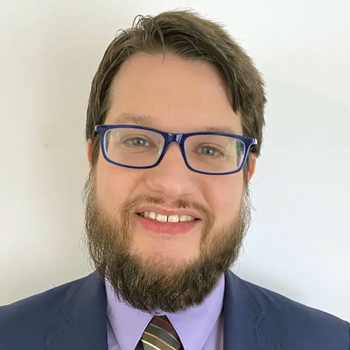
Jonah Comstock is a veteran health tech and digital health reporter. In addition to covering the industry for nearly a decade through articles and podcasts, he is also an oft-seen face at digital health events and on digital health Twitter.
Supercharge your pharma insights: Sign up to pharmaphorum's newsletter for daily updates, weekly roundups, and in-depth analysis across all industry sectors.
Want to go deeper?
Continue your journey with these related reads from across pharmaphorum


Meet Dalton, a new AI-powered drug discovery platform
Claude Science outperforms experts in protein binder task
Anthropic launches Claude Science for pharma researchers
Anthropic AI tool conducts physical scientific experiments

Click on either of the images below for more articles from this edition of Deep Dive: AI 2026