Sandoz on the future of generics and biosimilars in Europe
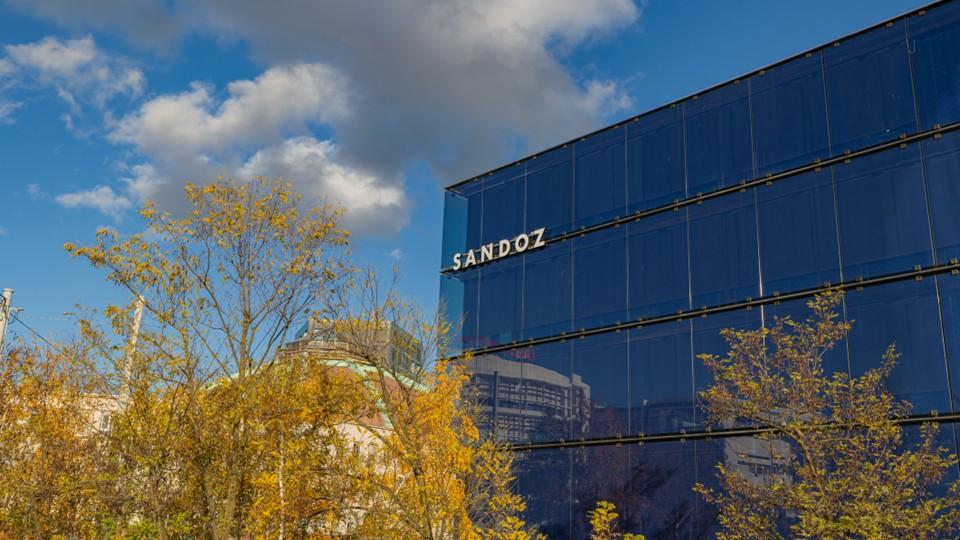
As a significant wave of high-value medicines nears the end of patent protection, attention is quickly turning to how companies can bring more affordable generic and biosimilar alternatives to patients.
Last month, at Reuters Pharma Europe in Barcelona, Deep Dive editor Eloise McLennan sat down with Claire D'Abreu-Hayling, president of generics development and chief scientific officer at Sandoz, to explore the promise of this so-called “golden decade” of patent expiry for the sector, as well as the structural factors that can keep medicines costly for longer, and what this means for patients across Europe.
Can you tell us a little bit about the current biosimilar and generics market in the EU?
Claire D'Abreu-Hayling: In order to originate a product to become a generic or biosimilar, we have to look at the patent landscape. You have the European Patent Commission. You have the US Patent Commission. The innovative strategy is quite comparable. You have the compound patent. Then you have different patents in different areas, whether it's the active ingredient or the manufacturing patent. It can be an indication patent.
One of the approaches that the innovative companies take is to extend the patent. They have patent term extensions, which can delay the ability of a generic company to ultimately be able to get to the market because of the threat of litigation. From a comparison point of view, Europe and the US are pretty much the same with respect to patent treatment.
What we have recognised is that, I think, cost-wise, it's more expensive to litigate patents in the US than it is to litigate patents in the EU. If I give you an example, it takes about $4 million to develop a generic tablet. Initial patent litigation is $3 million. For every patent litigation I have to face, it means that I can't invest in doing a development programme. The strength of the positioning of the patent can actually delay the entry of a generic to the market. Until you get clearance, you're unable to enter the market.
In terms of biosimilars and generics, what are the biggest challenges to getting drugs to patients in a more affordable way?
There are a couple of challenges that we face. Primarily, I think it's the regulatory pathway. We work with regulators globally, and we've worked with them to eliminate the need for phase three studies. That's taken years of getting a product to the patient. Historically, it would take five to eight years to get a biosimilar product to the market because of the two to three-year phase three clinical studies.
Without those phase three clinical studies, we can now get a product to the market in three to five years. That's shaped it quite significantly. I think there are cost considerations. Previously, the development of a biosimilar would take $150 million to $250 million, primarily because of the phase three clinical studies. Without those phase three clinical studies, the costs have come down quite significantly. Regulatory certainly is one of the areas that we need to continue to influence. Then, there's also the patent landscape that we spoke about as well.
That is a factor that can delay because we design our formulations and our product to address the patent landscape. If they keep extending the patent, then you keep chasing a moving target. That is also something that can delay the availability of medicines to the patients. Then, we also need to think about the costs in the markets. What is our commercial model, and how do we work to have an attractive commercial model that allows us to get the product to the patients at the right time?
Where do you see the most promise for generics over the coming year?
You've probably heard Richard Saynor talk about the golden decade. I've been in pharma now for 38 years. I think the next 10 years will have more significant availability of medicines than in history. We have over $650 billion worth of small molecules and biosimilars that are coming off patents in the next 10 years. There are lots of new technologies that are coming through as well.
I think the opportunity for a pharmaceutical company like ourselves is the opportunity to continue to invest in our development and manufacturing capability, continue to invest in our relationships with governments on policy and also regulators in regulatory policies, so that we can bring these attractive medicines to patients a lot earlier and more cost-effectively. There's a lot of opportunity in that space.
What role do you think that generic companies and companies like Sandoz can play in making healthcare systems more sustainable, as well as cheaper?
Recognising that the responsibility doesn't sit in one part of the chain. It's an ecosystem. Being an ecosystem with, again, government, policymakers, payers, patient organisations; because we need to hear the voice of the patient to understand the needs of the patient, to help us shape what medicines we want to bring. Our role as a pharmaceutical company is to ensure affordability, accessibility, and reliable supply.
And through investment, again, as I said, in development and manufacturing, through investment in building relationships, and also investment in challenging the behaviours of parts of the chain that would actually delay the entry of medicines to the market.
I have to say, we are seeing momentum in that space. Sandoz was one of the first companies at the table with the regulatory agencies to discuss regulatory streamlining, which is the removal of phase three studies. We started that dialogue in 2021. In 2026, we are very confident. We've had FDA, EU. We've also had Health Canada. We're working with PMDA, which is the Japanese regulatory agency, and now there's an ICH, which is the International Conference for Harmonisation.
It's the harmonisation of regulatory practices to remove phase three requirements. That has been a very successful move. We've also been working very closely with governments and saying to them, if I look at the antibiotics as an example, it costs more to buy a pack of M&Ms in Germany than it does to buy a pack of antibiotics. We've been working with governments around the Critical Medicines Act to say, fundamentally, if you price these things in such a way that it makes it unattractive for companies to continue to provide them, there will be no access for patients. In some countries, we've been able to get agreement to look at the pricing of these very critical medicines.
What would you like to hear industry talking about more when it comes to the affordability of generics and biosimilars?
It has to be access and it has to be about the patients. There needs to be a stronger patient focus. I think that there needs to be a stronger focus on policy. What are the policies, and how do we harmonise policies across Europe? We have the Euro. Euro is a harmonised currency, but we don't have harmonised policies around what we want to do for the patients or how we look at pricing versus access and affordability. Those are conversations I think need to be had around the table.
This year marks three major milestones for Sandoz – 140 years of heritage, 80 years of antibiotics manufacturing, and 20 years of biosimilars. How would you summarise the impact of those achievements?
The impact of the achievements on the work today is one of excitement. I think the organisation is really very motivated and recognises that we stand on the shoulders of giants. That is such a legacy to deliver up to. It reflects the nature of the organisation itself, the ability to be adaptable, the ability to be responsive to evolving market requirements, and also to continue to invest. When Sandoz started 140 years ago, they were a dye manufacturer. We went from dyes to making medicines. We were the first company to actually register and get approval for a biosimilar in Europe. We've opened doors. We've created industries. The biosimilar industry didn't exist before Sandoz existed.
That spirit of innovation and the ability to really convert that into something solid, a medicine that gets into a patient's hands that meets our purpose of access, I think that's really representative of the milestones that we will be celebrating this year. Our key focus has got to be continued patient access, continued affordability, continued reliability of supply chain, and continued compliance.
What would you like your legacy in Sandoz to be?
I came into Sandoz at the point at which we were separating from Novartis. My legacy has been helping set up a standalone independent pharmaceutical company that is number one with respect to being a provider of affordable medicines globally. The whole theme around access is, I take it personally. I'm fully motivated by knowing that, when a patient puts a product in their hand, my development team has been responsible for that.
The fact that I'm working for a company that has such a huge impact globally, we've got 26 billion dollars’ worth of healthcare savings globally this year, as well as 400 billion dollars’ worth of healthcare impact through the work that we're doing. Knowing that an impact has been made and that I've been a part of setting up the next iteration or next generation for this company will be my legacy, and I'm very proud of that, humbled and proud of that.
About the interviewee
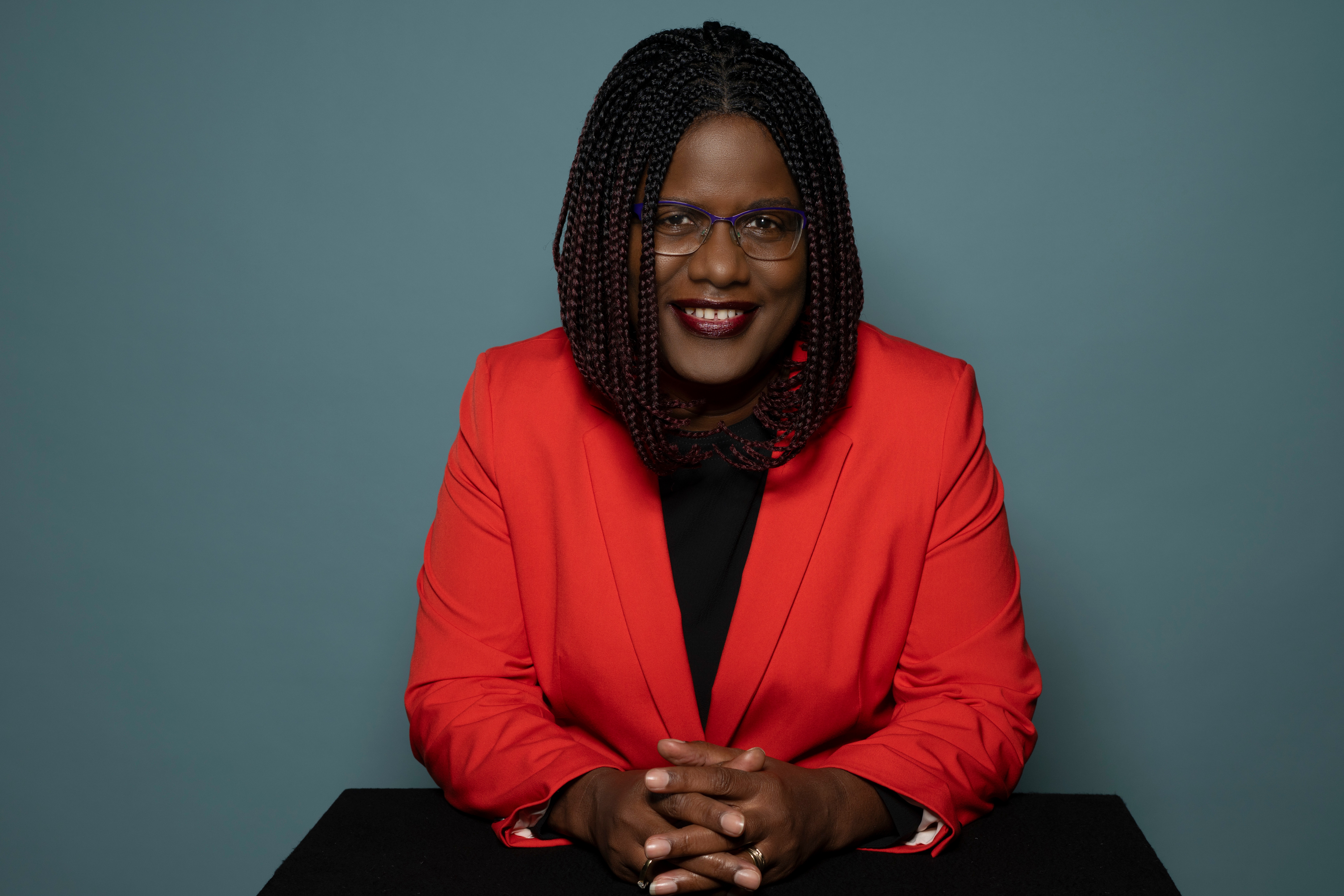
Claire D’Abreu-Hayling is president of generics development & chief scientific officer at Sandoz. She has over 35 years of experience as a pharmaceutical executive working in drug product development and global research and development. She is responsible for the global generics development network, including infrastructure strategy, development capabilities, scientific pipeline execution, and talent management. D’Abreu-Hayling also leads clinical development, patient safety, regulatory affairs, and global device development, enabling both generics and biosimilars development. Before joining Sandoz in 2021, she spent 15 years in senior roles at Teva Pharmaceuticals in the UK. She also worked with Sanofi and GSK early in her career. D’Abreu-Hayling earned a Bachelor of Science degree in Chemistry from the University of the West Indies in Trinidad & Tobago, as well as a Master of Science degree in Pharmaceutical Analysis and Quality Control from the University of London. She is a member of the Board of Directors of Black Phoenix Enterprise Ltd. in the UK.