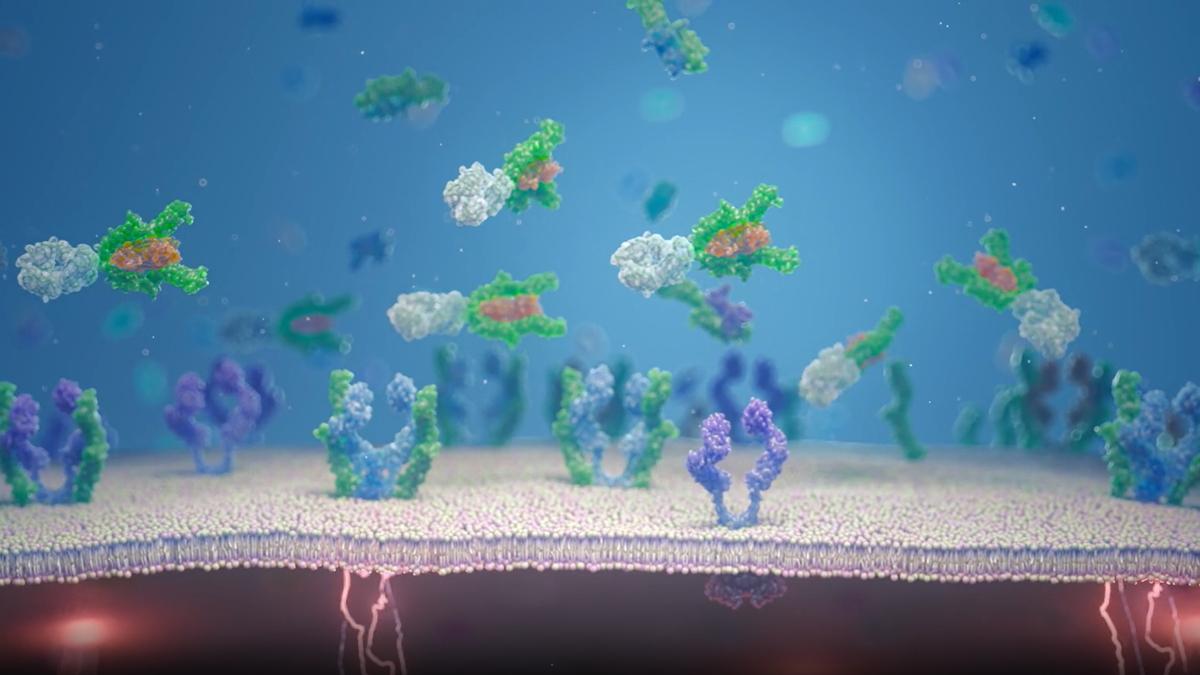
Gravity is an experimental variable pharma has rarely been able to change
What if one of the variables shaping an R&D programme has been present in almost every experiment we have ever run, yet, has almost never been changed?
Pharmaceutical researchers routinely manipulate temperature, pH, oxygen, concentration, pressure, flow, shear, and nutrient availability to understand how a biological or chemical system behaves. Gravity, by contrast, remains effectively fixed at 1 g.
For most pharmaceutical research, that is exactly as it should be. Most experiments should never go to space.
But in selected systems, gravity influences the physics around the biology or molecule: sedimentation, buoyancy-driven convection, mass transport, hydrostatic effects, and mechanical loading. In those cases, changing gravity can become scientifically useful - not because space is inherently better, but because it is different.
The question is therefore not whether pharma can do R&D in space. It is whether changing gravity can answer a question that conventional terrestrial experiments cannot answer as clearly.
Start on Earth
Any serious altered-gravity programme should begin with an Earth-first principle.
Define the pharmaceutical problem. Establish the terrestrial baseline. Understand the assay or analytical method. Characterise normal variability. Test the mechanism using conventional tools. Where useful, use clinostats, Random Positioning Machines, centrifugation, modelling, or other ground-based approaches to ask whether gravity sensitivity is worth pursuing.
Only then should sustained microgravity enter the discussion. Ground analogues are valuable screening tools, but they are not equivalent to orbital microgravity and can introduce their own shear and acceleration artefacts. Their role should be to reduce uncertainty, not to create a shortcut around experimental discipline.1
A flight experiment should therefore be the consequence of a good scientific question, not the starting point for one.
Three reasons to change gravity
A useful way to assess a candidate experiment is to ask whether changing gravity can do one of three things.
Can it accelerate the appearance of a phenomenon that is otherwise slow or difficult to observe?
Can it reveal a mechanism obscured by sedimentation, convection, mechanical loading, or other gravity-dependent effects?
Can it enable a structure, interaction, or process that is difficult to obtain under comparable terrestrial conditions?
If the answer to all three is no, there may be little reason to fly. Microgravity should have to earn its place in the R&D programme.
The pembrolizumab lesson
The Merck pembrolizumab crystallisation work is a particularly useful example because its relevance is not simply that an antibody was crystallised in orbit.2
In a 2019 peer-reviewed study, pembrolizumab samples crystallised in microgravity produced a homogeneous, monomodal particle-size distribution centred around 39 micrometres, while ground controls produced a heterogeneous bimodal distribution around 13 and 102 micrometres. The flight suspensions were also less viscous and sedimented more uniformly.2
What happened next is more important.
The researchers used what they learned about sedimentation and temperature gradients to reproduce more uniform crystalline suspensions on Earth. In January 2026, NASA reported that the space-station work had yielded early insights regarding particle structure and size relevant to development of a new subcutaneous formulation of pembrolizumab, approved by the FDA the previous September.3
That is the model I find compelling: learn under microgravity, then translate the knowledge back into terrestrial pharmaceutical development. The most valuable product returning from orbit may not be the sample. It may be process knowledge.
Biology without the hype
The same principle can apply to biological models.
Human organoids are already being used to model aspects of disease that are difficult to reproduce in simpler systems. Microgravity adds another controlled perturbation, changing mechanical loading and the physical environment in which cells organise.
In August 2026, the ISS National Laboratory reported that brain-organoid research conducted aboard the ISS had contributed to work leading to a clinical trial of a potential Rett syndrome therapy, while related programmes are exploring Parkinson's disease, multiple sclerosis, and Alzheimer's disease.4
The correct conclusion is not that "space cures disease". It is that an altered environment can, in selected models, expose biological behaviour that gives researchers another way to interrogate a mechanism. That distinction matters if this field is to remain scientifically credible.
From interesting data to decision-grade data
Spaceflight also introduces confounding variables. Samples experience launch acceleration and vibration, radiation, different handling and storage conditions, operational delays, and return logistics.
A ground control alone, therefore, does not always isolate gravity. Where technically possible, an in-flight 1 g centrifuge control is particularly valuable because it allows samples to share much of the same flight environment while differing in gravitational exposure. NASA has used this architecture precisely to distinguish microgravity effects from other aspects of spaceflight.5
The standard should not be "something interesting happened in space".
The questions should be: What changed? Against which control? Was the sample history documented? Were the analytical endpoints predefined? Can the result be compared with the terrestrial dataset? Does the finding support the original mechanism?
I use "decision-grade data" as a practical concept, not a regulatory classification: evidence robust enough for the R&D decision it is intended to support.
The answer, not the destination
Microgravity does not need to become a routine step in pharmaceutical development to become valuable.
Its value will come from the relatively small number of problems in which gravity-dependent physics or biology materially limit what we can understand at 1 g.
For those problems, the logic should remain simple: validate on Earth, change gravity only when the science justifies it, and translate the result back to Earth.
The rocket is transportation. Microgravity is an experimental condition.
The valuable product is the answer.
References
- Wadhwa A, Bruun L, Petersen JCG, et al. Guidelines for use of the random positioning machine as a reduced-gravity analog. Scientific Reports. 2026;16:10012. doi:10.1038/s41598-026-39316-7
- Reichert P, Prosise W, Fischmann TO, et al. Pembrolizumab microgravity crystallization experimentation. npj Microgravity. 2019;5:28. doi:10.1038/s41526-019-0090-3
- NASA International Space Station Research Communications Team. Space Station Research Informs New FDA-Approved Cancer Therapy. 6 January 2026. NASA
- ISS National Laboratory. Brain Organoid Studies on the ISS Move Closer to New Treatments. 18 August 2026. ISS National Laboratory
- NASA Open Science Data Repository. OS-808 / MVP-Fly-01: in-flight microgravity and 1g centrifuge control architecture. NASA OSDR
About the author
 Paulo Pinheiro is managing director of the Space Systems Innovation Platform (SSIP), a Swiss non-profit platform connecting industry, research institutions, and space infrastructure across microgravity life sciences and advanced R&D. His work focuses on building Earth-first collaborations in which altered gravity is used only where it can add meaningful experimental value. SSIP works within a Swiss ecosystem that includes HSLU/BIOTESC and expertise in preparing and operating biological microgravity experiments.