Go north: Life sciences excellence shines bright in Sweden
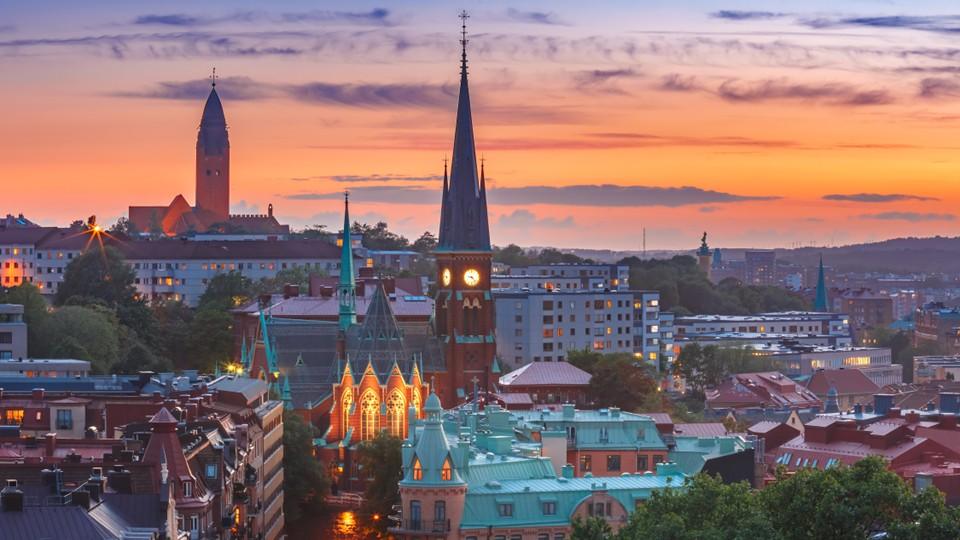
While last month saw EHA 2026 take place in Stockholm, Sweden, the sum of the country’s life sciences parts exists well beyond the capital’s bounds as well.
According to Swedish Bio, the life sciences industry in Sweden accounts for approximately 10% of the country’s total exports, or net sales of 508 billion SEK, “with value creation primarily focused on international markets.” And Gothenburg is the country’s leading region in conducting R&D in the business sector; a hubspot for innovation, it is at the centre of scientific and technical work.
Indeed, Gothenburg is Sweden's fastest-growing and second largest city region. Today, it accounts for more than a third of Sweden’s total business R&D expenditure, making West Sweden one of Europe’s leading innovation regions. Additionally, collaboration and close cooperation between business, academia, and the public sector are long-standing and defining characteristics.
Life sciences development with a Scandinavian twist
Sweden and Swedish companies have featured frequently in life sciences news in recent months and years. Back in December 2025, Sobi hit the acquisition trail with a deal to buy Arthrosi Therapeutics for up to $1.5 billion, adding a drug in late-stage clinical testing for gout to the Stockholm-based company’s franchise, which also includes NASP (nano-encapsulated sirolimus plus pegadricase; formerly SEL-212), partnered with Selecta Biosciences.
In November 2025, the Swedish government announced that it is investing 95 million SEK over five years in a new sustainability initiative – a platform intended to help Sweden reduce its climate emissions and strengthen the country’s competitiveness. The platform will be headquartered in Södertälje and have global reach in partnership with the government, AstraZeneca, Scania, and RISE, among others.
And back in 2024, BIO-Europe marked its 30th anniversary by holding the November conference in Stockholm, given how the Nordic region prides itself on developing new therapies, technologies, medicines, and treatments through strong collaborations, making it the perfect setting for the discovery and dealmaking that takes place at the event.
More recently, Hansa Biopharma’s CEO, Renée Aguiar-Lucander, was named one of Sweden’s Most Influential Business Women of 2026 in May by Dagens industri. Hansa is a commercial-stage biopharmaceutical company developing and commercialising novel immunomodulatory therapies to transform care for patients with acute or complex immune disorders. The nomination recognises leaders with significant influence over the development, competitiveness, and future of Swedish business.
Elsewhere, Swedish biotech Dicot Pharma had a very good June, granted a new patent in Japan for its active substance, LIB-01 – a new type of erectile dysfunction (ED) treatment, and the first novel drug class since Viagra launched in 1998 – while by the close of the month the company received clearance from the US Food and Drug Administration (FDA) to initiate the first part (Part I) of the Phase 2b study. LIB-01 works through a different Mechanism of Action (MoA) than the PDE5 inhibitor class, and could ‘revolutionise’ how millions of men that cannot take Viagra or Cialis are treated.
And at a time when blood tests have proved to be a promising and hotly discussed tool for detecting and monitoring cancer, researchers at Chalmers University of Technology and the University of Gothenburg have developed a new method – BayesCNA – that makes it possible to analyse samples containing as little as 5% cancer DNA in the blood, compared with the 15–20% currently required. The research ‘Sensitive detection of copy number alterations in low-pass liquid biopsy sequencing data’ has been published in the journal Briefings in Bioinformatics. The study was funded by the Swedish Research Council and Chalmers’ Health Engineering Area of Advance.
Notably, however – and also back in May this year – Thermo Fisher Scientific opened up their new biolaboratory in Gothenburg. The bioanalytical lab, located in GoCo Health Innovation City, will serve pharmaceutical and biotech customers with advanced laboratory services and leading-edge instrumentation across all phases of pharmaceutical development to help deliver life-changing medicines to patients worldwide.
For find out more, pharmaphorum spoke with Thermo Fisher Scientific's Leon Wyszkowski, president of the Analytical Services Division, and Magnus Bjӧrsne, head of the AstraZeneca BioVenture Innovation Unit.
Accelerating global health innovation
The 29,000-square-foot laboratory is adjacent to the Gothenburg strategic research and development site of AstraZeneca, which has been instrumental in the development of GoCo Health Innovation City. Steptura, a joint real estate company among Next Step Group, Balder, and Vectura Fastigheter, designed the life sciences and global research cluster in Sweden to attract researchers and entrepreneurs from around the world and to accelerate health innovation.
“We are thrilled to expand our bioanalytical footprint in Europe – in the collaborative and innovative environment of GoCo Health Innovation City – as we deploy the most technologically advanced systems to develop assays supporting early discovery and subsequently apply them for testing of clinical trial samples across every stage of drug development for our customers,” said Wyszkowski. “Our presence in Sweden will support our customers with accurate and timely data, empowering them to make informed decisions, as we advance Thermo Fisher’s Mission to enable our customers to make the world healthier, cleaner, and safer.”
“The European footprint isn't just there to support European innovation,” continued Wyszkowski. “It is there to support global innovators because, more and more, as logistics is more complicated, as trials get more complex, customers expect us to be able to truly be a global organisation with a significant footprint in the US, in Europe, in China, and in APAC. So, this investment benefits the global life sciences ecosystem overall.”
Thermo Fisher Scientific’s decision to expand in Gothenburg – with the specialised knowledge they bring to the region – will significantly enhance the already strong local scientific community, and drive innovation forward within life sciences. It is also part of a new R&D partnership between the AstraZeneca BioVenture Hub and Thermo Fisher’s PPD clinical research business. Collaborative projects will focus initially on chromatography, molecular genomics, and proteomics.
“This is a unique opportunity to co-locate with AstraZeneca scientists, driving collaborative innovation, strengthening the science ecosystem, and driving value generation for all collaborators, giving easy access to cutting edge technologies for emerging life sciences and biotech companies, as well as academic groups,” said Wyszkowski.
“When two global life sciences leaders join forces in an open innovation environment, truly exceptional conditions for breakthrough discovery and progress are created,” added Björsne.
Valuable collaborations driving growth for all
The AstraZeneca BioVentureHub is an open innovation platform, offering an inside track to AstraZeneca’s scientific expertise, world-class infrastructure, and facilities in order to promote innovation by connecting, catalysing, and nurturing the right parties to form valuable collaborations that drive growth for all involved.
“From the outset, when we started the BioVenture Hub, we had a strategy for the portfolio, that it should be non-competitive and it should be synergistic,” explained Björsne. “What we wanted to do with the BioVenture Hub was basically provide access to our insights and our knowledge and our infrastructure to accelerate innovation that potentially could become relevant to AstraZeneca.”
After all, innovation in pharma today looks different than it did a decade ago.
“Then, it was about pills or biologics that we provide to patients; today, innovation is very often a combination of what we are experts on, i.e., making medicines, but you connect it to digital devices, you connect it to sensors, you connect it to compute infrastructure,” said Björsne. “So, the whole definition of innovation is much wider today than it used to be […] and that becomes very, very challenging. By mixing five different industry verticals into the same physical environment, we blend deeptech with digital and AI, with medtech, with diagnostics, and with sustainability technologies, and we create a portfolio where none of these companies actually are in competition with each other.”
Three Cs and a culture of sharing
That paves the way for what they term ‘Dare2Share openness’. And, 12 years later, they have brought in close to 70 companies from all over the globe. AstraZeneca holds no ownership or innovation rights.
“It is when people meet, and when people with different perspectives discuss, that new ideas come up,” stated Björsne. “In Europe, we often talk about the inability of European start-ups to grow, and the discussion is very often tilted towards that we lack capital. I tend to disagree because good companies will get access to capital. Rather, I want to discuss this in the perspective of three different C's. It's capital, it’s capabilities, and it’s competence. What we try to do in the hub is to provide capabilities and competence. If that is in place, it will attract capital.”
A trio of considerations were also very important to Thermo Fisher Scientific in selecting which country to innovate in.
“One, we needed a country that was either within the European Union or very well connected to [it], because part of the challenge that we have in this business is, while it's focused on analytical testing, a big component of it is logistics,” explained Wyszkowski. “We need to bring patient samples from clinical sites all over Europe into this laboratory. Second, we need to be able to have very consistent, transparent regulatory regulations that, to ensure compliance, are consistent in a row for us to be able to have long-term planning. And again, Sweden checked those two boxes.”
“The third one, which is probably the most important one,” he continued, “we need talent. This is a high science business. We need scientists to be able to run the assays and, of course, all the supporting functions to run a complex regulated laboratory. And that's also what we found quite attractive in terms of just how Gothenburg, and Sweden, has been invested in, being able to drive and increase the biotech and life sciences ecosystem within the country.”
Not bad for a country with a population smaller than London, UK.
“If you look at the corporations that come out of here, you can start with IKEA, Ericsson, Volvo, Spotify […] to do that with a population of 10 million people, it forces us to work with resources in an alternative way, because they are a scarcity,” said Björsne. “We don't have a surplus of capacity, neither with respect to knowledge nor infrastructure. So, we are very used to sharing what exists in order to help each other. I think that is the culture that we have tried to embed in this ecosystem. And culture is something that is actually hard to replicate; that is what makes this really unique, I think.”
Following this interview, pharmaphorum was invited to Gothenburg, Sweden by Business Region Göteborg AB and 59 North to discover more. Stay tuned for further interviews and editorial overviews of specific life sciences developments in the region - coming soon.