Fighting AMR with AI starts with data we can trust
World AMR Awareness Week (November 18–24) asks the health community to take stock of where the fight against drug-resistant infections stands, and the picture is sobering. According to the World Health Organization (WHO), one in six common bacterial infections worldwide is now resistant to antibiotics, and resistance rose in more than 40% of the drug-and-bacteria combinations WHO tracked between 2018 and 2023. Drug-resistant infections are now associated with an estimated 4.71 million deaths each year, and that number is predicted to rise based on current trends.
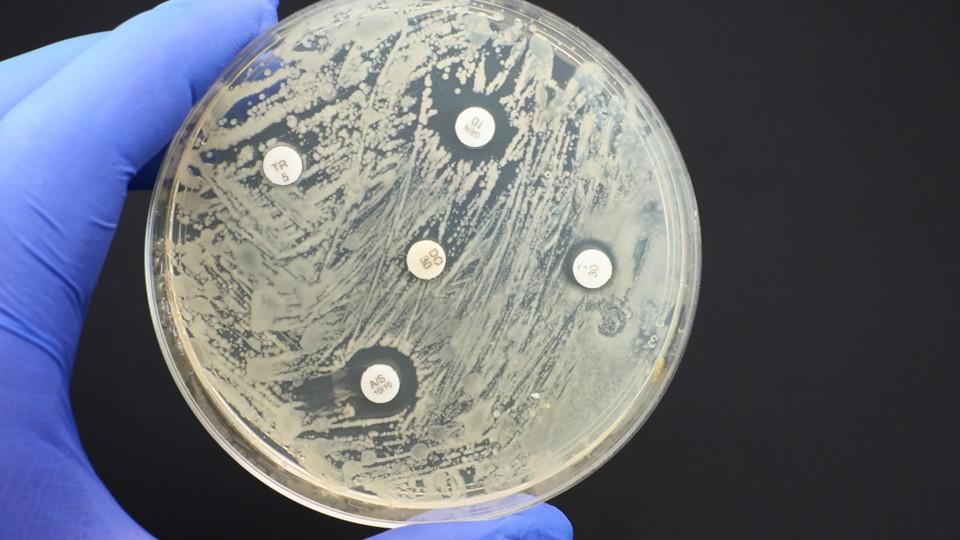
A familiar clinical bottleneck is at the core of those numbers. Conventional antimicrobial susceptibility testing (AST) involves growing the organism and exposing it to a panel of drugs, a process that can take two to four days. Meanwhile, clinicians, in an effort to address serious infections, often prescribe broad-spectrum antibiotics. This, in turn, creates exposure that drives resistance.
Artificial intelligence (AI) has the potential to offer a way out of that loop. Models that read a pathogen’s genome and predict which drugs will work could return actionable answers in hours, rather than days. But no model architecture, however sophisticated, can compensate for weaknesses in the data used to train and test it, and that is where the field is experiencing significant hurdles.
AI models in AMR R&D
Two independent reviews published this year, a EUCAST subcommittee report in June and a roadmap from the Align Foundation and Google DeepMind, point to the same fundamental problem: the industry lacks consistent, trustworthy data that pair a microbe’s DNA with laboratory proof of how it actually responds to drugs. As the Align roadmap puts it, existing data is “often fragmented, poorly standardised, and not comparable across labs.”
Looking more closely at the data behind today’s models reveals several recurring gaps. The first is whether the underlying records can be trusted. In public repositories, an organism’s genome frequently comes from one laboratory and its susceptibility result from another, with no guarantee that both describe the same physical sample. Even a single, widely used reference strain, passed from lab to lab for decades, has been shown to differ in both its genome and its behaviour across copies that all carry the same name. Contamination further compounds the issue. A 2026 re-analysis published in Nature Communications found that 134 of 182 sequencing runs used to train a model of resistance gene transfer contained reads from a different bacterial family.
What the data omits can be just as problematic. Susceptible strains, the ones in which a drug did exactly what it should, are often not recorded or retained, even though a model cannot learn to recognise resistance without equally solid examples of its absence. Further, a pathogen-drug pair that was simply never tested is routinely treated as a negative result, which may not be accurate.
The hardest cases are in the “gray zone”, which refers to isolates that are neither clearly susceptible nor clearly resistant. Their minimum inhibitory concentrations (MICs), the lowest drug concentration that stops visible bacterial growth, sit close to the clinical breakpoints used to decide whether a given drug is likely to work. Resistance in these organisms may be partial, or it may appear only under certain conditions. This is where AI models perform with the least fidelity and where treatment decisions are hardest. However, such isolates are underrepresented in public datasets, which is why EUCAST recommends that training collections include a high proportion of them.
Even with well-paired and representative data, biology adds another layer of complexity. Genes don’t always tell the whole story. A resistance gene can be truncated, interrupted, or simply switched off, while some resistance emerges only from many genes acting together. Detecting whether a known gene is present is often not enough to predict how an organism will behave.
A third challenge is measuring progress, because the industry still lacks a common yardstick for evaluating model performance. One recent benchmarking study found that randomly splitting data into training and test sets inflated apparent accuracy by as much as 31 percentage points compared with splits that account for how closely related the strains are. Without a shared, trusted test set and transparent methods, one team’s “90% accurate” cannot be meaningfully compared with another’s, and clinicians and regulators have little basis for confidence.
Structural biology shows what can become possible when AI is built on standardised, experimentally validated reference data. AlphaFold, the AI system developed by Google DeepMind to predict a protein’s three-dimensional shape from its amino acid sequence, cracked a problem that had challenged scientists for decades and earned its creators a share of the 2024 Nobel Prize in Chemistry. Its success rested on more than clever engineering. The model learned from the Protein Data Bank, where decades of deposition rules, validation, and expert review had produced a trustworthy body of experimentally determined structures. AMR prediction has no equivalent. Instead, each development team pays its own “curation tax”, privately cleaning public data in ways that are rarely audited or reproducible. A pipeline can be perfectly reproducible and still be biologically wrong if its inputs are mislabelled.
Three things would help address these gaps and provide a stronger foundation for AI-driven AMR prediction.
-
Authenticated reference materials.
Researchers need access to well-characterised bacterial strains that can be obtained, retested, and traced to a verified source. Authentication means confirming a strain’s identity, purity, and key characteristics through both genetic and phenotypic testing, and documenting its history from the original deposit onward. A physical isolate that any laboratory can obtain turns a data point into something that can be independently checked. If two groups get different results, they can return to the same material to find out why, rather than debating records of uncertain origin. Clinical laboratories already rely on quality-control strains with established MIC ranges to keep routine testing consistent, and AI development needs the same kind of anchor.
-
Paired genomic and susceptibility data generated from the same samples using standardised laboratory methods.
EUCAST recommends reference broth microdilution performed to ISO standards, with MIC values preferred over simple susceptible, intermediate, or resistant categories. When genome and phenotype come from the same specimen under a single protocol, label integrity is built in by design, rather than assumed.
-
Shared, community-developed benchmarks.
Common evaluation datasets should include verified susceptible isolates, borderline strains, and well-characterised cases where genotype and phenotype disagree, as well as fixed, published data splits. They should be guided by a broad mix of public, private, and academic stakeholders, so that all organisations contribute to what success looks like. Early efforts to build such a resource are now under way, and their value will depend on broad participation.
Consistent reference data is the foundation for external quality assessment of genome-based antimicrobial susceptibility testing, which EUCAST has called for, and ultimately for a credible regulatory pathway for sequencing-based diagnostics. Clinicians will not act on a prediction, and accreditors will not endorse one until the evidence behind it can be traced and defended.
This World AMR Awareness Week, the conversation about AI in infectious disease should move beyond what models can do and focus more closely on what they are built on. The algorithms are ready to help. The open question is whether we will give them data worthy of the patients who will depend on them.
About the authors
 Jonathan Jacobs, PhD, is senior director of bioinformatics at ATCC. He leads ATCC’s Sequencing & Bioinformatics Center and the development of the ATCC Genome Portal. He has over 20 years of experience in molecular genetics, bioinformatics, and microbial genomics, and he has worked throughout his career at the interface of academia, government, and industry. He holds a joint Research Professor appointment at Syracuse University’s Forensic & National Security Sciences Institute in support of microbial forensics graduate student training and research, and he actively collaborates with several US public health laboratories involved in pathogen genomics research and surveillance. Dr Jacobs is also certified in Product Management from Pragmatic Institute, and he has led successful commercial launches of several bioinformatics products into the market.
 Shahin Ali, PhD, is senior scientist in the collections group at ATCC, where he supports the acquisition and characterisation of microbial resources that advance global research and innovation. He has more than 13 years of experience in microbiology, fungal biology, and plant-pathogen interactions, with expertise in fungal identification, genomics, and microbial diversity. Prior to joining ATCC, Dr Ali was a researcher at the USDA-ARS at the Beltsville Agricultural Research Center. He earned his PhD from University College Dublin, Ireland, in 2012.