Sanofi's type 1 diabetes-delaying drug cleared for NHS use
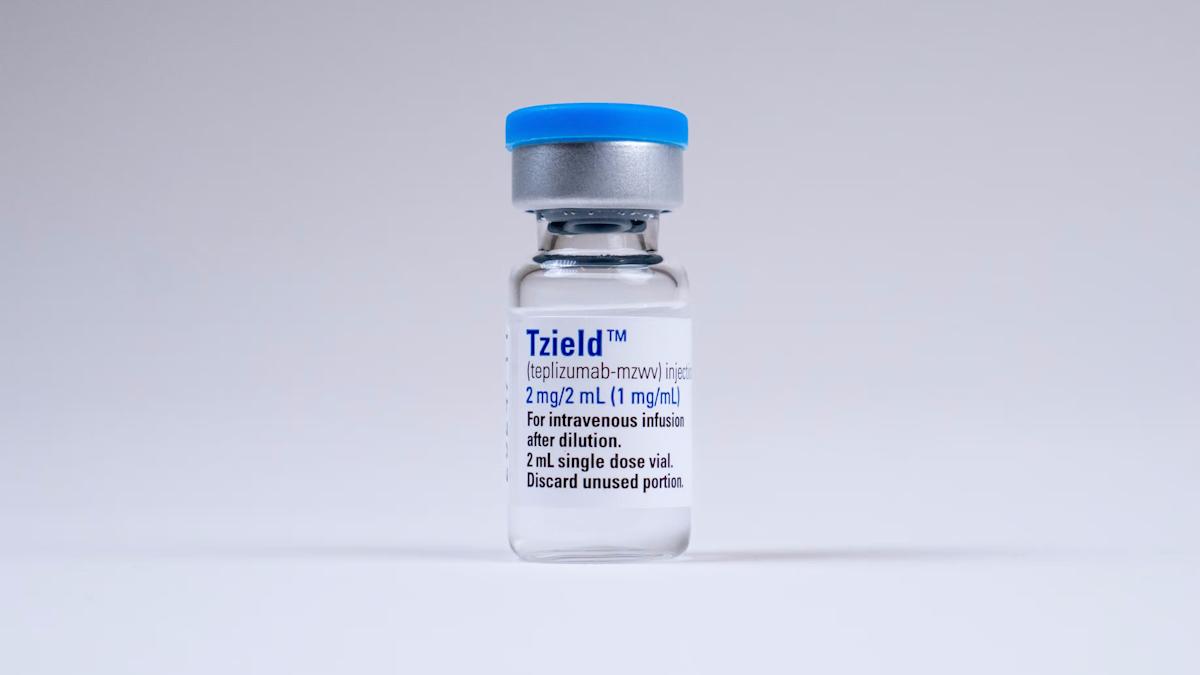
In a landmark decision for people with early type 1 diabetes (T1D) in the UK, Sanofi's first-of-its-kind therapy Tzield, which can delay progression of the disease, has been given a green light for use by the NHS.
Reimbursement authority NICE has published final draft guidance that recommends anti-CD3 antibody Tzield (teplizumab) for T1D patients in England and Wales, aged eight and over, who are in the early, presymptomatic stage 2 of the disease.
The news has been hailed by patient advocacy group Diabetes UK, which said it marks "the start of a new era" in T1D treatment.
Stage 1 T1D is when the immune system starts attacking insulin-producing cells in the body, while stage 2 marks the point at which blood glucose levels start to become abnormal, but patients still have no symptoms. In stage 3, clinical symptoms like excessive thirst, frequent urination, weight loss, and fatigue start to occur.
In clinical trials, a one-off, two-week course of daily infusions of Tzield – which works by resetting the immune system to dampen down its attacks on insulin-producing beta cells in the pancreas – delayed progression to stage 3 T1D requiring insulin treatment by two to three years.
NICE said that delay gives people with T1D valuable extra time before "taking on the demands of lifelong diabetes management," and also gives younger patients more time to reach key developmental milestones before that point.
The health technology assessment (HRA) organisation has estimated that around 1,100 people could be eligible for teplizumab in the first year, dropping to around 820 patients in subsequent years.
"For the first time in 100 years, we are moving beyond insulin, with a medicine that targets the root cause of the condition," said Dr Elizabeth Robertson, director of research and clinical at Diabetes UK.
"Detecting type 1 diabetes early, before symptoms appear, is key to unlocking these benefits; and our focus now is ensuring fair and equitable access for everyone who is eligible."
Diabetes UK has co-funded two screening trials, ELSA and T1DRA, in children aged two and over and in adults, respectively, which are investigating the use of fingerprick testing to identify people with T1D. Positive screening results have to be confirmed with an autoantibody test.
Elena Boichak, from Newbury, discovered her son Dima had stage 2 T1D after signing him up to the ELSA screening study when he was nine years old. She said: "As a mother, the most valuable thing teplizumab has given us is time. Every month and every year that Dima can continue being a child without insulin injections, carb counting, and the daily burden of type 1 diabetes is incredibly precious."
At the moment, the Scottish Medicines Consortium does not have an appraisal of Tzield on the go, so, there is likely to be a disparity in access within the UK for the time being. In Northern Ireland, access will depend on a review and adoption of NICE guidance.
Sanofi acquired Tzield when it bought Provention Bio for $2.9 billion in 2023, a few months after the drug was first approved by the FDA. Sales growth in the US has been slow, reflecting the need for screening and changes in clinical practice and a high cost – with a list price of around $200,000 – that requires prior authorisation by many insurers. In the UK, the list price is more than £10,000 per vial, but it will be provided to the NHS at a confidential discount.
The product brought in around €63 million last year, and Sanofi is expecting to see an uptick in momentum thanks to two subsequent FDA approvals, one in children as young as one with stage 2 T1D, and a second to delay the decline in endogenous insulin production in children aged eight to 17 years recently diagnosed with stage 3 T1D.