Roche two for two with breast cancer approval for Wilserdly
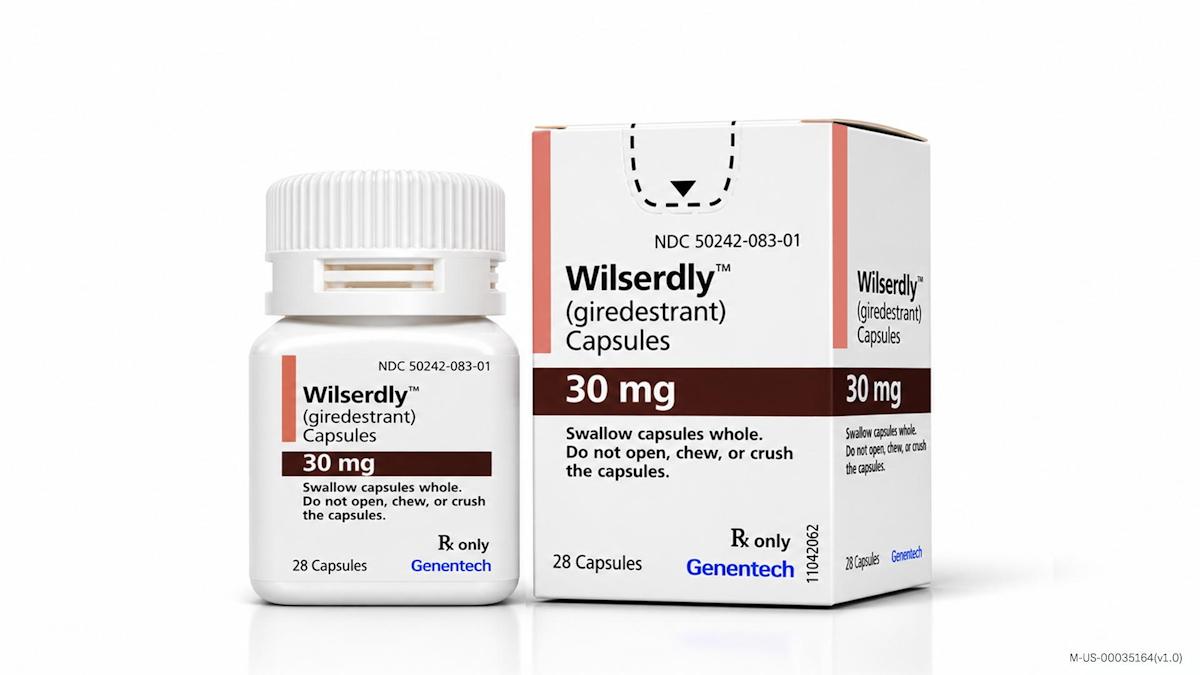
With the ink barely dry on the FDA's first approval of Roche's oral SERD Wilserdly for one breast cancer indication, the company is already celebrating a second.
The US regulator cleared Wilserdly (giredestrant) for early-stage HR-positive, HER2-negative breast cancer, making it the first new hormonal therapy for this form in two decades, a week after greenlighting the drug as a combination second-line treatment for patients with advanced disease.
Roche has suggested that Wilserdly could become its top-selling drug of all time, outselling its current bestseller Ocrevus (ocrelizumab) for multiple sclerosis, while some analysts have predicted peak annual sales could exceed $14 billion. It has set a list price of around $22,500 per month for the new drug.
Specifically, the new approval covers use of Wilserdly as once-daily, oral therapy for patients with stage 1, 2 or 3 HR-positive, HER2-negative breast cancer – the most common subtype of the disease – who are at intermediate-to-high risk of recurrence after surgery.
According to the FDA, approximately 322,000 cases of breast cancer in women and 2,700 in men will be diagnosed in 2026, of which around 70% fall into the HR+/HER2- category. Meanwhile, more than 90% are typically stage 1, 2 or 3, i.e. localised or regional tumours.
Wilserdly is the first drug in the oral SERD category to get approval in this adjuvant setting, leapfrogging its rivals, which are currently AstraZeneca's Etcamah (camizestrant) – recently cleared for first-line use in this type of cancer – as well as Menarini/Stemline's Orserdu (elacestrant) and Eli Lilly's Inluriyo (imlunestrant), which are indicated for second-line use.
The approval is based on the lidERA trial, which showed that Wilserdly achieved a 30% reduction in invasive disease-free survival (iDFS) compared to standard-of-care endocrine therapy, with a trend towards improved overall survival (OS).
At three years, 92.4% of patients taking Wilserdly were alive and free of invasive breast cancer, compared with 89.6% of those taking standard hormone therapy.
"By addressing a critical need in early-stage disease, where the chance for cure is greatest, Wilserdly has the potential to establish an important new standard of care for patients and physicians," commented Levi Garraway, Roche's chief medical officer.
It's worth noting that two CDK4/6 inhibitors – Eli Lilly's Verzenio (abemaciclib) and Novartis' Kisqali (ribociclib) – have also been approved for adjuvant use in HR+/HER2- breast cancer and outperformed endocrine therapy in their phase 3 trials.
Roche said that additional regulatory filings and development activities are underway in markets outside the US, with European filings expected next year.