Roche breast cancer drug Itovebi turned down by NICE
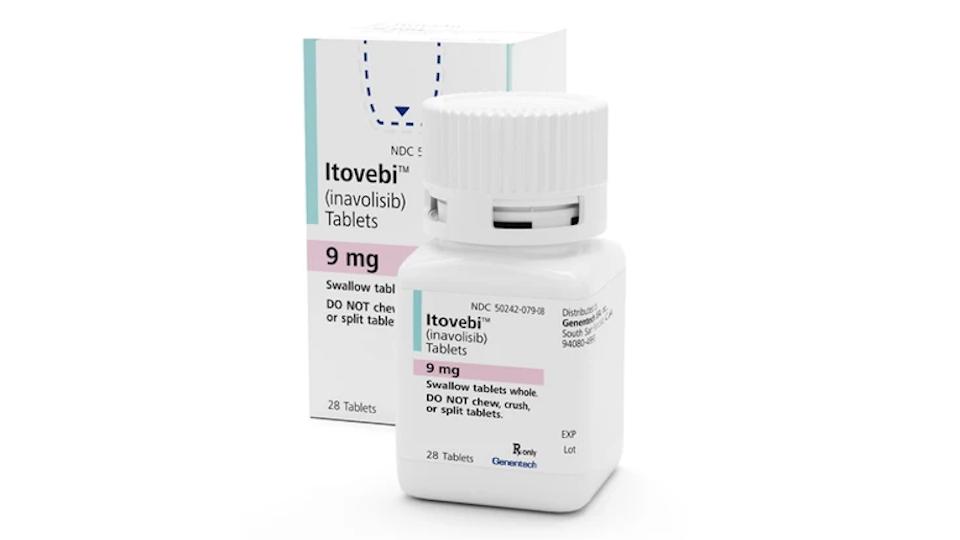
Reimbursement authority NICE has turned down routine NHS use of Roche's Itovebi for a specific form of breast cancer, a decision the company has described as "devastating."
In final draft guidance published this morning, NICE said that it would not recommend Itovebi (inavolisib) as a combination regimen for HR-positive, HER2-negative, PIK3CA-mutated, locally advanced or metastatic breast cancer, following recurrence on or within 12 months of completing adjuvant endocrine treatment.
The decision follows in the footsteps of its counterpart in Scotland, the SMC, which rejected the regimen in guidance issued last week.
PI3K inhibitor Itovebi was approved in the UK in November 2025 for this indication, as a combination with Pfizer's CDK4/6 inhibitor Ibrance (palbociclib) and the generic anti-oestrogen drug fulvestrant, on the strength of the phase 3 INAVO120 study.
In the study, the triple regimen reduced the risk of death by 33%, with a median overall survival of 34 months compared to 27 months in the control group, compared to dual therapy with Ibrance and fulvestrant. The regimen also more than doubled median progression-free survival to 17 months from 7 months.
In its guidance, NICE said that "the available evidence does not suggest that inavolisib plus palbociclib and fulvestrant is value for money in this population" compared to dual therapy with CDK4/6 inhibitors and fulvestrant.
Its appraisal committee cited uncertainties in the INAVO120 data, including that it was unclear if prior adjuvant exposure to CDK4/6 inhibitors – which can occur in current NHS practice – would affect the efficacy of the Itovebi regimen. They also said that testing for PIK3CA tends to occur later in the treatment pathway at present, and moving that forward would require "an additional step."
Those uncertainties meant that cost-effectiveness estimates for the triple regimen are above even the recently increased range considered an effective use of NHS resources, according to the guidance document.
"This negative guidance from NICE, following a second appraisal committee meeting, is a devastating outcome for this group of metastatic breast cancer patients, denying them a vital treatment option," said Richard Eaton, UK lead for breast cancer at Roche Products Ltd.
He pointed out that Itovebi is already routinely commissioned for this indication in comparable European countries such as Germany, Spain, Italy, and Austria, adding: "Patients in England and Wales deserve parity with Europe."
Combination regimen problem
Responding to the SMD decision, the Breast Cancer NOW charity said the decision "highlights the challenges faced in getting combination treatments approved on cost-effectiveness grounds," particularly when they involve more than one branded drug.
In these cases, it's not uncommon for the older brand to already be priced near to NICE’s maximum willingness-to-pay threshold, leaving little space for the new drug, pointed out Simon Eayrs, director of market access at Roche Products Ltd.
"This rigid system penalises innovation that delays disease progression and prolongs patient survival, and prevents the essential recouping of investment needed to support the next round of R&D," added Eayrs. "Without urgent reform, cancer patients in England and Wales will continue to miss out on the latest treatments."
Testing gap
Breast Cancer NOW also said it was concerned about access to the genomic testing needed to facilitate access to targeted medicines like Itovebi, pointing out that a lack of testing is blocking access to other recently approved treatments, including AstraZeneca's AKT inhibitor Truqap (capivasertib) and Menarini's oral SERD Korserdu (elacestrant).
According to Eaton, NICE's appraisal process does not integrate wider societal perspectives or evaluate the true economic value of innovative medicines.
"If the profound benefits of delaying disease progression, such as enabling patients and caregivers to maintain independence and remain in the workforce, were formally considered in NICE technology appraisals, we believe this regimen would be deemed cost-effective," he asserted.
"This outcome underscores the urgent need to modernise how the UK values innovative medicines."