Pay offer rejected as ICR researchers continue strike action
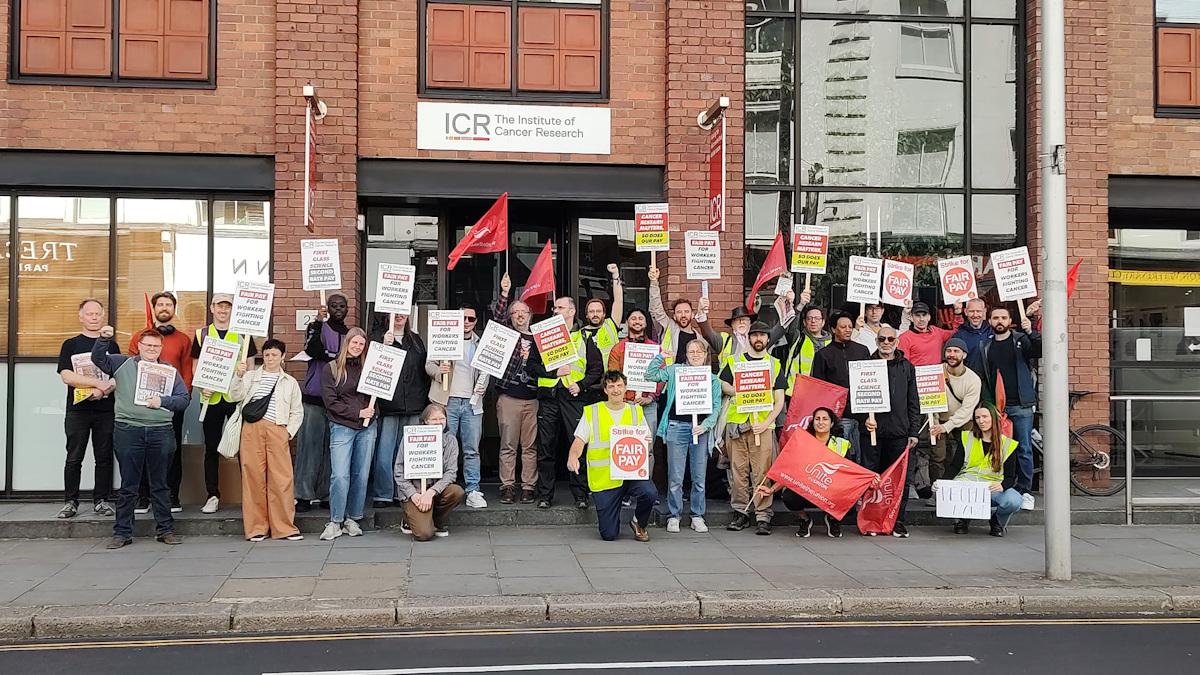
Hundreds of researchers at the Institute of Cancer Research (ICR) in London have held historic strikes across sites in Sutton and Chelsea over pay and working conditions, claiming some are missing meals and struggling with bills due to low pay.
The first strikes in the 117-year history of the ICR – which operates as a public research university and a college of the University of London – come after a 4% pay increase offer from management that has been dismissed by the Unite trade union as inadequate and will do little to address many of its members "languishing barely above the London Living Wage."
The union claims the ICR is operating a "low pay culture" while sitting on large cash reserves of more than £500 million (around $670 million) – with £37 million that remains unallocated – and is paying "whopping six-figure salaries" to managers, including more than £400,000 for chief executive Prof Kristian Helin.
The ICR and its close partner The Royal Marsden NHS Foundation Trust form the largest comprehensive cancer centre in Europe, and their work is credited with driving the discovery of more new cancer drug candidates than any other academic centre in the world, including breast cancer therapy abiraterone and PARP inhibitors. The strikers claim the industrial action has disrupted lab work and led to some research being placed on hold.
Another walkout was scheduled to start today, with additional actions planned between now and 7th August.
A survey of the 300 or so workers taking part in the industrial action, released by Unite, maintains that 79% of them are now worse off than they were 12 months ago due to the cost-of-living crisis, and nearly a quarter have either fallen behind on bills or face a constant struggle to meet payments. Around half reported they are turning down the heating in winter, skipping meals, or borrowing money to make ends meet.
Most worrying for the ICR, more than 60% of the staff are looking to leave their roles as soon as possible due to their working environment.
One commented: "I skip meals at work as I can't afford to buy things on site. I have, for all the years I have worked here, worked more than my contracted hours and never been paid overtime. Year after year, I am expected to deliver more, it's just not sustainable. I am actively looking for another job."
In a statement on the strikes, the ICR said senior management "recognise that this reflects strongly held concerns among colleagues, particularly in relation to pay," adding: "We remain committed to constructive discussions with Unite and to working towards a resolution."