Novo fails to shrug off investor concern at Q2 update
Novo Nordisk
Novo Nordisk has reported a rise in second-quarter revenues and hiked its full-year forecasts, but the positive results did not stop its share price falling sharply on some disappointing news for its shareholders.
The stock is down more than 12% since the end of last week, with around half of that fall coming from the concerns about slower-than-expected growth for its much-trumpeted Wegovy (semaglutide) pill and a reveal of disappointing phase 3 data for CagriSema (cagrilintide and semaglutide), a follow-up to injectable Wegovy.
Second-quarter sales came in at DKK 78.5 billion ($12.1 billion), a rise of 3%, which was a little ahead of expectations. Novo Nordisk attributed the gain to volume growth for its GLP-1 agonist portfolio, which more than compensated for a hit from changes to the 340B discounting system in the US, and raised its annual revenue guidance to 0% to 6% decline from earlier forecasts of 4% to 12%.
However, despite claiming 90% market share for Wegovy in the oral GLP1 category against Eli Lilly's Foundayo (orforglipron) – currently its only competitor in the market – the 265,000-plus weekly prescription rate proved disappointing to investors. All told, sales of Wegovy pill were DKK 3.2 billion (just under $500 million) in the quarter, with five million prescriptions written to date, while the injectable product grew 1% to DKK 19.5 billion.
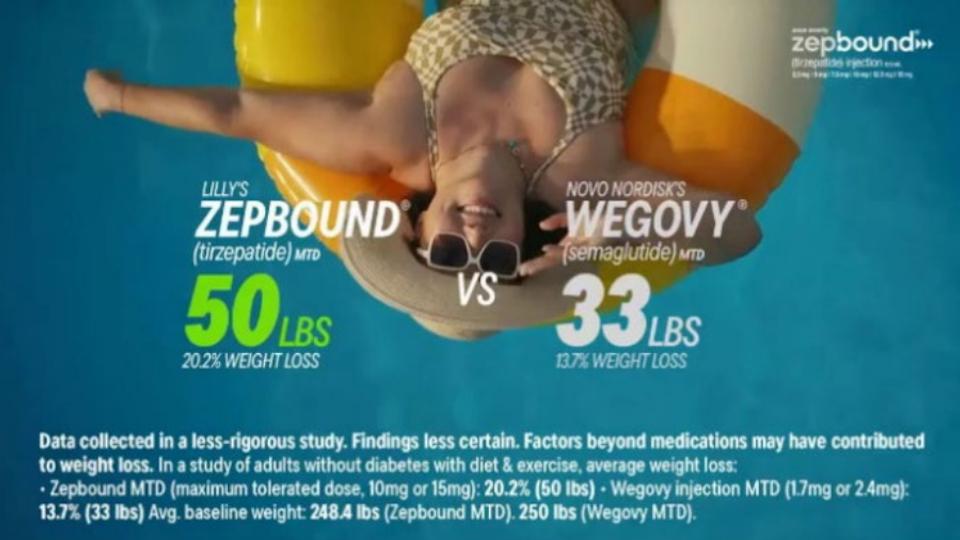
Meanwhile, Novo Nordisk also said that CagriSema was unable to show non-inferiority to Lilly's injectable GIP/GLP-1 agonist Zepbound (tirzepatide) in the head-to-head REIMAGINE 4 trial in patients with type 2 diabetes, mirroring the outcome of a comparative study (REDEFINE 4) in obesity/overweight.
While CagriSema matched Lilly's fast-growing drug on percentage change in body weight, it fell short on HbA1c, a marker of blood glucose control.
Novo Nordisk said it is expecting the Wegovy franchise to come under further pressure in the US this year due to competition from other products, slower prescribing growth in obesity overall, reduced coverage of weight-loss drugs by Medicaid, and its Most Favoured Nation (MFN) pricing deal with the Trump administration.
Sentiment towards Novo Nordisk was also hit by the acknowledgement that it has decided to abandon the development of weight-loss candidate monlunabant, a CB1 inverse agonist acquired in its $1 billion Inversago Pharma buyout in August 2023, which contributed to a DKK 4 billion write-off charge in the quarter.
The company has also just suffered a setback in its efforts to build its pipeline outside obesity and diabetes, as its IL-6 inhibitor ziltivekimab failed the phase 3 ZEUS trial in n patients with atherosclerotic cardiovascular disease (ASCVD) and chronic kidney disease (CKD).
That has raised the pressure on the company to bulk up its late-stage pipeline – though licensing or M&A deals, as it starts to consider the loss of patent protection for semaglutide in the early part of the 2030s.