Lilly raises stakes in Novartis battle with Verzenio data
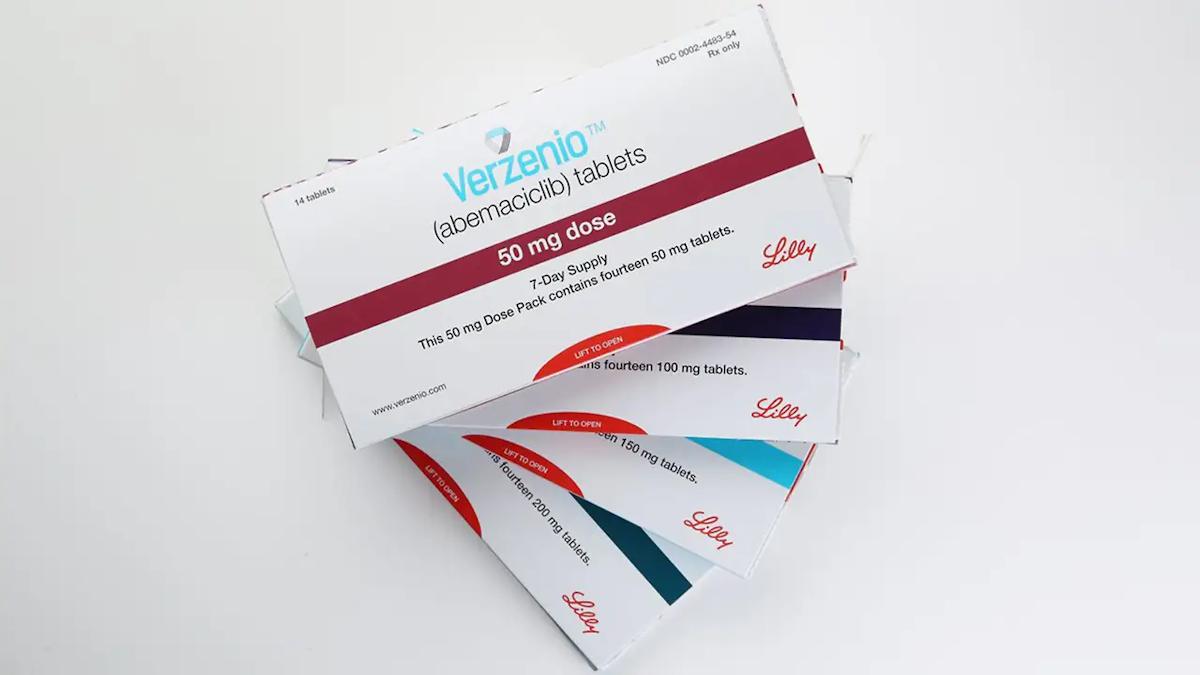
Armed with new survival data from the monarchE trial of CDK4/6 inhibitor Verzenio, Eli Lilly looks set to cement the drug's place in the treatment of early-stage breast cancer, and keep its nose in front of a fast-growing rival from Novartis.
Verzenio (abemaciclib) became the first drug in the class to be approved for use alongside hormonal treatment for patients with early HR-positive, HER2-negative breast cancer that has spread to the lymph nodes in 2021, on the strength of invasive disease-free survival data (iDFS) from monarchE.
The expansion of the label from advanced breast cancer into adjuvant (post-surgery) settings has already helped Verzenio reach sales of more than $5 billion last year.
Now, with the more robust overall survival (OS) result in hand, Lilly can consolidate its standing in early-stage disease and help fend off a challenge in the market from Novartis' Kisqali (ribociclib), which was cleared for use alongside hormonal therapy in early-stage HR+/HER2- breast cancer last year after improving iDFS in the NATALEE trial.
So far, the NATALEE study has not revealed a significant improvement in OS, although it has trended higher.
One key difference between the two drugs is that NATALEE also enrolled patients whose cancer had not yet spread to the lymph nodes, allowing Novartis to target a larger potentially eligible population. Since the new approval, Kisqali sales have rocketed, rising 60% to $2.1 billion in the first half of this year.
The scale of the OS improvement in monarchE has not yet been revealed, but Lilly said in a statement that at the seven-year follow-up point, it was a "statistically significant and clinically meaningful" increase compared to hormonal therapy alone. It was also backed up by sustained improvements in iDFS, as well as distant relapse-free survival (DRFS).
"Preventing disease relapse and helping patients live longer is the ultimate goal and a high bar in the adjuvant setting," said Jacob Van Naarden, president of Lilly Oncology.
"Achieving a statistically significant OS benefit with just two years of Verzenio therapy reinforces its differentiated profile in high-risk HR+, HER2- early breast cancer," he added. "Th[is] data validate[s] Verzenio as the standard-of-care for patients with node-positive, high-risk disease and increase[s] the urgency to ensure all eligible patients are treated."
Safety data from the long-term follow-up was consistent with earlier results, according to Lilly, which said the new data will be submitted for publication in a peer-reviewed journal and shared with regulators with a view to revising Verzenio's labelling.