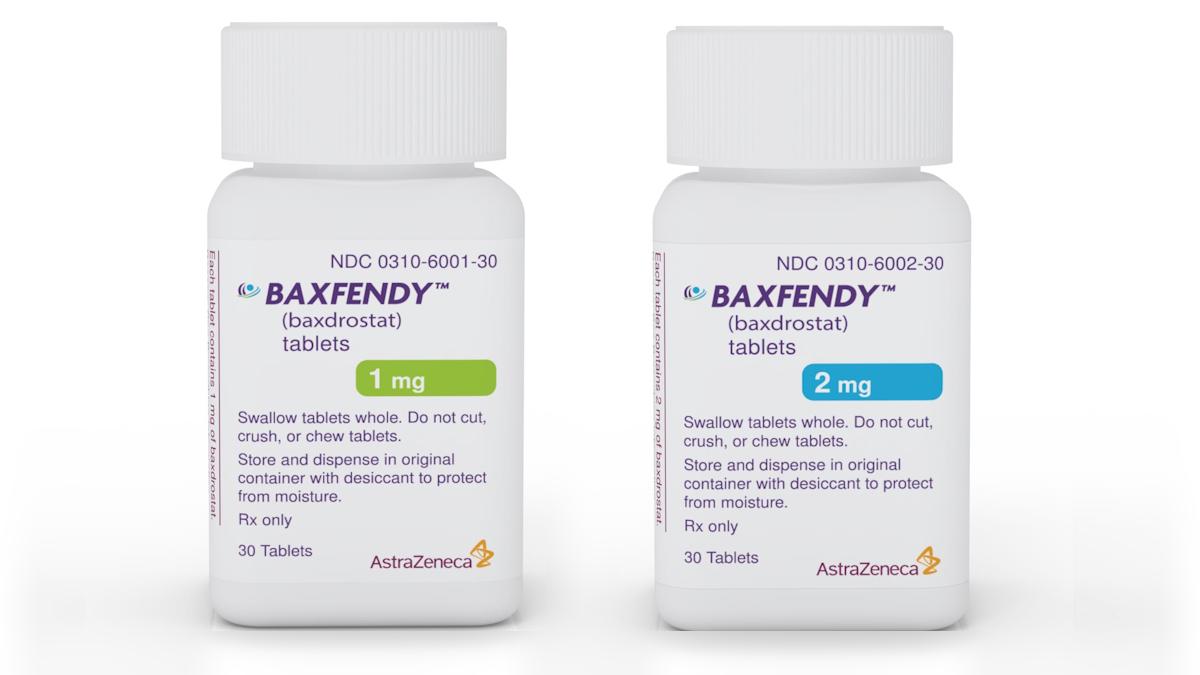
ESC: 'Landmark' study backs AZ's baxdrostat for hypertension
The full data from AstraZeneca's phase 3 BaxHTN trial of baxdrostat has raised hope of an important new treatment option for people who struggle to control their blood pressure with current therapies.
The study, presented at the European Society of Cardiology (ESC) meeting in Madrid and simultaneously published in the New England Journal of Medicine, showed that two doses of baxdrostat given on top of standard care achieved statistically significant reductions in blood pressure compared with placebo at 12 weeks in patients with uncontrolled or treatment-resistant hypertension.
AZ is now planning to file for approval of the once-daily, oral aldosterone synthase inhibitor (ASI) on the strength of the data as it vies with rival drugmaker Mineralys to bring a drug in the class to market. Phase 3 results from the Advance-HTN study of Mineralys' lorundrostat were reported earlier this year.
In BaxHTN, patients receiving a 2 mg daily dose of baxdrostat saw an average 15.7 mmHg drop from baseline in seated systolic blood pressure (SBP) at 12 weeks, equivalent to a placebo-adjusted decline of 9.8 mmHg. For the 1 mg dose group, the two values were 14.5 mmHg and 8.7 mmHg, respectively.
That looks similar to the findings of Advance-HTN, in which a 50 mg dose of lorundrostat achieved a 15.4 mmHg reduction in SBP at 12 weeks, 7.9 mmHg more than placebo, with the usual caveat of trying to compare studies with different protocols.
The proportion of patients with controlled SBP (<130 mmHg) after 12 weeks was 39.4% with baxdrostat 1 mg, 40% with baxdrostat 2 mg, and 18.7% with placebo.
"Aldosterone is a well-known driver of hypertension, but for decades scientists have struggled to block its production in a precise way. Baxdrostat is one of the first therapies to do so selectively," said BaxHTN lead investigator Prof Bryan Williams, of University College London (UCL).
He added that the near-10 mmHg placebo-adjusted reduction in SBP "is exciting, as this level of reduction is linked to substantially lower risk of heart attack, stroke, heart failure, and kidney disease."
Meanwhile, the safety profile of baxdrostat was in line with earlier studies, with serious adverse events reported in 1.9% of patients in the baxdrostat 1 mg group, 3.4% in the 2 mg group, and 2.7% with placebo.
One commentator, Prof Morris Brown of Queen Mary University of London (QMUL), who is an expert in hypertension, said that BaxHTN is a "landmark study" that could redefine how clinicians think about people who do not respond sufficiently well to current drugs.
"It is clear that resistant hypertension […] could be usefully reconsidered so that it is not just accepted as the long-term consequence of poorly controlled 'essential hypertension'," said Brown.
"Resistant hypertension is not essential," he added. "It is primarily aldosteronism, and patients will benefit from much earlier recognition that they have a different mechanistic type of hypertension from the polygenic condition in 75-80% of people with high blood pressure."
According to AZ, there are 1.3 billion people worldwide living with hypertension, and in the US approximately 50% of patients on multiple antihypertensive drug treatments do not have their blood pressure under control.
Photo by Mufid Majnun on Unsplash