
Celcuity gets FDA nod for first-in-class breast cancer drug
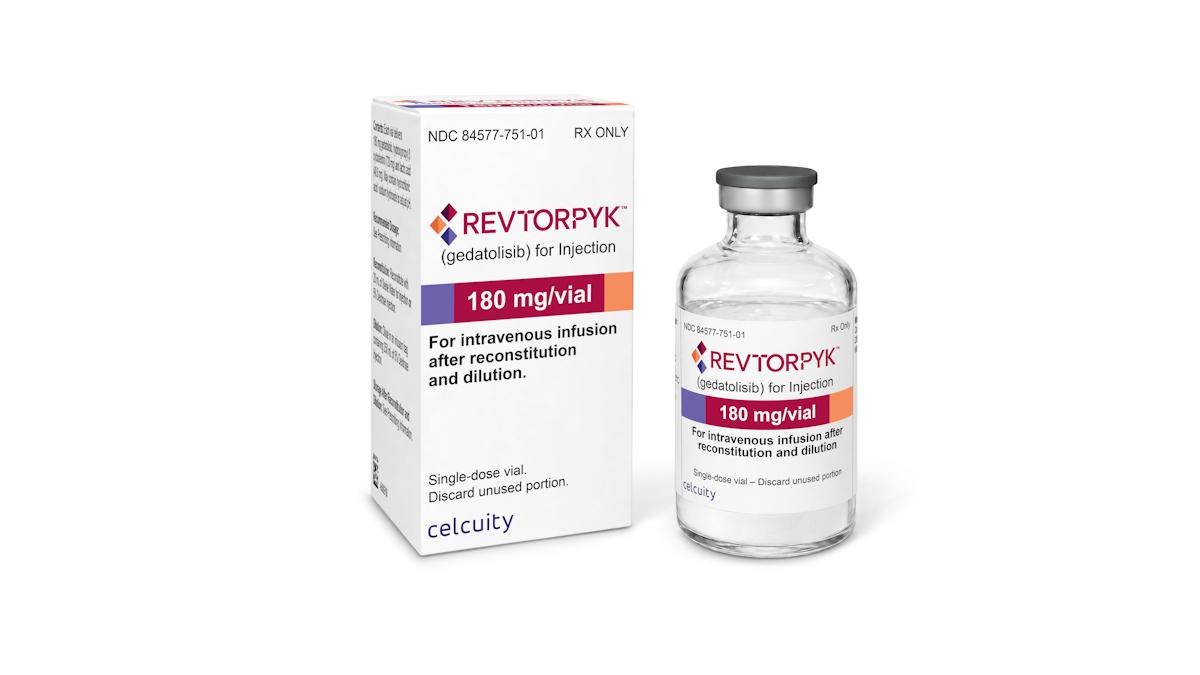
Celcuity has won FDA approval for gedatolisib – its first product – as a treatment for patients with a particular form of breast cancer.
The US regulator has cleared gedatolisib under the Revtorpyk brand name as a second-line or later treatment for HR-positive, HER2-negative locally advanced or metastatic breast cancer without PIK3CA mutation, as a triple therapy with Pfizer's CDK4/6 inhibitor Ibrance (palbociclib) and aromatase inhibitor fulvestrant or dual therapy with fulvestrant.
The first-in-class, intravenous PAM pathway inhibitor – combining PI3K and mTOR inhibition in one molecule – was approved on the strength of data from the open-label VIKTORIA-1 trial.
The study included both patients with both PIK3CA wild-type and PIK3CA-mutated tumours, but approval for the latter group is being sought in a separate marketing application that has not yet been filed for FDA review.
HR+/HER2- breast cancer is the most common subtype of breast cancer, accounting for approximately 70% of all cases, and approximately 60% of patients have PIK3CA wild-type disease.
In VIKTORIA-1, the triplet reduced the risk of disease progression or death by 76% compared to fulvestrant, with a median progression-free (PFS) survival of 9.3 months and 2.0 months, respectively, while the doublet achieved a 67% reduction and a median PFS of 7.4 months.
There was an objective response rate (ORR) of 32% with the triple therapy, 28% with the doublet, and 1% with fulvestrant alone.
Meanwhile, the data in PIK3CA-mutated tumours, reported at this year's ASCO congress, showed the triplet reduced the risk of disease progression or death by 50% compared to Novartis' PI3K inhibitor Piqray (alpelisib) plus fulvestrant, with a median PFS of 11.1 months and 5.3 months, respectively. The doublet also did well, reducing PFS by 49% to 11.3 months.
Celcuity said in a statement that it intends to file for FDA approval in the PIK3CA mutant setting in the third quarter of this year, with applications in other countries following thereafter.
If approved, the drug will have a broader label across both wild-type and mutant forms, while current PI3K inhibitors, such as Piqray and Roche's Itovebi (inavolisib), are currently only indicated for PIK3CA-mutant disease.
Celcuity has previously said that approval in the second-line setting alone would unlock a $5 billion potential market for gedatolisib, and it is also running a second phase 3 trial – VIKTORIA-2 – in treatment-naïve patients that could open up a similarly sized market opportunity.
"For patients with HR+/HER2- locally advanced or metastatic breast cancer, there is an urgent need for new treatment options that can meaningfully increase the likelihood of survival without disease progression or death," said Sara Hurvitz of Fred Hutchinson Cancer Center, co-principal investigator of the VIKTORIA-1 trial.
"With the approval of Revtorpyk, oncologists now have an effective new treatment option for these patients."













