BMS eyes role for new CAR-T in post-BCMA multiple myeloma
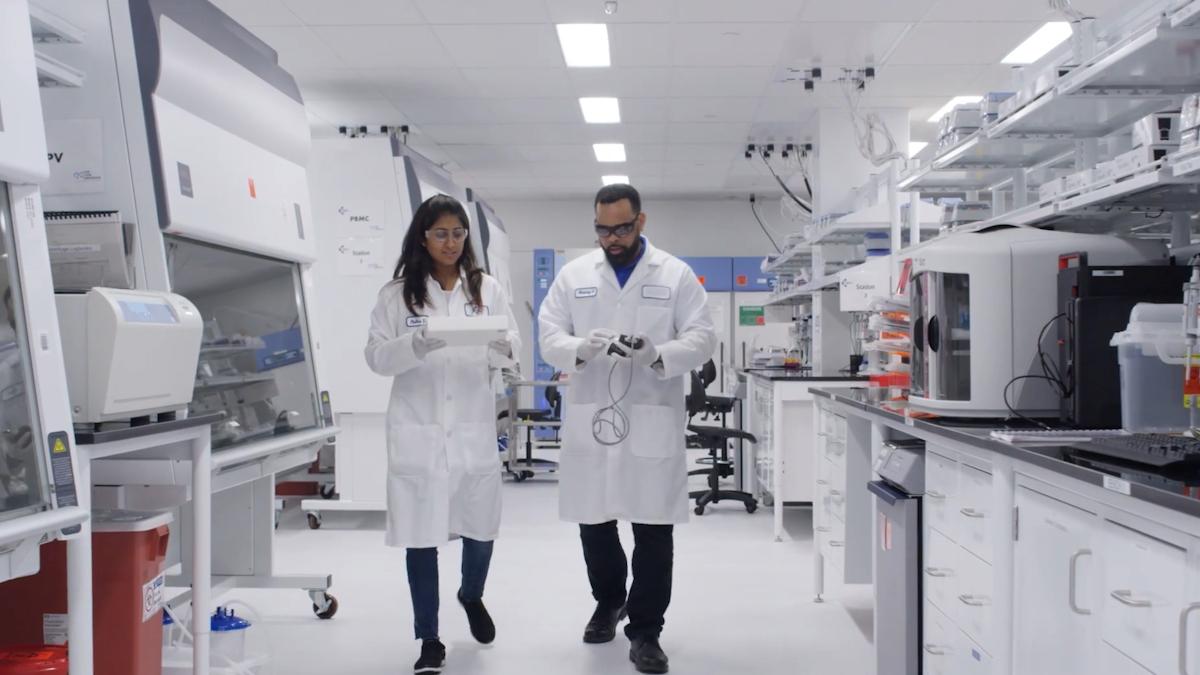
BMS CAR-T scientists at work.
Bristol Myers Squibb's GPRC5D-directed CAR-T therapy, arlocabtagene autoleucel (arlo-cel), has shown activity in a phase 2 trial that could underpin future filings for blood cancer multiple myeloma.
The pivotal QUINTESSENTIAL trial of the potentially first-in-class CAR-T showed a "statistically significant and clinically meaningful" improvement in overall response rate (ORR) with a one-off infusion of arlo-cel in multiple myeloma patients previously treated with at least four lines of prior treatment – including a BCMA-targeted therapy.
It is thought to be the first major study to test a GPRC5D-targeting therapy in patients who have already been exposed to all four main drug classes used in multiple myeloma - immunomodulatory inhibitor, a proteasome inhibitor, an anti-CD38 therapy and a BCMA-targeted therapy - and so have very few remaining treatment options.
QUINTESSENTIAL also met the key secondary endpoint of complete response rate (CRR) in patients who had been quadruple-class exposed after four or more prior lines of therapy, as well as ORR and CRR after three or more prior lines of therapy.
Studies show that re-treating with a different BCMA-targeting drug can be effective – particularly if there are several months between attempts – but in some cases the cancer cells stop producing BCMA altogether and fail to respond. That makes finding alternative targets a priority.
"As combination treatment regimens are now frequently used in earlier lines of therapy, an increasing number of people with multiple myeloma are quadruple-class exposed and resistant to currently available therapies earlier in the treatment journey, creating a critical need for new therapeutic approaches," said Lynelle Hoch, head of cell therapy at BMS.
"These topline results support arlo-cel's potential benefit for patients while showing a safety profile consistent with expectations."
GPRC5D has become an established drug target in oncology, since Johnson & Johnson won accelerated approval from the FDA in 2023 for its GPR5CDxCD3 bispecific antibody Talvey (talquetamab) as a fourth-line or later treatment for relapsed or refractory multiple myeloma.
In the phase 1/2 MonumenTAL-1 study, Talvey showed an ORR of more than 70% when used as a fourth-line or later treatment. Oncologists will be looking closely at the QUINTESSENTIAL data and how it stacks up against MonumenTAL-1 when the figures are presented at a future cancer congress.
Talvey is administered as a weekly or biweekly injection and is available as an off-the-shelf therapy, while arlo-cel requires collection of T-cells from the patient's blood followed by bridging therapy, CAR-T cell manufacturing, lymphodepleting chemotherapy, and then a single infusion.
Other companies with GPRC5D-directed therapies in development include Roche with forimtamig and Leads Biolab with LBL-034, which, like Talvey, are CD3xGPRC5D bispecifics. J&J, meanwhile, is also developing a trispecific antibody targeting GPRC5D, BCMA, and CD3, ramantamig (JNJ-79635322), which is already in late-stage development.