BioMarin halts Voxzogo trials due to safety signal
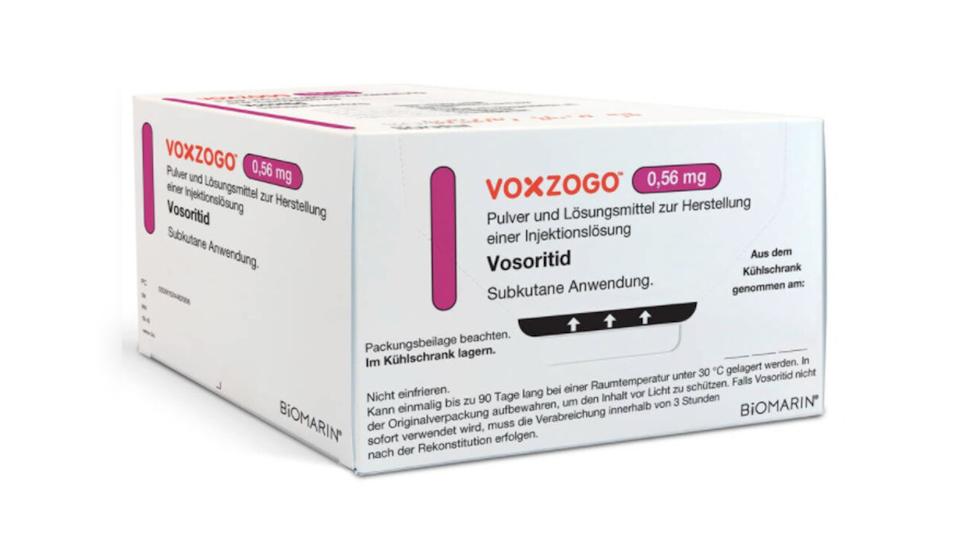
BioMarin has suspended dosing in phase 2 trials of its achondroplasia therapy Voxzogo aimed at broadening its label, while it investigates a potential safety issue.
In a financial regulatory filing, the pharma company said it was halting dosing and enrolment in mid-stage trials of Voxzogo (vosoritide) in Turner syndrome, SHOX-deficiency, and ACAN-deficiency – all conditions that can lead to short stature – after several cases of a problem affecting the hips were seen in two investigator-led studies.
The potential side effect, called slipped capital femoral epiphysis (SCFE), is a fairly common hip disorder, usually affecting adolescents, in which the ball at the upper thighbone slips backwards off the growth plate, causing hip, knee, or thigh pain and a limp. It can require surgical pinning to stabilise the joint and prevent long-term complications like arthritis.
In its update, BioMarin said SCFE events "have not been observed in the phase 2 BioMarin trials in these same conditions, nor have any cases been observed in the more than 5,000 infants and children who have received Voxzogo for achondroplasia," nor among patients enrolled in its ongoing clinical trials in hypochondroplasia.
In light of that, the company has elected to continue phase 2 trials of Voxzogo in Noonan syndrome and idiopathic short stature (ISS), although, the latter will continue only in subjects without ACAN-deficiency – around 95% of the trial population – for the time being.
Shares in BioMarin slipped slightly after the announcement, but only lost a couple of points, suggesting investors were not spooked by the announcement, even though Voxzogo is one of the company's important growth products.
Sales of Voxzogo for achondroplasia grew more than a quarter in 2025 to reach $927 million, making it BioMarin's biggest seller, but the company has predicted that growth will slow in 2026, with a forecast of $975 million to $1.025 billion.
Pivotal data in the follow-up hypochondroplasia indication is expected in the first half of this year, setting up a potential launch in 2027. However, the company has acknowledged that competition is on the way and the long-term sales trajectory of Voxzogo is hard to track.
Earlier this month, for example, Denmark's Ascendis Pharma got FDA approval for CNP-acting drug Yuviwel (navepegritide) as a treatment for achondroplasia, which can be injected once a week, while Voxzogo requires a daily shot.
Kyowa Kirin and BridgeBio's orally-dosed FGFR3 inhibitor infigratinib, meanwhile, was effective in a phase 3 achondroplasia study reported in February and is heading for marketing applications in the US and Europe later this year.
BioMarin is working on its own CNP drug – codenamed BMN 333 – which is due to start a phase 2/3 clinical testing programme in the first half of this year. The company has moved to reduce its reliance on Voxzogo in the meantime via a $4.8 billion deal to buy Amicus Therapeutics.