Biohub raises $1.8bn for its 'virtual biology' initiative
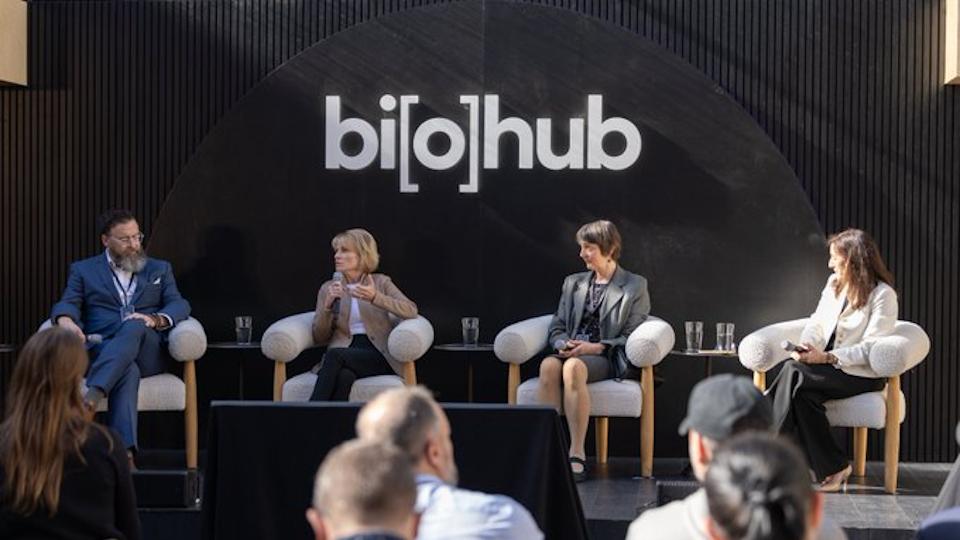
Biohub unveiled the new backing at its inaugural AIxBio event In San Francisco on 7th October.
Just months after launching an open-source 'virtual biology' platform, non-profit research organisation Biohub has raised $1.8 billion in backing for the AI-powered initiative.
The philanthropic organisation, set up by Meta chief executive Mark Zuckerberg and his wife Priscilla Chan, said the project will receive the investment from a consortium of backers that includes the US Department of Energy (DOE), the National Institutes of Health (NIH), along with Meta and fellow tech giants Google DeepMind and Isomorphic Labs.
According to a Biohub statement, the funding isn't all cash; a large chunk of the value comes in "data, computation, and new measurement technology."
The Virtual Biology Initiative was first announced in April with anchor funding of $500 million and aims to deliver a "world model" that can serve as a discovery engine for protein structure prediction, design, and biological discovery, made freely available to researchers worldwide.
"An accurate predictive model of biology could dramatically accelerate scientific discovery by enabling scientists to perform experiments digitally," said Biohub's head of science, Alex Rives.
"The insights that come from this could unlock a far greater understanding of disease and open up completely new paths for cures," he added. "Because of this potential, the creation of a virtual cell is one of the most important challenges for the next era of science."
DOE is providing more than $500 million over five years in lab measurement, modelling, and computation to build "an AI-ready open data resource," while NIH will match that figure in "relevant datasets, repositories, and knowledge bases developed through more than $500 million in prior federal investment."
Google DeepMind, Isomorphic Labs, and Meta are collectively investing $300 million to create the technologies and multi-modal datasets that will underpin the effort.
The platform is drawing on Biohub's ESM atlas of 6.8 billion proteins and 1.1 billion structures, the ESMC language model that virtually represents proteins, and the ESMFold2 design engine that predicts the 3D structures of proteins and their interactions with binders.
It will use technologies like cryo-electron tomography, spatial transcriptomics, cutting-edge microscopy, and engineering tools that "build and perturb biology at molecular, cellular, tissue, and whole-organism levels."
Other organisations taking part in the project include Allen Institute, Arc Institute, The Billion Cells Project, Broad Institute, Gladstone Institutes, Human Cell Atlas, Human Protein Atlas, Renaissance Philanthropy, and the Wellcome Sanger Institute.
"By combining resources and expertise, we can accelerate the development of universal cell models with sufficient biological complexity to predict how any cell responds to an intervention," said Nicole Kleinstreuer, NIH's deputy director for programme coordination, planning, and strategic initiatives.
"The return from these models could be broad and profound, resulting in substantially faster timelines for medical breakthroughs as compared with attempting to attain the same results through laboratory experiments alone."