Beeline raises $300m for BMS drugs, and other biofinancings
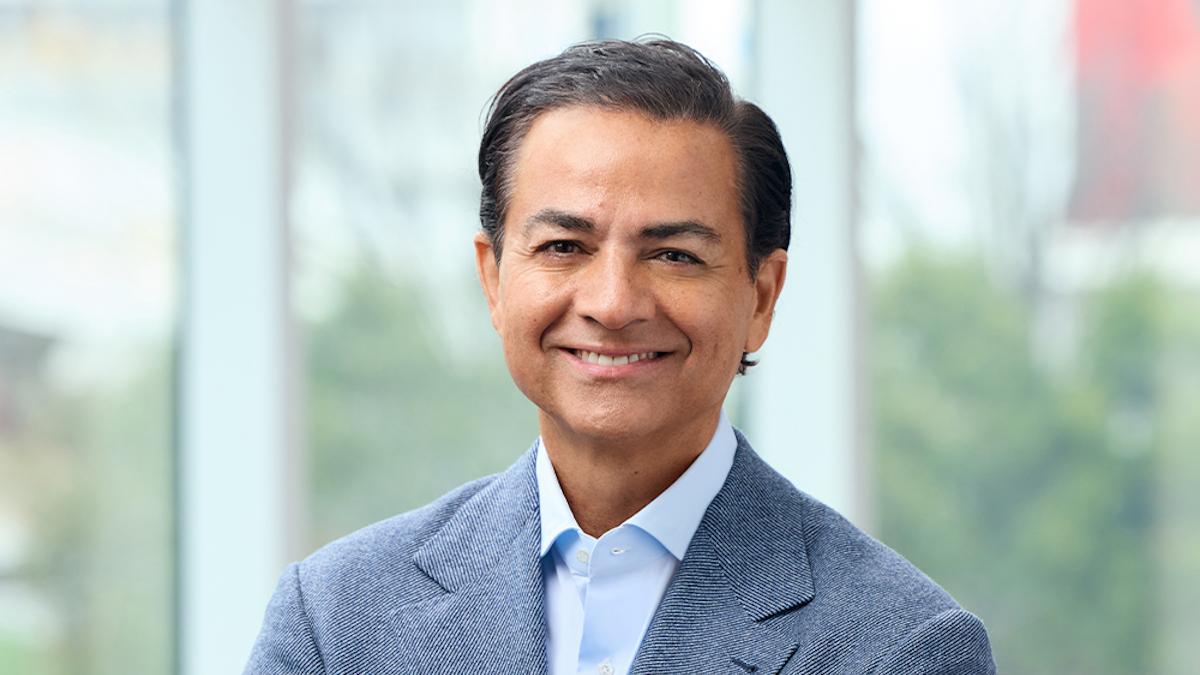
Saqib Islam, chief executive Officer of newly launched Beeline Medicines.
The pace of private financing in biopharma steps up again, with sizeable rounds closed by Beeline, Oricell, Terremoto, Harbinger, Neomorph, Adcendo, and STORM in the last week.
Beeline gathers $300m for BMS immunology pipeline
Beeline Medicines has formally launched with $300 million in Series A financing, led by Bain Capital, and a pipeline of drugs for immunology and inflammation therapies licensed from Bristol Myers Squibb.
The start-up – with operations in Stamford, Connecticut, and Boston, Massachusetts – starts out with five drug candidates headed by afimetoran (BMS-986256), a once-daily, oral TLR7/8 inhibitor in phase 2 for systemic lupus erythematosus (SLE), which has also shown efficacy in an early-stage trial in cutaneous lupus erythematosus (CLE). The mid-stage SLE study is nearing completion, and a phase 3 programme is being developed.
Also at the clinical testing stage are IL-2-CD25 fusion protein BMS-986326, in phase 1b for atopic dermatitis and SLE/CLE, and oral TYK2 inhibitor lomedeucitinib in phase 2 for psoriasis, which is in the same class as BMS's Sotyktu (deucravacitinib), which was approved for psoriasis in 2022, but has not grown commercially as quickly as anticipated. The final two early-stage programmes are focused on the IL-18 and IL-10 pathways with potential in gastrointestinal inflammatory conditions.
The new company is led by ex-SpringWorks chief executive Saqib Islam, with former SpringWorks chief operating officer Badreddin Edris taking the same position at Beeline, where he will also serve as president. Dr Nathalie Franchimont has been named chief medical officer, a role she previously held at Nimbus Therapeutics.
Cell therapy specialist Oricell grabs $100m in 'pre-IPO' funding
Oricell Therapeutics of Shanghai, China, has closed what it has described as a pre-IPO round, raising more than $110 million for its pipeline of cell therapies for solid tumours and blood cancers, as well as a drive towards international expansion.
The round – co-led by Vivo Capital, Beijing Medical and Health Care Industry Investment Fund, Qiming Venture Partners, and an unidentified global healthcare fund – adds to the company's coffers as it prepares for pivotal trials of Ori-C101, a GPC3-targeted autologous CAR-T therapy for advanced hepatocellular carcinoma (HCC), the most common type of liver cancer.
It will also fund R&D into follow-up assets, including secreted, rapid-production, and in vivo cell therapy candidates, the latter fast becoming a hot topic in oncology. Oricell's pipeline also includes OriCAR-017, a GPRC5D-targeting cell therapy in early-stage clinical testing for multiple myeloma.
Terremoto closes third round to fund AKT1 candidates
South San Francisco biotech Terremoto Biosciences topped up its cash reserves with a $108 million Series C that will be used for clinical trials of its portfolio of AKT1-targeting drugs for cancer and rare bleeding disorder hereditary haemorrhagic telangiectasia (HHT).
The company's lead cancer programme, TER-2013, is in phase 1 for solid tumours that have mutations in the PIK3CA, AKT, or PTEN genes, a pathway that is altered in many cancers, including around half of all cases of HR-positive breast and prostate cancer. A second AKT1 inhibitor, TER-4480 for HHT, is expected to start human testing later this year. There are currently no approved therapies for HHT.
Terremoto thinks its focus on selective AKT1-directed candidates will provide an advantage over other drugs targeting the PIK3CA/AKT/PTEN pathway, which can cause serious side effects.
The round included new investors RA Capital Management, Deep Track Capital, Osage University Partners, and Chinese pharma group BeOne Medicines, with participation from existing backers OrbiMed, Third Rock Ventures, Novo Holdings, and Cormorant Asset Management.
Harbinger promises better cancer blood tests
Flagship Pioneering-backed biotech Harbinger Health closed a $100 million financing round to fuel the development of its Resolve range of multi-cancer detection or 'liquid biopsy' blood tests, backed up by analytical software platform Harbinger HX, that are designed to spot cancers in the early stages.
According to a statement from the Cambridge, Massachusetts company, Resolve tests, which look for DNA methylation patterns in samples that are analysed using AI, could start to become commercially available before the end of this year. The approach should deliver fewer false negative results that allow cancers to go undetected, and fewer false positives that can place a burden on patients and healthcare systems, than other technologies, according to Harbinger. It is running a 1,650-subject clinical trial of two Resolve tests (PROCARES), which is due to read out in the coming months.
Other multi-cancer detection test developers include GRAIL and Labcorp, which are developing technologies that look for fragments of DNA released by cancer cells into the blood. They have different approaches and objectives, however, with GRAIL focusing – like Harbinger – on screening for cancer in high-risk people, while LabCorp's kits are designed to guide the treatment of patients already diagnosed with cancer.
Flagship led the round, alongside all existing investors.
Neomorph sticks another $100m on its molecular glue degraders
San Diego, California-based Neomorph has banked $100 million in second-round financing, led by Deerfield Management, in another sign of investor interest in companies developing molecular glue degraders for previously undruggable targets.
The new funding has been earmarked for an ongoing phase 1/2 trial of NEO-811, Neomorph's lead candidate, which is designed to induce targeted degradation of a protein called ARNT (or HIF-1β) implicated in clear cell renal cell carcinoma (ccRCC), a form of kidney cancer. It will also go towards bringing other in-house pipeline projects forward from Neomorph's molecular glue platform, which has attracted partnerships with Novo Nordisk, Biogen, and AbbVie.
Other participants in the Series B included new investors Regeneron Ventures, Longwood Fund, Alexandria Venture Investments, and the Dana-Farber Cancer Institute's Binney Street Capital.
ADC specialist Adcendo adds $75m in Series C
Jeito Capital has led an oversubscribed $75 million third round for Danish antibody-drug conjugate (ADC) developer Adcendo, supporting its mission to advance three candidates for solid tumours through clinical testing.
The first of those ADCs, ADCE-T02, is a TF-directed candidate licensed from Chinese biotech Multitude Therapeutics in 2024 that is in a phase 1 trial in head and neck, pancreatic, colorectal, and non-small cell lung cancers. It's in the same class as Pfizer and Genmab's Tivdak (tisotumab vedotin), used to treat cervical cancer, but, according to the Copenhagen company, could offer an improved clinical profile.
Following after is ADCE-D01, a uPARAP-directed ADC with potential in soft tissue sarcoma and other cancers of mesenchymal origin in phase 1/2, and ADCE-B05, a preclinical-stage candidate whose mechanism isn't disclosed, but is being developed for squamous cell solid tumours.
New investors Vida Ventures, BPI France, and Export and Investment Fund of Denmark (EIFO) participated in the round, alongside all existing investors, said Adcendo.
STORM cooks up $56m round for sarcoma drug
Finally, Cambridge, UK biotech STORM Therapeutics closed $56 million in third-round financing that will fund studies of STC-15, described as a first‑in‑class, oral small-molecule inhibitor of METTL3 in phase 1 testing.
The drug has just started a phase 2 trial in sarcoma, a form of cancer that arises in bone or soft tissues, and is designed to "target and reprogramme" progenitor cells that transform into malignant cells. In the study, STC-15 is being tested as a monotherapy and in combination with Junshi Bio's PD-1 inhibitor Loqtorzi (toripalimab) for patients with relapsed sarcomas, including liposarcoma and leiomyosarcoma.
The financing was funded by existing investors, M Ventures, Pfizer Ventures, Taiho Ventures LLC, IP Group, UTokyo IPC, and Fast Track Initiative (FTI), which all participated in STORM's $30 million Series B in 2022. It also raised $38 million in an expanded first round that closed in 2019.