Is the next generation of Chinese biotech ready to go global alone?
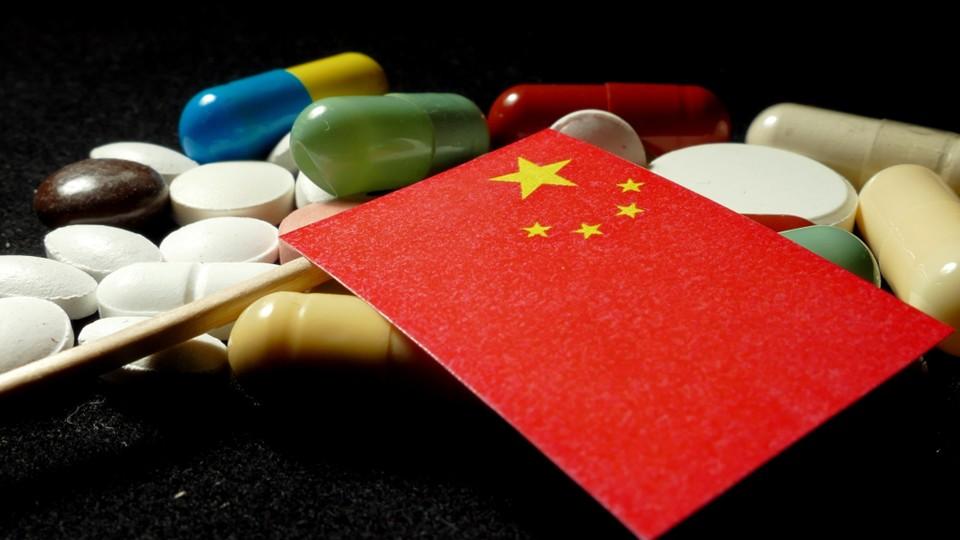
Chinese drug developers are retaining more control over international programmes, but full independence remains a selective and expensive choice. The next phase is likely to combine licensing, co-development, and carefully chosen global bets.
For much of the past few years, the international story of Chinese biotech has been told through licensing. Chinese companies discover and advance promising drugs; Western pharmaceutical groups acquire rights outside China and assume responsibility for global trials, regulatory approvals, and commercialisation. The model has grown rapidly. GlobalData reported that licensing agreements between US and Chinese drug companies reached a combined value of about $115 billion in 2025, while nearly half of US inbound agreements involved Chinese companies.
That scale raises a natural question. As Chinese biotechs accumulate capital, clinical experience, and credibility, will they continue to transfer most ex-China rights, or retain their strongest assets and compete internationally themselves?
Ambition came before the licensing boom
Global ambition is not new. Helen Chen, head of Asia Healthcare at L.E.K. Consulting, has worked in China since 2000 and recalls that during the funding upswing from roughly 2017 to 2022, many Chinese biotechs expected to resemble their US and European peers. Management teams believed investors would support international development when the programme was strong enough, and several companies began building overseas clinical and commercial teams.
The market downturn, COVID disruption, and changing regulatory expectations weakened that confidence. Hopes that extensive China-only clinical packages might support US approval gave way to demands for more US and multiregional evidence. At the same time, global buyers began to recognise the quality and breadth of Chinese pipelines. Successful transactions and approvals established a track record, turning licensing into an accessible source of capital and a practical route to overseas markets.
Several deals helped establish that record. HUTCHMED licensed fruquintinib to Takeda outside mainland China, Hong Kong, and Macau in 2023; the drug was subsequently approved in the US and European Union as FRUZAQLA. Jiangsu Hengrui's anti-TSLP antibody followed a different route. After being licensed outside Greater China to the newly formed Aiolos Bio, it became the principal asset in GSK's 2024 acquisition of Aiolos for $1 billion upfront and up to $400 million in regulatory milestones. Both cases made the international value of China-originated assets easier to assess.
That does not mean the original ambition disappeared. A familiar bootstrap pattern is emerging: companies license early assets, reinvest the proceeds, and gradually assume more responsibility. In an L.E.K. survey of about 40 Chinese biopharma companies, 40% were already conducting overseas trials and another 50% wanted to do so. Most of those already active abroad still expected to find partners, but roughly a quarter of respondents were considering eventual independent development. The small sample warrants caution, yet, it shows that licensing and long-term independence can sit within the same strategy.
Global development is a selective bet
Readiness also depends on what a company is trying to develop. Narrower indications, including some haematological cancers, offer a more manageable entry point than large chronic-disease programmes. Chinese sponsors can use international CROs and recruit experienced regulatory and clinical staff in Europe, Japan, and the US. Standards are also converging as China participates in the International Council for Harmonisation.
Scale quickly exposes the remaining limits. "I don't see any Chinese company ready to jump into a 10,000-patient diabetes trial in the US," Chen says, pointing to the execution difficulty and the size of the required investment. International commercial experience is still scarcer. Running a multinational trial is a considerable step; building medical affairs, market access, and sales capabilities across several healthcare systems is another.
Xueming Qian, founder, chairman & CEO of Transcenta Holding Ltd, reiterates this view, but sees commercialisation as the most difficult boundary. "In order to get a compound commercialised in the US, you have to have your own commercialisation capability," he says. "Regulatory expertise and trial execution can be bought or built with CROs and external advisers, but sales infrastructure in the US and Europe requires far greater investment in people, market access, and local operations".
Portfolio breadth adds another constraint. Chinese drug developers often carry more early-stage programmes than similarly sized Western peers, partly because discovery and early clinical work can be completed at lower cost. Even the best-capitalised groups cannot take every asset worldwide. Larger companies may advance selected programmes and out-license others; smaller companies may license several assets to finance one global priority.
Partnership models are becoming more flexible
The likely outcome is therefore greater choice, rather than a wholesale retreat from licensing. Some companies will collect early data in Australia, move into US or European trials, and then partner at a later stage and higher valuation. Others will retain particular territories, indications, or co-commercialisation rights. The strongest can build fully international organisations from the outside.
Qian makes an important distinction between co-development and co-commercialisation. "More established companies are willing to retain more of the option to co-develop in Western countries, but they have not really retained the right to co-commercialise," he says. "Commercialisation demands much higher costs, infrastructure, and human resources. Companies are still doing this step by step, which makes sense."
The domestic Chinese market also remains commercially significant, even when global rights are licensed. "Sometimes there is a big enough domestic market," Qian says. "Companies can develop and commercialise by themselves, or work with a big domestic pharma company." Larger partners can provide established sales and distribution channels, allowing smaller biotechs to build domestic revenue while licensing ex-China rights where they lack overseas commercialisation capability.
Large Chinese and multinational companies are also moving beyond simple one-way asset transfers. A 2026 agreement between Hengrui and Bristol Myers Squibb covered 13 early-stage programmes: Bristol Myers Squibb obtained rights outside Greater China to four Hengrui assets, Hengrui received Greater China rights to four Bristol Myers Squibb programmes, and the companies agreed to collaborate on five further candidates. Such structures allow both sides to contribute assets and development capabilities, blurring the line between licensor, partner, and competitor.
A gradual shift in control
Politics may alter the pace. Cross-border data flows, human genetic information rules, export controls, and investment restrictions all affect how programmes and transactions are structured. Those constraints are real, but they do not produce a single outcome; companies can adapt through corporate structure, trial design, and the allocation of rights. The larger risk is sudden regulatory change that makes long-term development assumptions unreliable.
So, are Chinese biotechs ready to go global alone? A limited number are, for selected assets and markets. BeOne Medicines is a good example of a Chinese biopharma that has already become comprehensively global. More will gain that option, but few are likely to abandon partnerships altogether. The more significant change is that Chinese companies can choose where to retain control, where to share risk, and when to license.
The boundary is moving quickly. Reciprocal licensing, joint development, regional rights, and portfolio-level options were barely part of the discussion a year ago. China's next generation of biotechs may still be licensors, but increasingly they will also be global developers, co-owners and, in chosen markets, direct competitors.
About the author
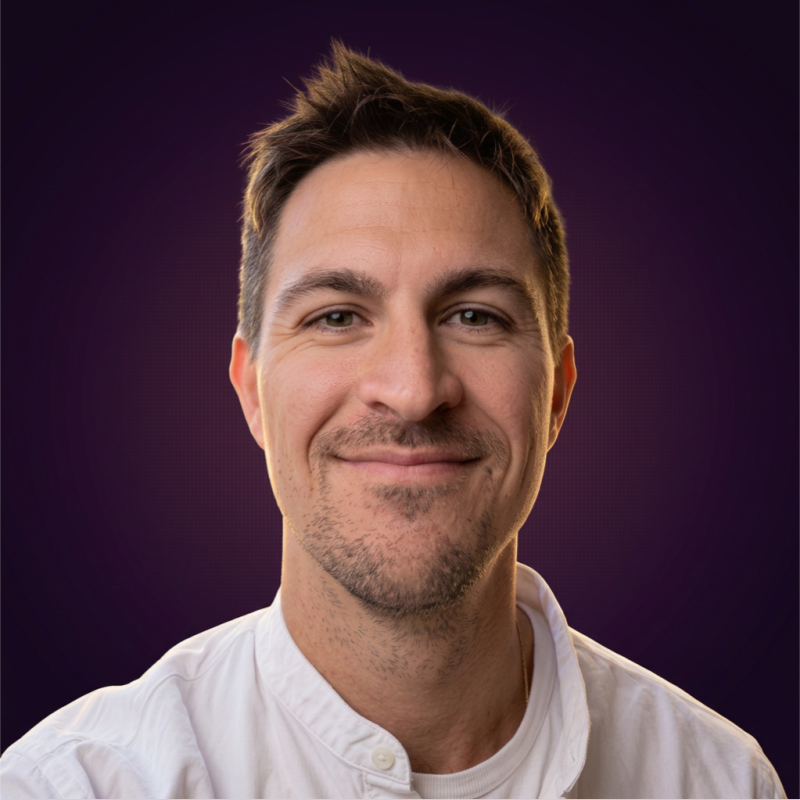 Matt Marlowe is a life sciences brand and market strategy consultant specialised in helping biotech teams turn complex science into clear, commercial narratives that drive success. With deep experience in the China biotech space, Marlowe partners with founders and product leaders to position offerings, accelerate adoption, and drive measurable market traction. He runs genapse and BridgeCross Bio Media.