Five Takeaways from JP Morgan Week 2026
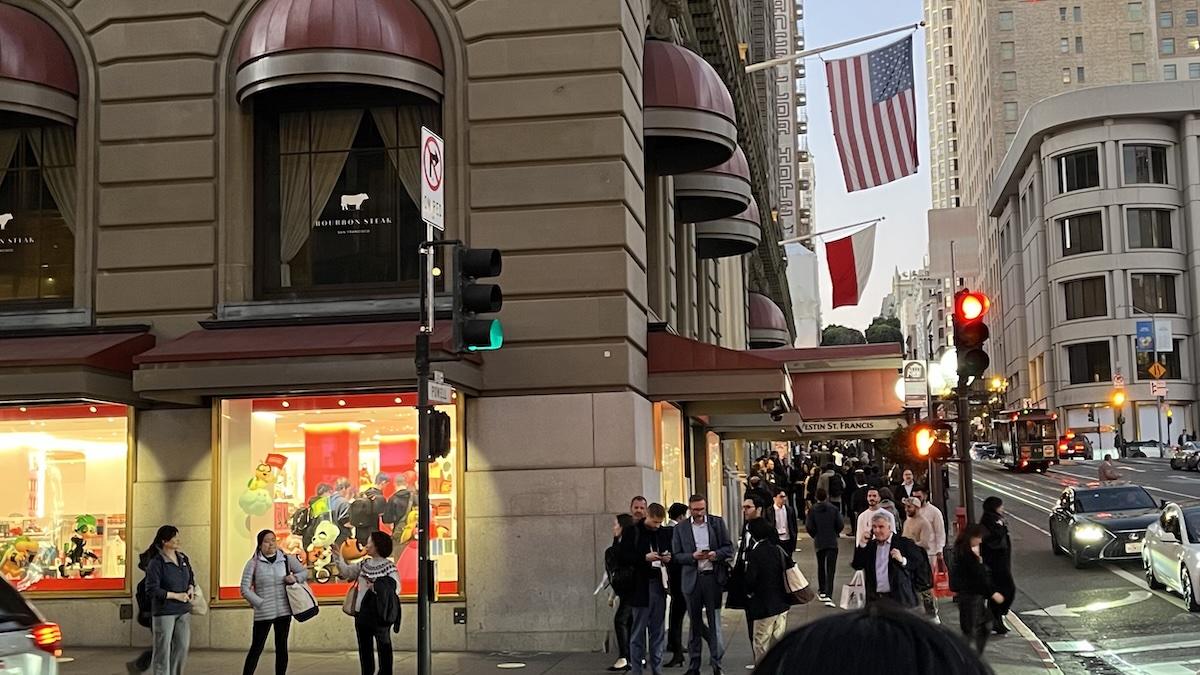
Every January, thousands of pharma and biotech executives, analysts, and journalists descend on Union Square in San Francisco for a sprawling industry gathering that has less to do each year with its namesake, the JP Morgan Healthcare Conference at the Westin St Francis. This year I spent three days at Informa's Biotech Showcase, a larger event that takes place at the nearby Hilton, and taking many many meetings and receptions at hotels and coworking spaces around the square. Here's just a few of the big thoughts I walked away with after the show.
No deals? No problem
Historically, JPM week has been marked by at least a handful of high-dollar, high-profile acquisition events. This year we saw no such thing (although Eli Lilly did make a billion-dollar acquisition just before the show with Ventyx), just a lot of partnerships and collaborations, a handful of smaller tech-focused acquisitions, and a few IPO announcements (more on that below).
But unlike in previous deal-light years, no one on stage or in meetings seemed to think this was any kind of a signal about dealmaking in 2026. Indeed, most big pharmas re-iterated that they were on the lookout for the right kind of innovative, low-risk assets as their various patent cliffs continue to loom. Instead, the lack of deals seems to signal a shift away from the arbitrary, albeit exciting, practice of timing announcements with the conference and associated events.
Just because JPM is where deals are made doesn’t mean it has to be where deals are announced. Make no mistake: the mood at JPM this year was as sunny as the weather and the word I heard most to describe the show was “optimistic”.
The IPO window is opening
The aforementioned IPOs include immune-oncology company Eikon and hair loss startup Veradermics, which announced plans to go public, and radiopharma company Aktis, which notched the first biotech IPO of the year shortly before the show.
The last few years have been light on biotech IPOs, so with three already emerging analysts are cautiously optimistic about the opening of a long-awaited IPO window in the space. That’s good news for the sector as it’s an indicator of public support, it injects more money into the space, and by giving biotechs options beyond acquisition it strengthens their hand at the bargaining table.
Walking the walk on AI
The last few years at JPM AI has dominated the conversation. But it’s never dominated the news cycle as much as this year. Companies like NVIDIA, Recursion, and even Anthropic hosted large events in San Francisco to show off the work they’re doing to advance AI drug development, beyond mere target identification to even robotic and wet lab applications. We also saw both ChatGPT and Anthropic launch health-focused versions of their consumer-facing LLMs, which marks a major step in direct-to-consumer healthcare.
Paradoxically, AI was less talked about this year at least at the sessions I attended. Gone is the need to cram an AI question into every panel – instead the technology is coming up organically as it becomes more and more integrated into pharma workflows. It’s no longer news that you’re using AI. It’s only news when you’ve done something with it.
China isn’t going anywhere
If AI has a successor for “the topic that must be addressed on every panel”, it’s China. We’ve been hearing for a while that Chinese biotechs are becoming a force to be reckoned with, not just with me-too products but with wholesale innovation. That continues to be the case, and China also provides an attractive environment for doing pre-clinical research more cheaply and efficiently than is possible in US and Europe because of regulations. And the version of the BIOSECURE Act that finally passed last year is weaker and doesn’t present as much of a problem for biotechs looking to partner in China.
In fact, China’s ascendancy in biotech is a cause for concern among some US biotechs and investors, especially because the US seems to be moving in the wrong direction – moves like leveeing tariffs, cutting early research funding, and introducing barriers to H1 visas all make the US biotech weaker at a time when China’s star is on the rise.
Radiopharmaceuticals and other next big things
There are always a handful of next big things vying for the spotlight in biotech, but this year off the heels of Aktis’s IPO, radiopharmaceuticals seemed to be the hot oncological topic. Radioligand therapies, or RLTs, are similar to antibody-drug conjucates but instead of delivering a chemical payload they deliver a radioactive one. This has the advantage of being highly effective with low toxicity, but also brings challenges as radioactive materials with a short half-life are complicated to manage.
Like cell therapy before it, radiopharmaceuticals need an industry-wide infractructure update to reach their full potential. But with so many startups and big pharmas working in the space, those challenges seem likely to be resolved over the next few years. Right now, as I mentioned in my longer piece, it’s a race to find the right isotopes and delivery models to maximise RLT’s potential. But soon it will be all about targets, and we could see an explosion that looks like ADCs all over again.
Other next big things include psychedelics in neuro, which are finally starting to be broadly taken seriously by the field, and in vivo cell therapy, which still stands poised to disrupt the space.