Solution Spotlight: Axtria HIQ
Axtria HIQ is an agentic analytics product built specifically for pharmaceutical headquarters teams. It connects to a company’s existing data warehouse, applies a pre-built life sciences semantic layer, and answers complex commercial questions in conversation, showing the sources, the logic, and the query behind each response. It has been in daily production at a global pharmaceutical company since May 2026.
What problem or status quo deficiency are you solving?
A brand director sits in a meeting and asks how demand, shipments, inventory, and forecast have moved together over the past two quarters, and whether any of it correlates with call activity in particular territories. Nobody can answer. So, the question becomes a request, sent to an analytics team or an outside vendor. By the time it comes back, days later, the meeting is long over and the decision was made without it.
You might have a dashboard to show what happened, and a natural-language LLM over a warehouse. But the answer you want requires connecting facts that arrive at different levels of detail and timeframes: demand data has a lag, shipment data is current. Forecasts look forward, call activity is daily.
Axtria HIQ is built for the person who needs that connected answer while the decision is still open.
What has made this problem challenging to address in the past?
First, the knowledge needed to answer the question correctly isn’t in the data. For a specialty pharma, demand is tied to prescriptions, but the company ships to distributors. Shipment volume can’t be attributed to a territory the way demand can. The definitions that finance and the field spent years refining live in a few analysts’ heads. A general-purpose AI pointed at the same warehouse will answer confidently, but be wrong in ways a business user can’t see.
The second challenge highlighted the gap between a tested system and a usable one. Our first build tested above 95% accuracy on an enterprise-scale warehouse and went to user acceptance testing with the team confident. In the first week, users flagged a quarter of the responses. The test questions had been written by analysts who knew the data, but real business users wrote shorthand, asked follow-ups without restating, and asked for data that didn’t exist. We spent the next two months rebuilding around how business users actually work.
What new innovations does your solution bring to bear on these challenges?
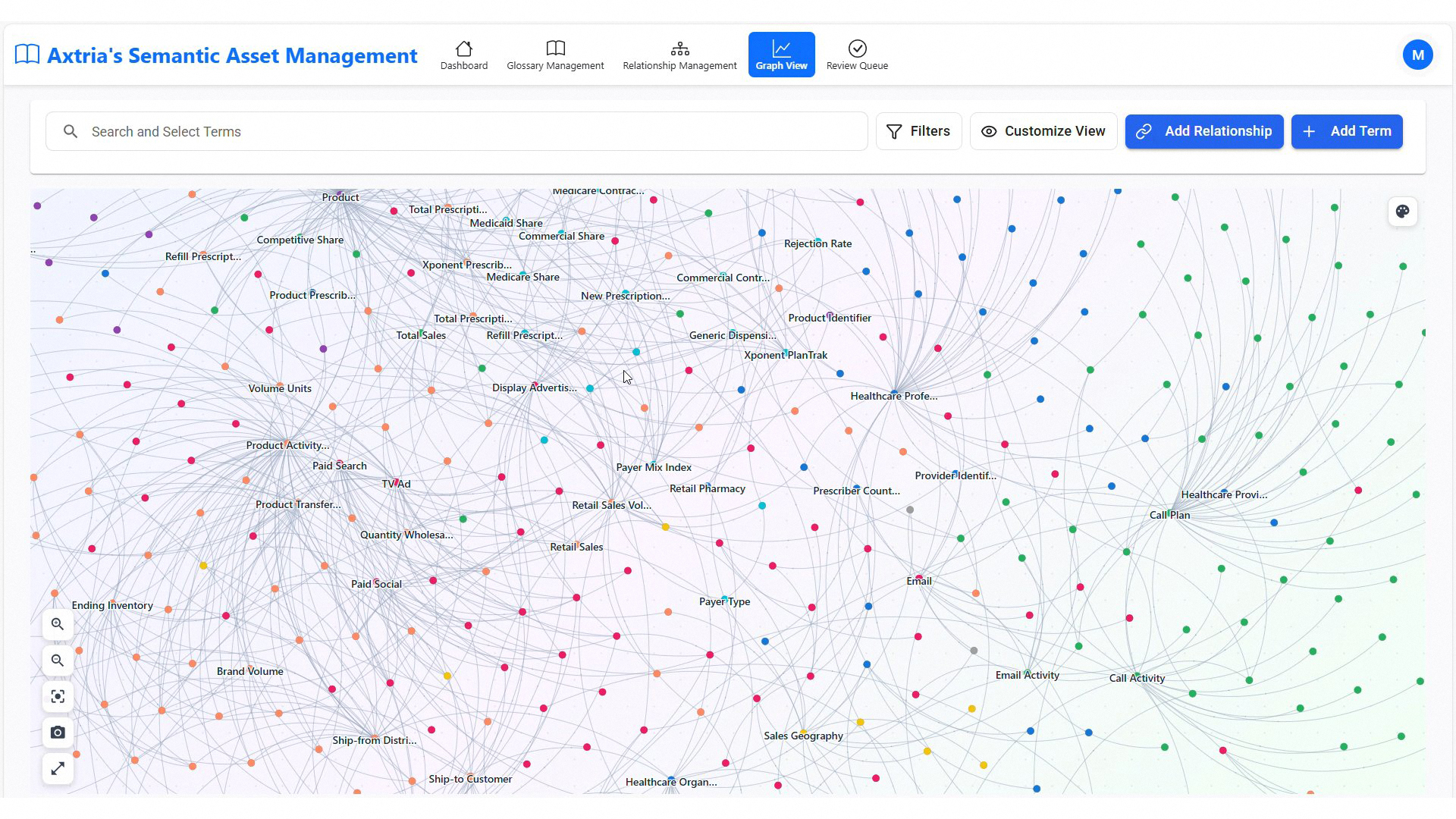
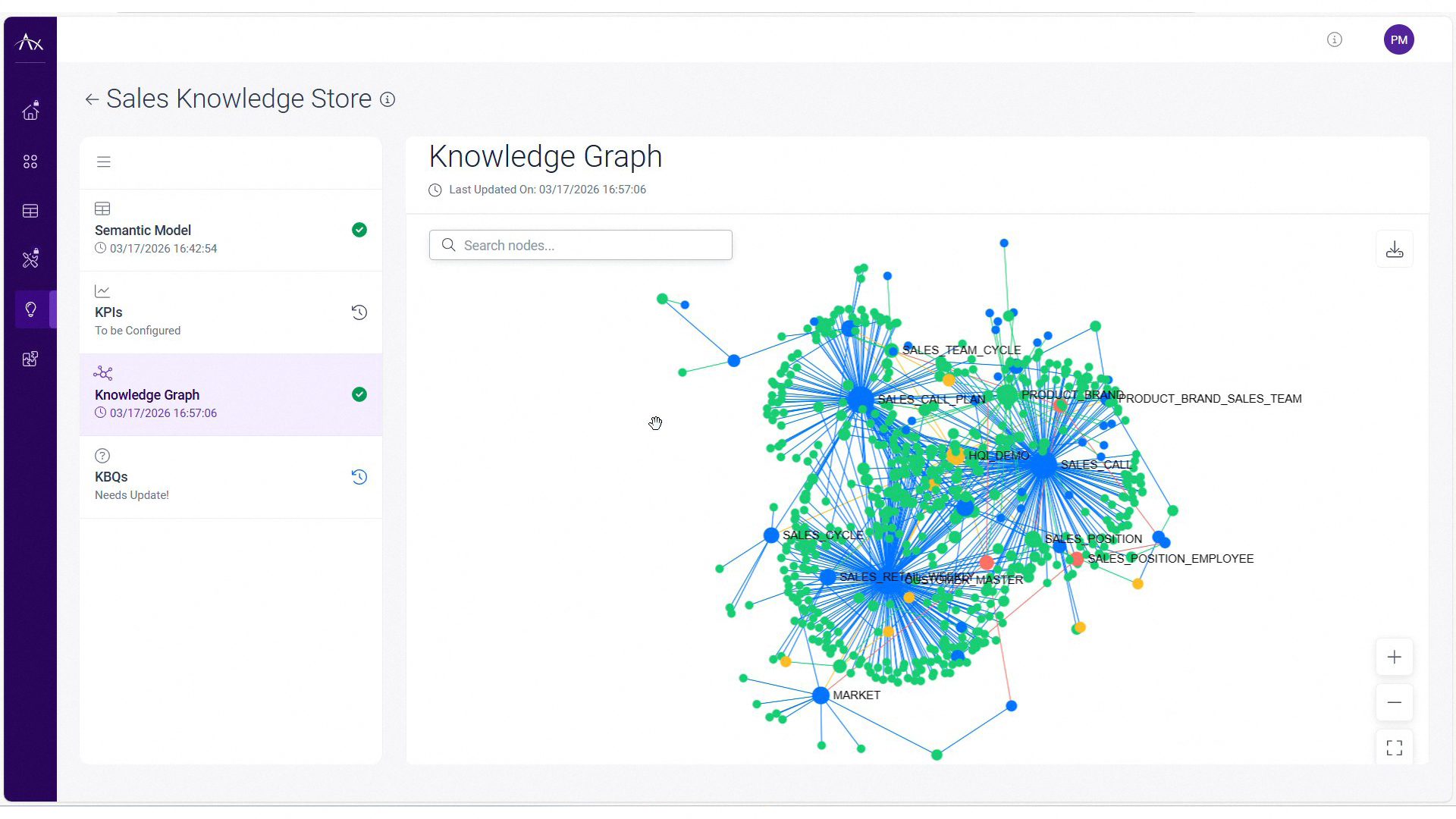
The first part is a life sciences semantic asset that Axtria HIQ brings to every deployment: more than 150 commercial concepts, 2,500 terms, 350 KPI definitions, and 700 business rules describing how pharmaceutical commercial data behaves. When HIQ connects to a client’s warehouse, it draws the relevant parts into a knowledge graph mapped to their tables and columns, so the system starts with the domain already understood, rather than learning it through use.
For governed metrics, HIQ never asks the language model what a KPI means. It executes the definition the organisation has approved, so the same question returns the same answer next quarter.
The second part is HIQ’s ability to decline. It classifies the intent behind a question before attempting it, and refuses clearly, with a reason, when the question falls outside the data or the supported analysis. If something is ambiguous, HIQ asks, rather than guesses. That guards against the most common failure mode of AI tools: confident answers that turn out to be wrong.
How does your solution work?
HIQ is less like a query tool and more like a digital knowledge worker: it asks the questions behind the one you asked. A user opens HIQ to a feed of proactive insights for their role, not an empty prompt. A brand manager might see market share growing faster this quarter. Selecting it runs the diagnostic follow-ups an analyst would run, unprompted, tracing where the growth is coming from and what’s driving it. The user can follow up in their own words, perhaps asking where there’s no matching increase in call activity, revealing white space for targeting.
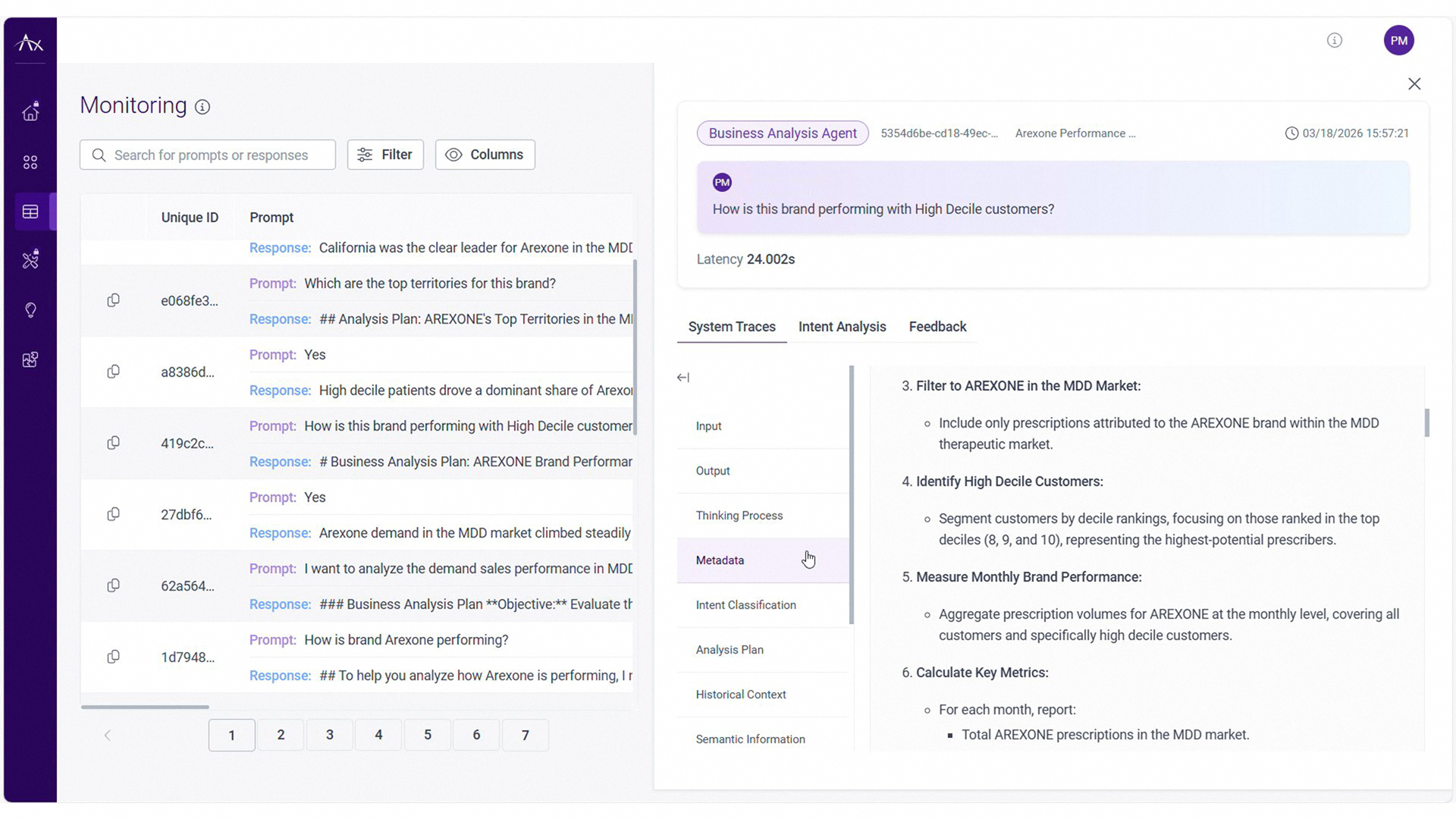
With HIQ, every answer carries its lineage: the sources, filters, joins, and query applied, so whoever owns the number can check it, rather than rebuild it. The response also passes through an Axtria-built validation layer that flags or retries anything the system can’t stand behind, instead of the model grading its own work.
HIQ runs inside the client’s AWS or Azure environment, on language models their own legal and compliance have approved. Nothing is copied or moved out of the warehouse.
What makes your solution stand out in the market?
Cloud and BI platforms have capable tools, but your engineering team could take months assembling a custom agentic layer before business users see anything reliable. And what you own afterward takes effort to keep alive: definitions drift, brands launch, alignments redraw, and model versions get deprecated underneath you.
With HIQ, the difference is what arrives already built and who maintains it. Axtria owns the pharma semantic library and the product engineering; the client owns their data and the knowledge graph built from it, which remains theirs to export. Accuracy isn’t a one-off either. Every time the data, the semantic layer, or the model changes, a separate in-house tool re-runs a representative set of questions, each with an answer pre-verified by a human. Quality that slips shows up before a user ever runs into it.
What concrete outcomes and KPI benefits does your solution deliver?
In one production deployment, HIQ is being used by more than a dozen business users across two brands, with more market access and claims data being added. Within that scope, analysts reported about 20% time savings on the investigations HIQ handles. The change that matters more, though, is that a business user who previously had no route to an answer, other than asking someone else, now has one. And they get it while the decision is still live.
About Axtria

Axtria helps life sciences companies harness the potential of data science and software to improve patient outcomes by connecting the right therapies to the right patients at the right time. The company is a leading global provider of award-winning cloud software and data analytics to the life sciences industry. We’re proud to deliver proven solutions that help pharmaceutical, medical device, and diagnostics companies complete their journey from data to insights to action, enabling them to earn superior returns on their investments. As a participant in the United Nations Global Compact, Axtria is committed to aligning strategies and operations with universal principles on human rights, labor, environment, and anti-corruption, and taking actions that advance societal goals.