Dr Craig Primack: How telehealth closes obesity care gaps
Earlier this year, when US telehealth giant Hims & Hers first unveiled plans to acquire its Australian rival Eucalyptus for a whopping $1.15 billion, the company made a bold statement of intent to become the largest global player in the telehealth space.
Through the deal, Hims & Hers would inherit a strong market presence in Australia, as well as access to several consumer brands; most notably the weight loss platform, Juniper, which operates in the UK, Germany, and Japan.
Just a few months later, the deal has officially completed. But, what does Hims & Hers aspire to achieve as it enters into these new markets? To find out, pharmaphorum sat down with the company’s head of weight loss, Dr Craig Primack, in London, to discuss his experience as a pioneer in the field of obesity medicine, and what Hims & Hers has in store for UK patients.
You’ve been working in the obesity and weight-loss arena for more than 20 years. What originally attracted you to the space?
Craig Primack: My father had a heart attack at the age of 52. It's why I went to medical school, where I got into health: my own cholesterol, my own activity, and so forth. In Arizona, we had a very good bariatric surgeon, and our hospital needed a medical programme to go along with that. I joined that programme with my business partner at the time. They sent me to a meeting, which is now the Obesity Medicine Association.
I was president [of the Obesity Medicine Association] in 2019 after being on the Board for 10 years, and I remained on for a couple of years. I found from my first meeting that you could be aggressive, meaning people were successful. People did it as a career. When I went through medical school, there was no one who was an obesity medicine doctor.
By happenstance, it's been a really good place to be in the last 10, 15 years. I can tell you, even two or three years ago, did we know that our field would be where it is today? No way.
How do you think your background of understanding the holistic needs of obesity has helped you navigate this new era of treatment?
We've always known that there is, unfortunately, a horrible bias and stigma with obesity. It's the “you need to do it more” idea, which is: you need to diet more, you need to exercise more, you need to eat less, and move more. That has never worked and has put a lot of guilt on people.
But, when you start to call it a medical disease and treat it as such, it really starts to make sense. It's different from other medical things. I use a sinus infection example all the time. A sinus infection takes an antibiotic. Somewhere between five and 10 days, you take this antibiotic, but it's usually cured, and you don't have to think about it again for potentially years.
Obesity is more of a chronic, serious disease. It's a relapsing disease. It's multifactorial. The thing that's left out of that conversation that I've personally added is that it's also treatable. We have to keep that in the conversation. If you tell someone you have a disease, but it's incurable, it doesn't empower them to do anything.
The GP is not specifically trained, nor do they have the time, to treat obesity. There are too many people in the system. The specialised obesity clinics – especially, I know, here in the NHS – some of them are completely closed to new patients. Others can be a two and three-year wait in, unfortunately, a lot of areas. Digital health fills that gap and allows people to get medical care for something they need, where they want it, how they want it and, if they qualify, when they want it.
Telehealth companies like Hims & Hers have seen tremendous success in the US market, but are you seeing similar appetite for private access to obesity care in the UK, where the NHS remains a trusted national institution?
I think people need to access their care when and how they want to. We're not competing with the NHS. The NHS is going to be busy. It's always going to be busy. It's going to take care of billions of people.
We're seeing those kinds of things in the US also. Companies and people whose insurance covered it [weight loss treatments], suddenly their insurance doesn't cover it any more. It unfortunately becomes a dollars-and-cents issue. Companies are using their whole budgets on GLP-1, and they don't have money for other things. Everyone's numbers are going up.
Being able to give people an alternative, and fill the gap that is not being met, is really where digital health comes in.
Access to medication is just one piece of the puzzle. How are you supporting those surrounding holistic elements, as well as the prescription?
It's currently described as the comprehensive approach. The biggest buzz is medications, because of the growth in GLP-1s. The second is nutrition, and giving people guidance on what and how they should be eating, knowing that there is no one diet that fits everybody, but there are some good philosophies that we can follow.
We now know protein is very important as a macronutrient. We know micronutrients and vitamins are also very important because, if you're eating less, you need to still fuel your body in the way that it needs. Staying away from what we'll call ultra-processed foods. Eat real food. Learn to cook if you don't cook. Things like that. They all help.
The third piece is activity. For many reasons, I do think activity is healthy for everybody. We know someone who is sedentary and just starts to move a little bit; their life expectancy goes up. Not only that, but their metabolic disease gets a little better. Their sleep and stress levels get better.
The buzzword now is muscle. Doing strength training at some level – doesn't have to be in the gym lifting weights – but something where you're using muscles that you don't use every day.
The last piece is the lifestyle piece around it. It's a vague term. I like to say it is proactive and reactive. Proactive says, “I'm going to give you things that you're going to put in your toolbox today”. If you're taking a GLP-1, can you take it on an aeroplane? The average person doesn't know that. If I'm having side effects, how do I deal with them? This is a really great place for telemedicine.
One of the criticisms we've heard about telehealth services in the obesity space is that it's more of a financial exchange, rather than a health support system. What would you say to that?
I would 100% disagree. There are medical conditions that – and I use the word – are transactional. Sinus infection, for example. You take your antibiotic, it does the trick, and you go home.
Obesity care is not transactional. It's a conversation, really, with your clinician. It's ongoing. Again, a patient I've been taking care of for 20 years, we have that conversation every month when she comes to see me. Through Hims & Hers, we message with our patients all the time. It could be small. It could be: “I am having a side effect. What do I do about it? Is it bad enough that I need to go to the emergency?” Everything in between.
Using telehealth, if we can even answer that question on a Friday night when it's nine o'clock at night and you're sitting at home with nausea, instead of worrying about it because your GP has gone home for the day. Saturday afternoon, the average main side effect, which is nausea, probably the one that gets people the most, peaks at about 36 hours after you take your injection. If that 36 hours is on Saturday afternoon, who's there to support you? Telemedicine is.
How do you address the issue of misinformation surrounding obesity and weight loss medications?
We did a survey on 2,000 people here in England. A couple of things came out of that – the three big pieces. Number one, there is bias and stigma about it. People want to get care from their GP, but something in the 20% don't, even though they want to ask them.
There are a lot of reasons. They don't trust the answer they're going to get. They are made to feel guilty about it. So then, where are they going because of that? They're going to social media. But, they're also finding that it's not reputable.
It makes it more important that you have a physician on the other side of your telemedicine who has an answer that's been studied, that's been proven in clinical processes to help you. I think people are looking for an answer that they're not finding. Where do we go now? We go to social media, or AI, or somewhere. We know AI hallucinates. Social media, you don't know what your source is.
Your physician has hopefully been trained with an obesity background. At least in the US, I've put together a guideline that all of our clinicians follow that's now over 150 pages – it started out smaller, and we keep adding and adapting to it.
Each time a series of questions comes up that someone can't answer, we throw it into the guidelines so everybody has access.
What do you think is currently the biggest misconception about obesity and what Hims & Hers does as an organisation?
I think the misconception is that we just give people a medicine and treat them. That is not at all what we are. Our goal is to be the same kind of healthcare you're going to get in a GP's office or an obesity specialist’s office, but in a digital format.
The medical intake is complete. It's your medical history. It's what medicines are on. It's what's worked for you in the past, what hasn't worked for you in the past. Together with your clinician, you come up with a treatment plan, and then you are sent your medicine.
We are not just trying to send you a drug and not support you because it wouldn't work. You'd take it for one month, and you'd have side effects, or it wouldn't be effective, and you'd go somewhere else. You have to treat people in a comprehensive way. It's the way that it needs to be done long-term.
If I sat down with you again, let's say in two years’ time, what would you want to have achieved with Hims & Hers that you haven't achieved now?
Even though we do a very good comprehensive programme, I think finding how everybody can lose weight. Over that time, there'll be more drugs on the market. If 10% of people don't respond to their current drugs, we'll have more.
Being able to be the place that people think about going for a lot of their healthcare, but especially in my world, it's obesity care, and that we're not having the bias and stigma conversation. Again, I don't know that it'll happen in the next two years, but would I like it to? Absolutely.
About the interviewee
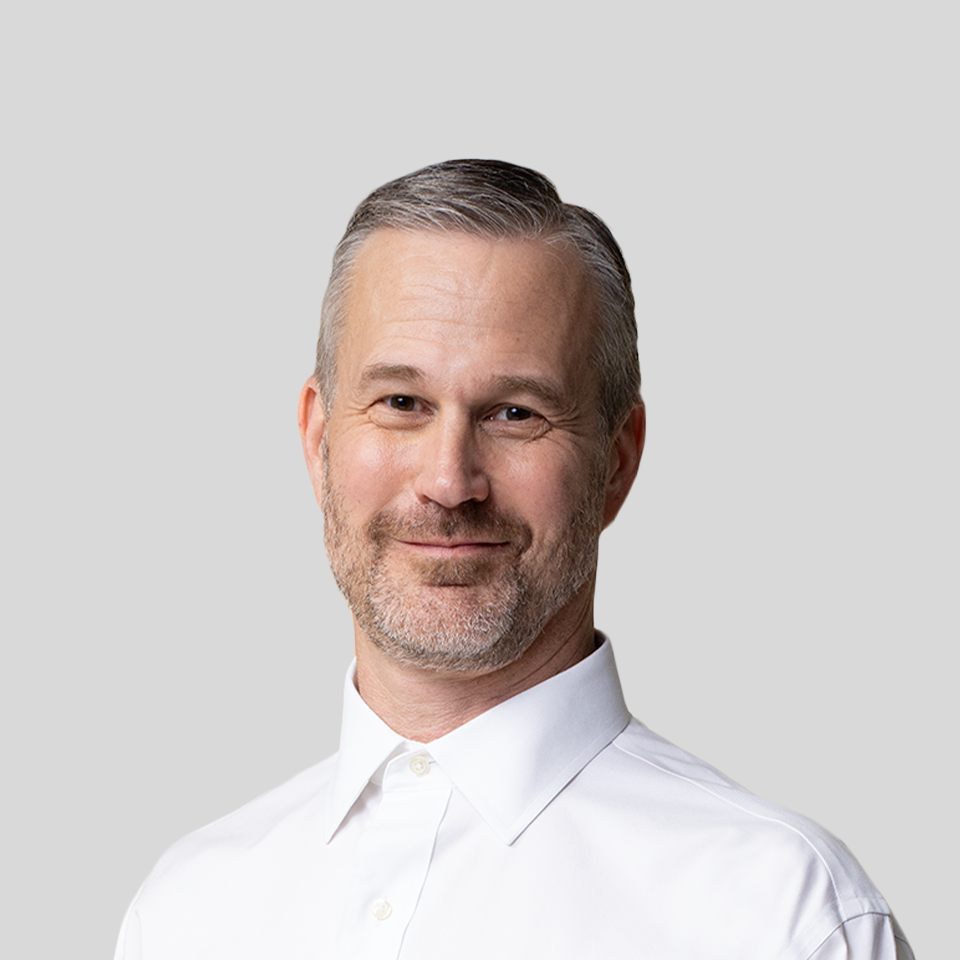 Dr Craig Primack MD, FACP, FAAP, FOMA is a physician specialising in obesity medicine. He completed his undergraduate studies at the University of Illinois and subsequently attended medical school at Loyola University - The Stritch School of Medicine. He completed a combined residency in Internal Medicine and in Pediatrics at Banner University- Phoenix, and Phoenix Children's Hospital, and received post-residency training in Obesity Medicine. He is one of about 7,000 physicians in the US certified by the American Board of Obesity Medicine. In 2006, Dr Primack co-founded Scottdale Weight Loss Center in Scottsdale, Arizona, where he began practicing full-time obesity medicine. From 2019-2021, he served as president of the Obesity Medicine Association (OMA), a society of over 5,000 clinicians dedicated to clinical obesity medicine. He has been on the OMA board since 2010, currently serving as ex-officio trustee. Dr Primack routinely does media interviews regarding weight loss and regularly speaks around the country educating medical professionals about weight loss and obesity care. He is co-author of the book, “Chasing Diets”.