Omnichannel didn’t fail biopharma. Our metrics did.

For decades, “omnichannel” has been one of pharma’s favorite buzzwords. We built journeys, added digital touchpoints, and invested heavily in data. On paper, it looked like progress. In practice, most commercial leaders I speak with admit the same thing: the impact hasn’t always matched the investment.
The issue isn’t a shortage of channels or effort. It’s the metrics we built the entire model around.
Most omnichannel programmes are still governed by legacy KPIs – reach and frequency, email opens, click-through rates, impressions. They’re convenient to collect and report. But they measure activity, not impact. None of them answer the only question that matters: did we help a healthcare professional (HCP) make a better decision for a patient?
I still hear rules of thumb like, “It takes 16–20 touches before you see an NBRx uplift.” My first question is always: 16–20 what? Emails? Banner ads? Sales rep visits? Scientific events? We’ve reduced a complex customer journey to a blunt heuristic without knowing which sequence of actions actually moves a non-writer to a writer – or turns a casual prescriber into a loyal advocate.
That’s not omnichannel. It’s multi-touch activities with no causal understanding behind it.
A shift towards personalised HCP engagement
Most commercial plans are still built brand-first. We start with our objectives, our messaging, our internal timelines – and then ask omnichannel to deliver those priorities “at scale”. But a brand-first design can’t produce a customer-first strategy. The KPIs give it away: we optimise for how often we showed up, not whether anything meaningful changed for the HCP.
The language across the industry is already shifting. “Omnichannel” is giving way to “customer experience” and “personalised HCP engagement.” It’s a healthier framing, but only if we define CX in biopharma terms. For HCPs, CX is simple: clinically relevant information, delivered when they need it, without adding friction to their workflows. If an interaction isn’t relevant, credible, well-timed and low-burden, it doesn’t matter how many channels it used, the experience failed.
The shift raises a hard question for 2026: are we prepared to measure CX in a way that goes beyond vanity metrics and reflects real changes in HCP behaviour? To get there, we must rethink three things.
1.Attribution to outcomes has to be non-negotiable.
If the only thing you can say after a campaign is that 5,000 cardiologists opened an email and 800 clicked, you don’t have an omnichannel strategy – you have activity without impact. Commercial teams need to link engagement to meaningful signals: shifts in intent, changes in prescribing behaviour, and tighter alignment between patient need and treatment choice. Attribution to Rx will always lag, but it should anchor the narrative. Everything else is an input, not the outcome.
2.We need to replace legacy engagement KPIs with customer-signal KPIs.
Instead of counting touches, we should ask a simpler question: did this sequence of actions make it easier for a physician to treat the right patient at the right moment? Did they move from ignoring our content to engaging with it? From scepticism to selective use? From trying the therapy to prescribing it consistently for appropriate patients? Those transitions become visible when you unify the right data – digital behaviour, field activity, access dynamics, and local market context. They just don’t fit into a CTR.
3.We have to accept that humans alone can’t manage this level of complexity.
No brand team can manually test every combination of channel, message, and timing across hundreds or thousands of HCPs. And even when the data exists, teams are navigating siloed systems, med-legal timelines, payer shocks, and uneven patient-level visibility, the real reasons optimisation breaks before the maths does. This is where AI changes the equation, not as another black box, but as an engine that converts fragmented data into clear, actionable guidance.
When AI unifies commercial data with de-identified patient-level data and real-world HCP behaviours, you start to see why certain sequences work and others don’t. You can test hypotheses quickly, adjust in days instead of quarters, and give field teams recommendations based on observed behaviour – not static deciles. And you can do it while keeping people in control: AI surfaces the options, humans make the call, and the system learns from what happens next.
Commercial excellence is a strategic asset
So, what does this mean for 2026? I don’t expect omnichannel to disappear; I expect it to be redefined. The companies that pull ahead will stop treating omnichannel as a checklist and start treating it as a learning system. They’ll anchor their reporting on outcomes and customer signals, rather than volume of activity. They’ll use AI to close the loop between strategy and execution so that every campaign makes the next one smarter. And they’ll design from the HCP’s point of view – their constraints, their information needs, and the patients behind every decision.
If you’re a commercial leader, the issue isn’t whether you have enough channels, content, or data. It’s whether you can tell a clear, evidence-backed story about how your work changed HCP behaviour in ways that matter for patients – and whether you can repeat and scale that in a dynamic market.
Omnichannel didn’t fail pharma. Our metrics did. In 2026, fixing that won’t be optional. It will separate teams that keep adding noise from those that finally deliver the personalised, measurable engagement this industry has been talking about for years.
About the author
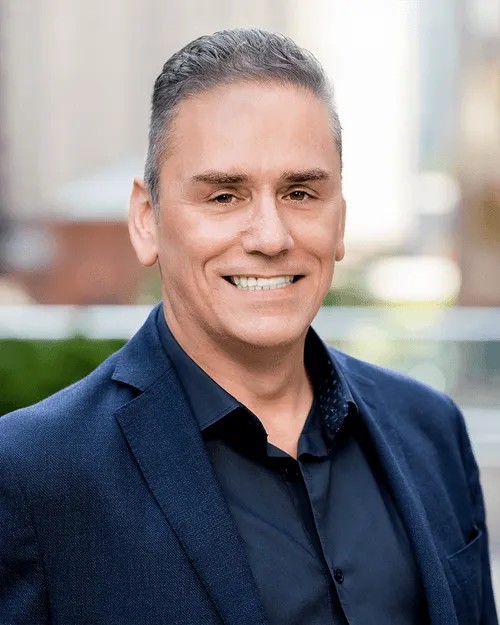 Philip Poulidis is chief executive officer & co-founder of ODAIA. He is a serial entrepreneur and Silicon Valley technology executive with over 25 years of experience as a start-up founder, public company executive, and board member in semiconductor, IoT, SaaS and digital health. He founded Morega (exit to AT&T) and was an executive at Marvell and BlackBerry.