Four reasons pharma is sweeping the Super Bowl despite FDA fears
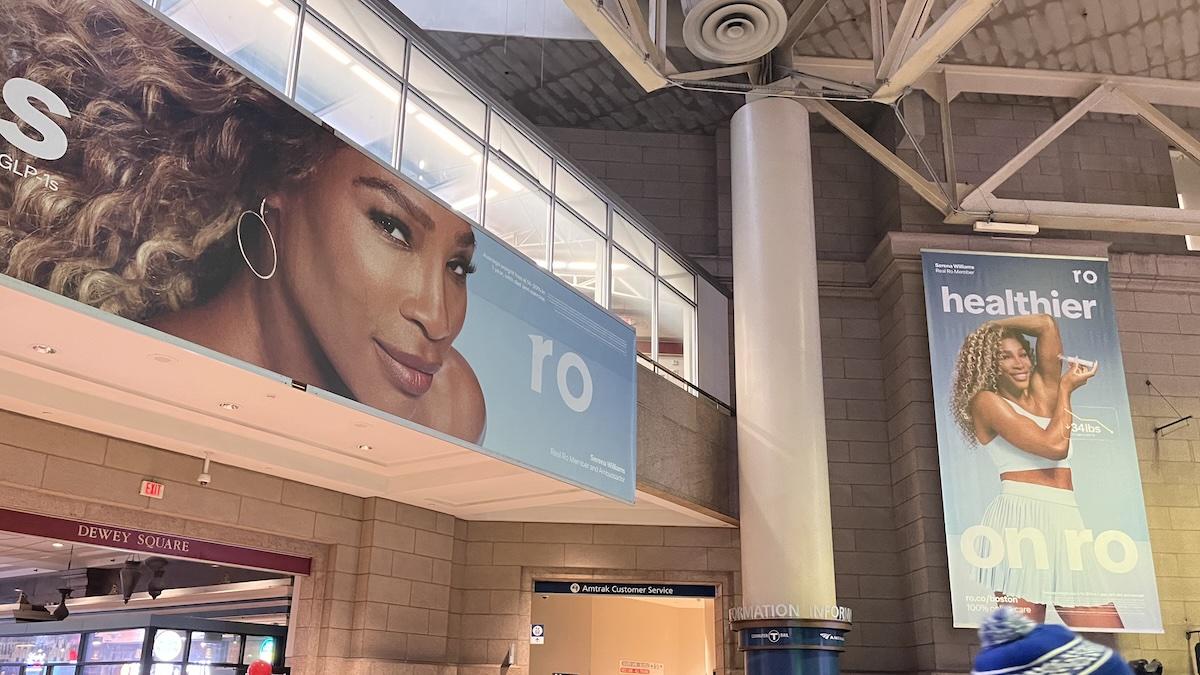
Ro spokeswoman and tennis superstar Serena Williams, seen here in an ad campaign in Boston's South Station, will also feature in the company's Super Bowl spot.
Less than six months ago, the FDA initiated a crackdown on D2C advertising, sending out a slew of warning letters and talking about throwing up major impediments to pharma advertising on TV.
“I see the TV ad market heading into Super Bowl 2026 as increasingly precarious,” Sandy Donaldson, cofounder and chief strategy officer of Impiricus and former head of global omnichannel at UCB, told pharmaphorum in an email. “What was once a cornerstone of healthcare brand building is now in the crosshairs of regulatory and political fire from regulators who believe direct-to-consumer drug ads have routinely prioritised hype over clear, balanced risk communication.”
Yet on Sunday, the Super Bowl will feature an unprecedented number of pharma ads from Boehringer Ingelheim, Novartis, and Novo Nordisk, plus telehealth companies Ro and Hims and Hers. Lilly will have a spot in pre-game programming and on Peacock during the game and Pfizer, while skipping the game itself, unveiled a sports-themed ad campaign this week.
So why is pharma advertising surging in the biggest ad playground of the year at a time when you might expect companies to be keeping their heads down for fear of regulatory backlash?
There are several answers to that question, none of them mutually exclusive.
1. Timing is everything
Ad space during the Super Bowl sells out way in advance, and it’s possible that these companies were locked in before the FDA crackdown in September. Jim Potter, the executive director for the Coalition for Healthcare Communication, says he knows of at least one company that found itself in that situation.
It’s worth noting that of the three big pharmas advertising during the game itself, only one commercial, Novo Nordisk’s Wegovy spot, is a typical drug ad with side effects and warnings at the end. Both Boehringer Ingelheim and Novartis are focused on awareness campaigns aimed at getting people to do screenings, for high uACR and prostate cancer respectively. This would have been a safe option for companies nervous about another regulatory crackdown between September and February, Potter said.
2. The crackdown that wasn’t
But all of that might be a moot point because so far there hasn’t been that much of a regulatory crackdown.
“If you analyse what happened with the entitled letters, most of those letters are closed out,” Potter said. “Which means they basically went in, they did reshoots or they did some edits, and they brought it back and said, here, how about this? And the agency said, yeah, we're closing out our concern about what we had with your previous ad.”
Though there is likely some kind of guidance or rulemaking still forthcoming, Potter is sceptical that the agency’s rhetoric about closing the so-called 1997 loophole will come to anything.
“From my perspective, that's either a big misnomer or they did really sloppy research through AI to come up with that idea,” Potter said, noting that the FDA's basic premise, that the 1997 rule introduced changes to statutory requirements, is inaccurate, and that even if it weren't, aggressive attempts to limit pharma advertising are still likely to fail in court against First Amendment challenges.
Of note, one area where the FDA enforcement is still very possible, and letters have not been closed out, is GLP-1 compounding, which underlies the Ro and Hims and Hers ads this year. Just yesterday FDA Commissioner Dr Martin Makary posted a warning on X to GLP-1 compounders, promising “swift action”.
3. GLP-1s need bigger megaphones
The economics of Super Bowl advertising require a product that’s going to have a large enough addressable market to justify the $7 million or more price tag. For pharma in 2026, that’s GLP-1s. Of the seven ads I mentioned at the start of the article, four are related to GLP-1s at least in part.
The Wegovy pill ad is Novo's first ever Super Bowl ad and it features a star-studded case of actors and comedians, Ro is leaning into its partnership with tennis star Serena Williams, and Hims and Hers is airing a more high-concept ad that nevertheless alludes to GLP-1 medications.
Especially as the Wegovy pill is coming out, Lily’s answer is launching soon, and compounders are responding with their own pills, the GLP-1 wars are in full swing. We shouldn’t be surprised that the Super Bowl is a major battlefield.
4. Taking control of pharma’s narrative
A more interesting explanation is that pharma’s presence at the Super Bowl is about more than poor timing or mass market blockbusters. It might represent a sea change in how pharma is presenting itself to the wider world.
“What the Super Bowl allows healthcare and pharmaceutical brands to do, it's not just about reach, it's about cultural permission,” Heather Coyle, president of the brand consultancy Triggers, told pharmaphorum. “When pharma and healthcare brands are showing up here, it's signalling this is mainstream, it's not fringe, it's not shameful. They're saying that health belongs in everyday culture, right alongside cars and beer and whatever other pop culture, Doritos, Pepsi that are coming forward, not just in exam rooms.”
Less than a year ago, I wrote about how the IRA caught pharma off guard and the industry was just beginning to reckon with how deeply unpopular it’s become. At last year’s Super Bowl, Hims & Hers caught flack for running an ad that played into that negative public perception of pharma.
Coyle believes that pharma’s presence at the Super Bowl is an effort by the industry to proactively change its place in the culture.
“I think if you take a look at the ads for the Super Bowl this year, they're really framing health choices as reflections of who you are and what life you want, not just clinical decisions and outcomes," she said. "I think that overt shift from, ‘here's a drug for your disease’ to ‘here's a story you see yourself in’ is a really massive shift.”