Closing the digital gap: Paid media’s essential role in omnichannel strategy

In the evolving landscape of healthcare professional (HCP) engagement, face-to-face interactions remain a cornerstone. They offer the personal touch that builds trust and fosters deep discussions. Still, HCPs increasingly turn to digital channels for information, as traditional methods alone may fall short.
Paid media emerges as an essential amplifier of HCP engagement. It generally encompasses:
- Social advertising, such as targeted posts on platforms like LinkedIn or X and on relevant platforms according to countries and regions.
- Programmatic display ads targeting HCPs on non-medical environments and B2B platforms such as professional networks.
- Paid article placements in industry publications.
Paid media helps to extend content and messaging and reach HCPs where they are already active. By weaving paid media into the full engagement funnel, pharmaceutical brands can bridge critical communication gaps, deliver personalised experiences, and accelerate product adoption and memorisation.
A 360-degree approach to HCP engagement can transform fragmented touchpoints into seamless journeys that ensure brands meet HCPs on their own terms while driving measurable outcomes.
Breaking the cycle of digital disconnect
HCPs today maintain robust digital presences across social platforms, medical publishers, and professional networks. This creates untapped opportunities for interaction. Traditional channels, however, face mounting limitations.
As powerful as they can be, email waves remain quite transactional and are not part of a real integrated orchestration. Field rep access declines due to busy schedules and regulatory hurdles. In-person events are constrained by logistics and compliance. This is why paid media can step in as an important way to support and amplify other touchpoints. It reaches HCPs in their preferred environments when it is most convenient for them.
Digital capabilities are rarely leveraged to their full potential, especially with the rise of AI-powered tools that reveal HCP interests, needs, and pain points.
As face-to-face visits decrease, companies must turn to data-driven alternatives to gather insights and anticipate HCP requirements. Paid media, when integrated as part of a cohesive strategy, can complement these efforts. It helps to provide reach beyond emails and in-person touchpoints, ensuring no HCP is overlooked.
Outsourcing partners can help navigate this complexity, but the key lies in starting with a strong internal strategy. Without such connections, HCPs face a maze of disconnected experiences, which can lead to frustration and missed chances for better patient outcomes.
Paid media increases brand awareness and reach
One of the most powerful roles of paid media lies in its ability to close coverage gaps that traditional tactics may leave behind. For instance, while email campaigns might reach a vast majority of a target audience, targeted advertisement can capture the attention of HCPs who are not actively engaging with email or not available for visits. Using first-party HCP data helps to enable precision targeting, going beyond specialty, behaviour, and channel preference to include areas of expertise, peer influence, and more.
By starting with unbranded content to build awareness and educate, and progressing to personalised invitations, these efforts not only expand reach, but also help to nurture HCPs through the engagement. This can turn passive viewers into active participants. Misconceptions, such as the idea that paid media is just social or irrelevant for regulated content, often hold brands back.
Understanding brand sentiment to design smarter communications
Paid media platforms offer more than just delivery. They provide a window into HCP perceptions through brand sentiment tracking and share-of-voice analysis. Monitoring how HCPs discuss, share, or react to brands on social channels can reveal positive or negative trends. This allows pre- and post-campaign evaluations to gauge its impact on awareness and favourability. This enriched data helps to inform dynamic communication plans. It aligns content with HCP preferences and behaviours observed across scientific and social environments.
Integration is key. An omnichannel journey might begin with an email invitation that is reinforced by a reminder via social or app notifications. Community building plays a role, too. The goal is to make HCPs feel valued with relevant content tailored to their needs and interests and foster genuine peer-to-peer interactions. This evolves from episodic campaigns to ongoing dialogues and adapts to individual practice settings and time constraints.
Strategies for successful omnichannel execution
To execute effectively, brand teams must select the right mix of channels. Social media works for HCPs who seek peer interactions. Programmatic efforts work for broad awareness. Trusted portals manage in-depth content with compliance remaining paramount. Unbranded campaigns can help navigate platform policies, while authentication tools verify users before displaying sensitive information. Partnering with specialists can streamline the execution of omnichannel campaigns, from creative production to the collection of performance analytics. This becomes especially valuable when setting up and separating precision campaigns, which target verified HCPs, from predictive ones that leverage AI to forecast behaviours.
The ideal journey varies by strategy. For rep-focused outreach strategies, paid media and email help fill gaps in those territories not visited by reps. In hybrid models, reps serve as the entry point, while tools such as banner ads help with awareness, and emails are for follow-up and reminder notifications. Emerging channels like clinical support applications and point-of-care screens add promise. They create loops where patient-facing content can prompt HCP inquiries and are all measurable through adaptive key performance indicators (KPIs). Adding these channels is just the start. With so many touchpoints, questions arise about targeting the right stakeholders first, as well as where, how, and for what return on investment (ROI).
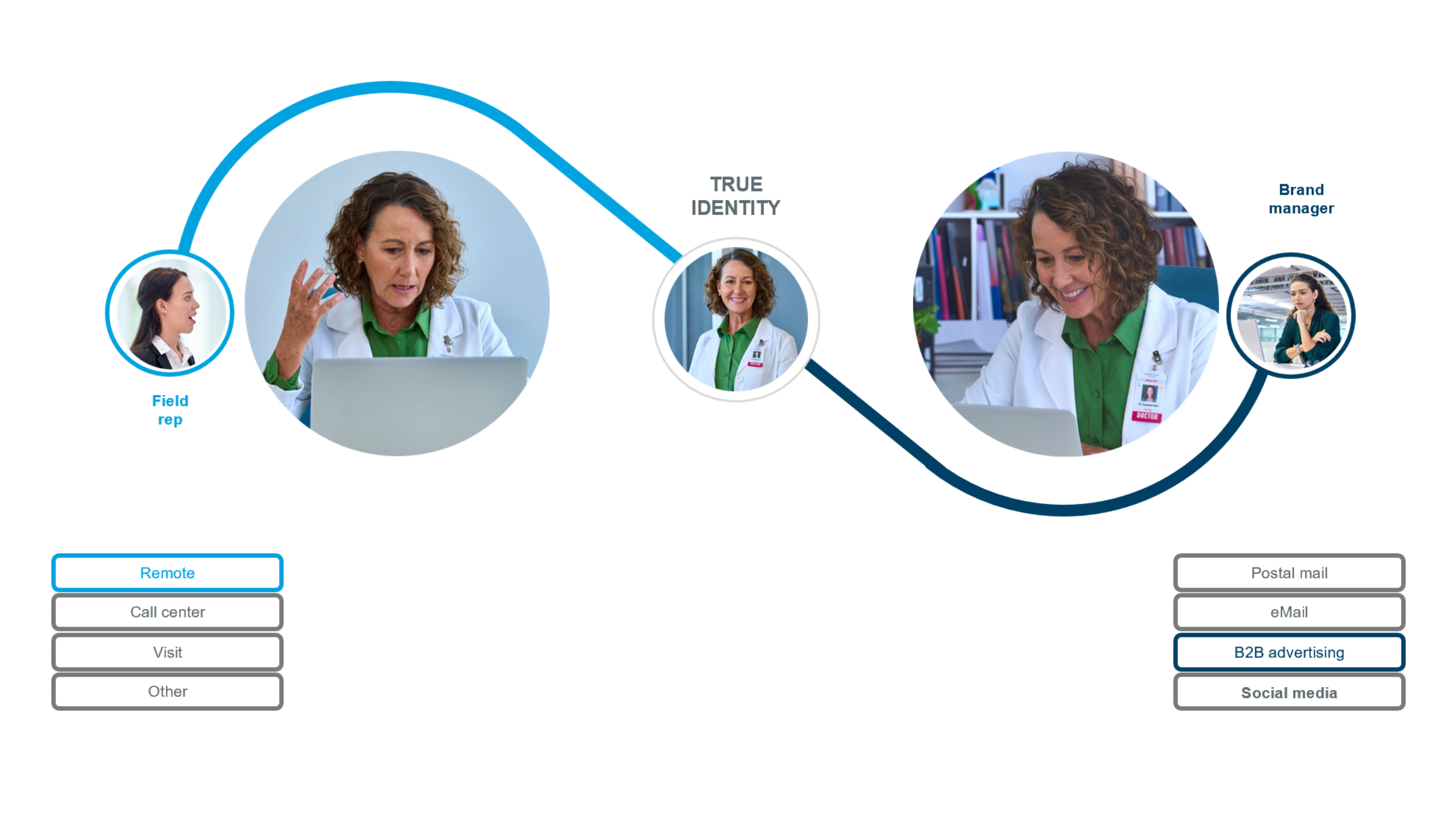
Data can help, as it goes beyond basic profiles to include channel preferences, influence levels, and content affinity. This information helps to facilitate persona creation, messaging personalisation, and optimisation. Measurement can adapt based on KPIs, from campaign metrics to full ROI. Success also demands organisational shifts, breaking down silos between marketing, medical, and operations teams to prioritise journey-centric designs over departmental boundaries.
Making paid media work for your brand
To harness the potential of digital in a 360-degree omnichannel framework, start by assessing current channel performance and pinpointing HCP coverage gaps. Pilot integrations, along with existing tactics, can help quantify incremental reach, engagement, and outcomes, such as consent rates, meeting bookings, and product inquiries. Beyond impressions, companies should track influence on prescribing behaviour and ROI. This helps turn digital from a siloed effort into a strategic driver. Unified analytics can connect interactions to market outcomes and prove how coordinated efforts help boost adoption and efficiency.
As HCPs continue to embrace seamless, personalised interactions, brands that embrace paid media within omnichannel strategies will lead the way. The time to evolve is now.
About the author
 Yannick Lafortune is associate product and strategy director at IQVIA, where he leads the exUS OneKey Digital enablement strategy and offerings. Lafortune has over 10 years of experience in the digital and advertising space across commercial and technology areas, including experience at Magnite, Hawk (an Azerion Company), and now with IQVIA.