Staying on course: How hybrid FSP/FSO models are shaping clinical development

Escalating pressures in clinical trials are amplifying long-standing issues related to growing complexity, costs, and extended timelines, putting greater burdens on sponsors, sites, and patients. The average time to complete a clinical trial has increased by approximately 20-30% over the past decade.1 Patient participation burden in Phase II and III protocols also increased 39% between 2011-2014 and 2019-2021,2 with more procedures, endpoints, and admin time required per protocol.
Faced with these compounding challenges, biotech and pharmaceutical companies increasingly require additional agility, flexibility, and operational efficiency in their clinical research operations. Clinical trial operations must also evolve to navigate growing complexity while ensuring timelines are met so new medicines can reach patients quickly and with care.
Strategically selecting the right outsourcing model helps maximise quality, operational success, and financial efficiency. The increased use of hybrid models that combine functional service provider (FSP) services with full-service outsourcing (FSO) models offer significant flexibility and improvements in how trials can operate, delivering flexibility and operational efficiencies while allowing sponsors to complement their existing expertise and retain more control over critical functions.
Hybrid models: Built for flexibility
Multiple factors influence the outsourcing process, and biopharmaceutical companies typically use a variety of models. Some choose FSP partnerships, which involve the outsourcing of all or most of one function (for example, clinical operations or pharmacovigilance). Others choose full-service outsourcing, which involves the outsourcing of all clinical trial tasks. Growing use of hybrid FSP/FSO models changes this dichotomy, combining elements of both models into bespoke solutions that empower sponsors to optimise their operations and pull in tailored services and support.
The numbers back this up. Our 2025 FSP Trends Report, for example, found that FSP use is growing faster than FSO, with 35% of drug developers increasing their use of FSP outsourcing in the last two years versus, 29% who increased their use of FSO. The use of FSP and hybrid FSO/FSP models is also on the rise, with two-thirds of clinical development outsourcing involving FSP and flexible staffing models (40%) and hybrid FSP/FSO models (26%) – which is up from 62% of outsourcing in 2023. This shift is not just for large pharma; biotechs and mid-sized firms are making the switch, too, as these models offer scalable options to augment their in-house teams with specialised expertise to keep operations running smoothly.
In fact, preference for hybrid FSP/FSO outsourcing is increasing most in small/mid-size companies (34% in 2024 vs 22% in 2023). In the face of mounting complexity, embracing a hybrid approach helps sponsors manage risk, keep trials progressing, and adapt when the unexpected happens.
Hybrid models solve real-world problems
Clinical trials are more complex than ever. Protocols demand more, patients are harder to find, and regulations continue to evolve. To help sponsors remain agile, hybrid models allow organisations to add single or multiple FSP offerings to an existing FSO arrangement to optimise clinical trial operations and address unanticipated or changing demands. And just as no two companies are alike, neither are any two hybrid solutions the same. By mixing FSP and FSO services, sponsors can tailor their outsourcing for each project’s needs.
The gains go beyond speed and cost. Hybrid FSP/FSO models are helping sponsors augment FSO arrangements to support expansion into new regions, therapeutic areas, or clinical trial phases.
Additionally, hybrid models are often used when a sponsor wants to retain greater control of a critical or strategically important clinical development function. By arming sponsors with greater flexibility, this model delivers additional resources or specific capabilities to meet unexpected demand and keep projects on time and on budget.
Common use cases for hybrid solutions include:
- Enhancing an existing FSO arrangement with added expertise or resources for a specific study function
- Supporting sponsors that need clinical development resources in areas where a full FSO model is not practical
- Addressing needs that an FSO alone cannot fulfil, such as entry into new regions, therapeutic areas or trial phases
- Retaining greater control over critical or strategically important clinical development functions
- Preserving consistent product and programme knowledge across an entire portfolio
- Rapidly scaling resources or capabilities to keep projects on schedule and within budget when faced with unexpected demand
- Ensuring continuity — including key staffing continuity — during periods of business disruption
- Reducing risk by avoiding reliance on a single outsourcing provider for all clinical development functions
- Enabling a seamless transition from an FSO model to an FSP engagement
Ensuring programme success to keep timelines on track
Effective hybrid FSP/FSO partnerships need clear and consistent communication, engaged oversight, and a shared focus on quality. Sponsors and FSP partners must set clear goals, define how to measure success, and stay involved from start to finish. The best FSP partners become true extensions of the sponsor’s team, bringing both technical skill and a deep sense of the sponsor’s culture and objectives to their work to help them meet their timelines.
Looking ahead, the clinical trial landscape will continue to shift. Augmenting FSO arrangements with FSP solutions creates a bespoke hybrid FSP/FSO model that maximises clinical trial performance and overcomes persistent challenges in clinical development.
Sponsors who use this flexible, focused approach will be ready to deliver faster, more efficient, and more patient-focused research. For an industry under pressure to evolve, this is not just good news – it is a clear path forward.
References
[i] Tufts Center for Drug Development, Association of Clinical Research Organizations, Journal of Society for Clinical Trials
[ii] Tufts Center for Drug Development, JAMA, Deloitte, Institute for Human Data Science
About the author
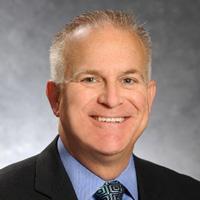
Les Enterline is senior vice president and global head of PPD FSP solutions, part of the PPD clinical research business of Thermo Fisher Scientific, where he leads the strategy and delivery of innovative functional service partnership models that help clients accelerate drug development. He joined PPD in 2014 after nearly 18 years at Bristol-Myers Squibb, where he advanced collaborative science and research operations. Enterline brings deep expertise in building scalable, flexible solutions that enable biopharmaceutical companies to achieve their development milestones efficiently.