Why Britain's blood tests are only as reliable as the journey to the lab
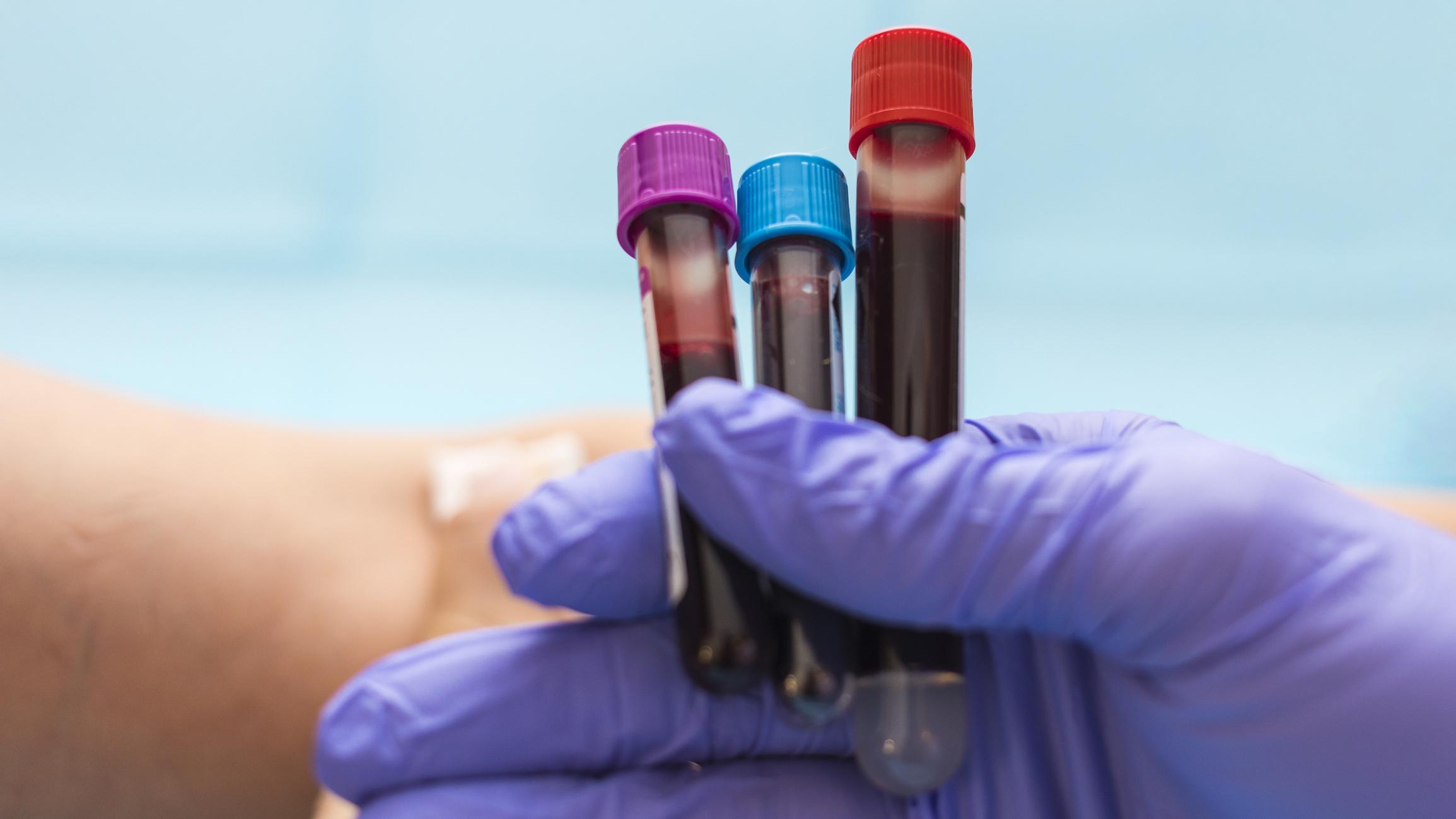
A modern hospital laboratory analyser can return a result with an error rate of around 0.0001%. It is one of the most precise pieces of equipment a hospital owns, and the NHS has spent vast sums acquiring this kind of kit. Yet, ask any biomedical scientist what undermines diagnostic accuracy day to day, and the answer rarely involves the analyser itself. It’s what happens before the sample even arrives.
The separation of phlebotomy from pathology some years ago was a mistake. What happens in phlebotomy has a huge impact in pathology, and the different funding streams and management means that interests are no longer aligned.
The journey a blood tube takes from a patient's arm to the laboratory bench is governed by a strict biological clock. Once drawn, a sample has roughly four hours before cellular breakdown begins to alter its chemistry. Red cell membranes start to fail, releasing potassium and other intracellular contents into the surrounding serum or plasma, resulting in haemolysis: a sample either flagged as unsuitable for testing, or worse – analysed anyway and reported with incorrect values.
In practice, the four-hour clock is eaten away before a sample is even logged. Tubes arrive at reception needing their date and time recorded, urgent specimens need prioritising, and a large proportion need re-labelling before they can go near an analyser. Each of these steps adds minutes that the sample cannot spare. Many laboratories have responded by centrifuging everything as soon as it arrives, separating plasma or serum from red cells before degradation can take hold. It is a sensible workaround, but it is also an admission that the upstream process cannot be trusted to deliver a usable sample in good time.
When a sample does fail, the consequences may be significant, as patients may need to be recalled and re-bled, effectively doubling the cost of that test. For factitious hyperkalaemia this might be alarming, with a visit or phone call to one’s home in the middle of the night instructing the patient to attend A&E urgently to check the blood potassium. For most adults, that is an inconvenience. For a neonate or an oncology patient already enduring repeated venepuncture, it is additional physical trauma layered onto a treatment pathway that was meant to move quickly.
The scale of the problem
An estimated 70%1 of what gets recorded as "laboratory error" has nothing to do with the laboratory at all. Those errors originate earlier at the point of collection, labelling or transport. Poor-quality labels that cannot be read, alone mean that somewhere between 12% and 15%2 of all tubes arriving at a lab cannot be read automatically and must be pulled aside for manual re-labelling. Across the UK, that adds up to more than 50 million tubes a year, with some of the larger laboratories re-labelling 10,000 to 15,000 tubes daily.
The problem is most acute for samples sent in from GP surgeries and community diagnostic hubs, where bedside thermal printers and inconsistent label templates frequently produce barcodes that laboratory systems simply cannot parse. The fix, i.e., transcribing the details by hand and printing a new label, sounds trivial, but it pulls a trained biomedical scientist away from analytical work and introduces exactly the kind of manual, error-prone step that automated systems were supposed to eliminate. In effect, hospitals end up running a low-tech workaround inside a high-tech facility.
Haemolysis rates illustrate just how widespread phlebotomy issues are. In emergency departments, where turnaround pressure is greatest, between 17% and 25% of samples show signs of haemolysis. Among inpatients generally, the figure sits between 4.5% and 10%.3 Each of those samples carries the risk of a falsely elevated potassium reading, masking a genuinely low level or suggesting a dangerously high one that isn't really there. Clinicians making decisions on undiagnosed patients are, in a meaningful proportion of cases, working from numbers that were compromised before the sample even reached the analyser.
When labelling goes wrong
Mislabelling carries its own, separate set of risks. In some hospitals, phlebotomists still print a batch of labels before starting a ward round, then match them to patients as they go. Even a small error rate here scales quickly: wrong blood in tube (due to mismatched patients) was observed in one hospital study in up to 0.6% patients. This equates to roughly two incorrect results a day in a 1,000-bed teaching hospital, around 800 a year. If only 5% of those results are clinically significant, that is an estimated 40 patients harmed annually from labelling errors alone.
In transfusion medicine, “wrong blood in tube” is not simply a paperwork issue: a misidentified blood group can lead to a patient receiving incompatible blood and suffering an acute haemolytic transfusion reaction. It remains one of the most serious recognised risks in diagnostic pathology, and it is entirely preventable.
Evidence that this can be fixed
None of this is new to laboratory staff, and none of it requires new analytical technology to solve. Research by Barak and Jaschek looked at what happens when IT-led interventions such as barcoded tubes, integration with laboratory information systems, and automated transfer of clinical data, are introduced at the pre-analytical stage. Across millions of tests, pre-analytical error rates fell from 2.7% to 0.77%.4 The NHS's own Getting It Right First Time (GIRFT) programme has reached a similar conclusion: quality has to be measured across the whole diagnostic journey, starting from the moment a clinician places an order, not from the moment a sample lands on the analyser.
North Central London's Integrated Care Board offers a working example of what this looks like in practice. Across the area, blood tests are ordered digitally and samples can be taken at a pharmacy, community clinic, or GP surgery without a paper form, with results routed automatically back to the requesting clinician, regardless of where the blood was drawn. Re-labelling on arrival has been eliminated, and chain-of-custody tracking now runs continuously from order to confirmed lab receipt. Primary and secondary care are, for the purposes of this workflow, operating as one system, rather than two that happen to share patients.
A process problem, not an equipment problem
The pre-analytical stage has been treated for too long as background noise, something laboratories simply absorb the cost of, through re-labelling, repeat bleeds, and stabilisation workarounds. But the NCL experience suggests this process failure is solvable, not an inevitable feature of how blood testing works. Trusts that join up ordering, collection, and laboratory systems stand to recover bed capacity, cut unnecessary repeat testing, and reduce wastage on collection materials – savings that come on top of the patient safety benefit.
The analytical end of the pathway is, by any measure, performing brilliantly. The question every laboratory director and trust board now needs to answer is a simple one: how much longer can that precision be allowed to go to waste on samples that were already compromised before they arrived?
References
[1] Plebani, Mario. (2012). Pre-analytical errors and patient safety / Preanalitičke greške i bezbednost pacijenata. Journal of Medical Biochemistry. 31. 10.2478/v10011-012-0014-1.
[2] Barak M, Jaschek R. A new and effective way for preventing pre-analytical laboratory errors. Clin Chem Lab Med. 2014;52(2):e5-e8. doi:10.1515/cclm-2013-0597; Carraro P, Plebani M. Errors in a stat laboratory: types and frequencies 10 years later. Clin Chem. 2007;53(7):1338-42.
[3] Ibid.
[4] Ibid.
About the author
 A Professor of Medicine at UCL, an experienced clinician working in the Royal Free London as a hepatologist, acute physician and a clinical pharmacologist, Professor Kevin Moore is also an author of the Oxford Handbook of Acute Medicine with ~ 200,000 sold copies. As a clinician, he has experienced the many frustrations of manual workflows, which lead to patients becoming lost in the system, either in referral or long-term follow-up. During Covid, the problems faced by the many patients under long-term surveillance became acutely manifest, leading him to tackle the technological challenges impacting patient safety head-on by co-founding Salutare.