Community pharmacy is ready to lead. Now it needs the system to catch up.
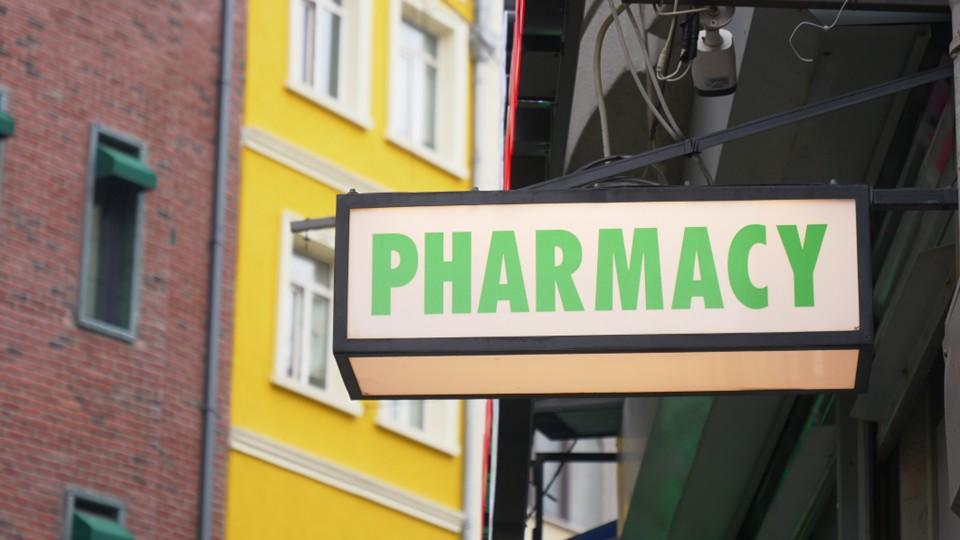
Ask most people where they go when they feel unwell and the answer will still likely be their GP. But for many everyday health concerns, a community pharmacist can offer faster, more accessible, equally expert advice without an appointment. The capability is already there. The challenge is whether the wider healthcare system can make full use of it.
That matters because prevention and local access to care sit at the heart of the NHS long-term plans and ambitions. Community pharmacy is the infrastructure that makes that vision possible. But infrastructure without investment does not hold.
The ambition is real, the resourcing is not
Community pharmacies are within a 20-minute walk for 89% of the population, rising to 99.8% in the most deprived areas.[i] They handle over 1.3 million consultations every week in England alone, with the vast majority resolved on the spot.[ii] Without them, an estimated 725,000 more patients would end up at their GP surgery every week. Initiatives like Pharmacy First in England and Scotland, and A New Prescription in Wales have begun reshaping how patients access care. The clinical case for pharmacy as a frontline healthcare destination has been made, tested, and proven.
Yet, at least 65% of pharmacies in England operated at a loss in 2025.[iii] Core funding has been cut by 30% in real terms over the past decade, even as the number of items dispensed has increased by over 100 million.i 95% of pharmacies told the National Pharmacy Association they are not financially positioned to support the government's ambitions to move care into the community. We are asking pharmacy to do more while systematically making it harder to do so.
This is not a funding debate for its own sake. Every pharmacy that closes, or that is too stretched to offer clinical consultations, is a gap in the frontline of prevention. In 2023, over 75,000 deaths in England were attributable to preventable conditions.[iv] Self-care, guided by trusted local pharmacists, is one of the most cost-effective levers we have to shift that number. The weighted average societal return on preventive interventions is £9 for every £1 invested.[v] The economics are not complicated.
Three things need to change
Delivering the NHS’s 10-Year Plan will require coordinated action across government, regulators, and industry. Three areas stand out as priorities:
- Funding must reflect responsibility.
Ring-fenced budgets for clinical services, tied to outcomes, rather than dispensing volumes, would better reward the contribution pharmacists already make and the expanded role they are being asked to take on. Independent prescribing for non-acute conditions is a logical next step, building on initiatives like Pharmacy First and A New Prescription and enabling pharmacists to manage more of the routine workload that currently lands unnecessarily with GPs. 57% of pharmacy owners have been forced to stop recruiting or filling vacancies in the past year,iii despite ever more being asked of them. That is not a workforce that can absorb more responsibility without investment. - Regulation needs to move at the pace of healthcare need.
The MHRA is a world-class regulator, but limited capacity creates delays in medicine reclassification that restrict patient access to appropriate self-care. Greater investment in regulatory resource would accelerate responsible innovation without compromising safety. The reclassification pathway from Prescription Only Medicine to General Sales List has proven its value when applied well, and expanding that pipeline supports patient choice while reducing unnecessary clinical contact. - Digital integration cannot be an afterthought.
Full pharmacist read-write access to the Single Patient Record is essential to a joined-up care pathway. Without it, pharmacy operates in isolation, highly capable, but unable to share or receive the information needed for seamless triage, referral, and follow-up. 84% of patients support the use of their data within the NHS and 83% trust the NHS to use it responsibly. The public appetite is there. The infrastructure needs to follow.
Making self-care as simple as it should be
Health is in your hands. This means stripping out every layer of unnecessary complexity between a person and the care they need. Clearer product information. Packaging designed around how people actually use things. Digital tools that make the pharmacist consultation faster and more confident. Simpler supply chains so the right product is on the shelf when someone needs it.
As an industry, we all need to work to remove the less obvious barriers, the ones that are easy to overlook. Men experiencing erectile difficulties often feel real reluctance to raise the issue, even in a pharmacy setting. When Cialis Together became available through pharmacy, it took working with pharmacists to translate the required clinical screening into a streamlined nine-question digital assessment. Simpler for the patient to start the conversation. Clearer for the pharmacist to make a safe supply decision. The result was wider access and a more confident pathway on both sides of the counter.
The reclassification of Allevia 120 mg, the first medicine in the UK to switch directly from Prescription Only Medicine to General Sales List, demonstrated that the regulatory framework can support genuinely innovative access to medicines when the will is there. Increased product choice within an OTC category gives pharmacists more to work with when matching treatments to individual patients. That is self-care made more personal, not more complicated.
A shared responsibility and a shared opportunity
Community pharmacy is not a pressure valve for an overburdened NHS. It is a clinical asset with the potential to reshape how preventative care is delivered in this country. Achieving that requires government to fund it properly, regulators to match ambition with resource, and industry to show up as a genuine partner, rather than a product provider.
The 10-Year Plan sets out a compelling vision. Community pharmacy is ready to deliver it. The conversation we need to be having is not whether pharmacy can do more. It is what we collectively owe it in return.
References
[i] Todd A, Copeland A, Husband A et al. BMJ Open. The positive pharmacy care law: an area-level analysis of the relationship between community pharmacy distribution, urbanity and social deprivation in England. Available at: https://bmjopen.bmj.com/content/4/8/e005764
[ii] Community Pharmacy England. Pharmacy Advice Audit 2024. Accessed on 14th May 2026. Available at: https://cpe.org.uk/wp-content/uploads/2024/10/Pharmacy-Advice-Audit-2024-Full-Report.pdf
[iii] Community Pharmacy England. Pharmacy Pressures Survey 2024. Accessed on 14th May 2026. Available at: https://cpe.org.uk/wp-content/uploads/2024/10/Pharmacy-Pressures-Survey-2024-Funding-and-Profitability-Report-Sep-2024.pdf
[iv] ONS. Avoidable mortality in England and Wales: 2024. Accessed 15th May 2026.
[v] Deloitte.The Shift to Prevention: Realising the Socio-Economic Potential. December 2025. Accessed 15th May 2026. Available at: https://www.deloitte.com/uk/en/Industries/life-sciences-health-care/research/the-shift-to-prevention-realising-the-socio-economic-potential.html
About the author

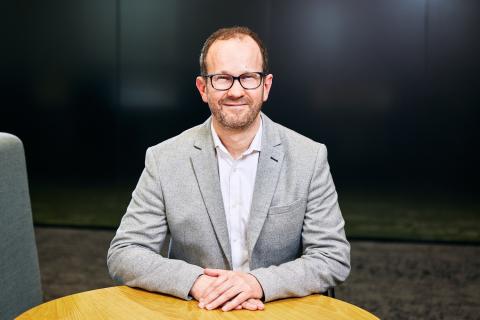
Nick Linton is the UK country head of Opella. His career spans FMCG and Consumer Healthcare, from distributor‑led markets in Ireland to reshaping go‑to‑market strategies across the UK. Linton believes that access to good healthcare shouldn’t be complicated and has channelled his vision for community pharmacy into shaping the wider self‑care agenda as a PAGB Board member.