Dose optimisation in oncology: Insights from AACR 2026 and implications for trial design

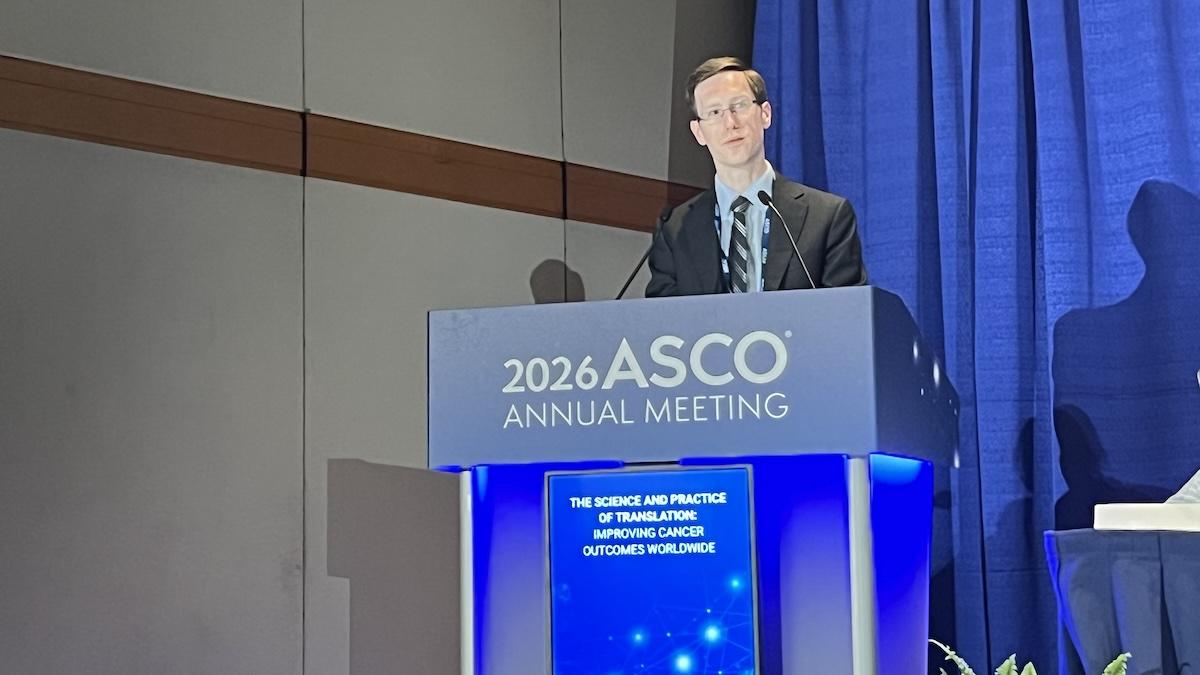
Five years after its launch, the FDA’s Project Optimus remained a key theme in discussions at AACR 2026. A dedicated educational session brought together perspectives from regulators, academia, and industry to explore a fundamental question: what does it mean to select the right dose?
Beyond the strong efficacy signals presented across early-stage oncology programmes, a consistent message emerged: identifying efficacy signals is key for R&D leaders, but is not sufficient to bring a potentially practice-changing treatment to patients.
Project Optimus aims to better align clinical development and patient perspectives by ensuring that early trial objectives not only support regulatory approval, but also reflect meaningful, long term patient benefit. The ability for patients to tolerate treatment and remain on therapy long enough to benefit is an equally critical dimension in early oncology clinical trials.
A paradigm overdue for reform
For decades, oncology dose-finding of cytotoxic agents followed a straightforward approach: escalate dose until toxicity becomes too much to tolerate. The maximum tolerated dose framework aligned with cytotoxic chemotherapy, where efficacy and toxicity tended to increase together. However, newer modalities such as targeted therapies, immunotherapies, and antibody–drug conjugates often do not follow this pattern. In many cases, the biologically effective dose sits below the toxicity threshold, meaning higher doses may increase side effects without improving outcomes.
Despite this shift, trial designs have been slow to adapt. In practice, dose reductions and interruptions due to tolerability issues remain common, limiting patients’ ability to derive sustained benefit.
Against this backdrop, the FDA introduced Project Optimus in 2021, encouraging dose selection grounded in efficacy, safety, and tolerability. This approach aims to support the selection of doses that improve tolerability without compromising efficacy, better aligning with patient needs. Session ED60, held on 18th April, focused on how this objective can be translated into practice.
Session ED60: Project Optimus at five years
Chaired by Gideon Blumenthal, oncology development head for GI cancers at Pfizer, the session reviewed progress and ongoing challenges.
Mirat Shah of the FDA began by outlining developments since the Project Optimus initiative’s launch, noting changes in development strategies alongside continued variability in how sponsors interpret expectations. The emphasis remains on transparent and randomised dose selection, incorporating efficacy, safety, and particularly tolerability as a meaningful clinical dimension.
A clear signal from the session was the FDA’s continued push toward more structured, comparative evidence generation. Randomised Phase II dose-optimisation studies are increasingly seen as the preferred approach to support robust dose selection decisions.
Shing Lee, Professor of Biostatistics at Columbia University addressed the role of patient-reported outcomes in dose-finding. Standard clinician-reported adverse event frameworks capture observable toxicity, but may not fully reflect patient experience over time. Tools such as the PRO-CTCAE aim to quantify symptom burden and functional impact directly from patients, enabling tolerability to be incorporated more explicitly into a randomised dose optimisation trial.
Across these perspectives, a broader alignment is emerging: dose optimisation should be grounded in the totality of clinical evidence, integrating efficacy, safety, and tolerability, rather than evaluating each dimension in isolation, and having to select the dose based on conflicting signals (i.e., most often, all efficacy, safety, and tolerability outcomes will not favour one dose, especially in early phase trials with limited sample size).
A practical approach to dose optimisation: Making trade-offs explicit
While the direction outlined during the session is increasingly clear, translating these principles into concrete dose selection decisions remains challenging in practice.
In early-phase trials, signals across efficacy, safety, and tolerability are often not aligned, and sample sizes limit the robustness of comparisons. As a result, trade-offs between dose levels are frequently assessed qualitatively, based on separate analyses that can be difficult to reconcile. This creates a gap between the ambition of integrated decision-making and the tools typically used to support it.
While not discussed during the AACR session, there are methodological approaches that can be considered to address this challenge. One example is the Net Treatment Benefit framework.
The Net Treatment Benefit framework provides one approach to addressing this. Using Generalised Pairwise Comparisons (GPC), patients at different dose levels are compared across a hierarchy of outcomes reflecting clinical priorities. Higher-priority outcomes may include measures of disease control or symptom improvement, followed by adverse events or treatment discontinuation. Each pairwise comparison is resolved at the highest-priority outcome where a clinically meaningful difference is observed, resulting in an overall measure of how often one dose leads to better outcomes than another.
This structure allows multiple dimensions of treatment effect to be integrated into a single endpoint. The prioritisation of outcomes can be informed by clinical and patient perspectives, aligning with the broader emphasis on patient-centred evaluation within Project Optimus. It is also well suited to randomised Phase II settings, where integrating efficacy, safety, and tolerability within a single, clinically meaningful framework can ensure that patient experiences meaningfully inform dose selection. Moreover, it permits the extraction of insights from the full dataset of a Phase II trial, not only relying on a few events (e.g., deaths, progression, or response rates) that often leverages a small portion of the information collected on patients.
Importantly, the approach supports more transparent justification of dose selection by quantifying the balance between benefit and risk, rather than relying on separate analyses interpreted post hoc.
The work ahead
Discussions at AACR 2026 reflected a clear shift in direction. The question is no longer whether dose optimisation needs to evolve, but how to implement it effectively in practice.
Key challenges remain, including generating comparative dose data within early-phase constraints, systematically incorporating patient-reported tolerability, and reconciling competing signals across endpoints while preserving development timelines and study feasibility.
Methodological approaches that better integrate multiple dimensions of treatment effect are likely to play an important role in addressing these challenges.
As expectations continue to evolve, dose optimisation is becoming a central determinant not only of regulatory success, but also of how patients experience and benefit from treatment in real-world settings. Project Optimus provides a strong framework to guide this shift, but its impact will ultimately depend on how consistently these principles are translated into practice.
Session Reference: ED60 — Dose Optimisation in Early-Phase Oncology Trials: Implementing the Vision of FDA's Project Optimus. AACR Annual Meeting 2026, April 18, 2026, 8:00–9:30 AM, Room 29, San Diego Convention Center. Chairs and speakers: Gideon Blumenthal (Pfizer); Mirat Shah (FDA); Alexia Iasonos (Memorial Sloan Kettering Cancer Center); Shing M. Lee (Columbia University).
About the author

Pascal Piedbois is a Professor of Medical Oncology and chief medical officer at One2Treat. He offers considerable experience from both the academic and industry sectors. In academia, he served as the head of medical oncology at Paris University and was the general director of the Comprehensive Cancer Center of the Alsace Region, based in Strasbourg, until 2015. In the industry, Piedbois has held several prominent leadership roles, including VP, head of global oncology and infectious diseases at AstraZeneca, senior VP, head of medical Europe, Canada, and Japan, and senior VP, head of medical go to market strategy for Bristol Myers Squibb. Additionally, he has served as the general manager of Boehringer Ingelheim, Belgium. Piedbois’ passion and commitment to combining digital innovation with medical relevance is set to enable the incorporation of patient preferences and needs into the development and market access of new treatments.