Senju launches first-in-class dry eye disease drug in Japan
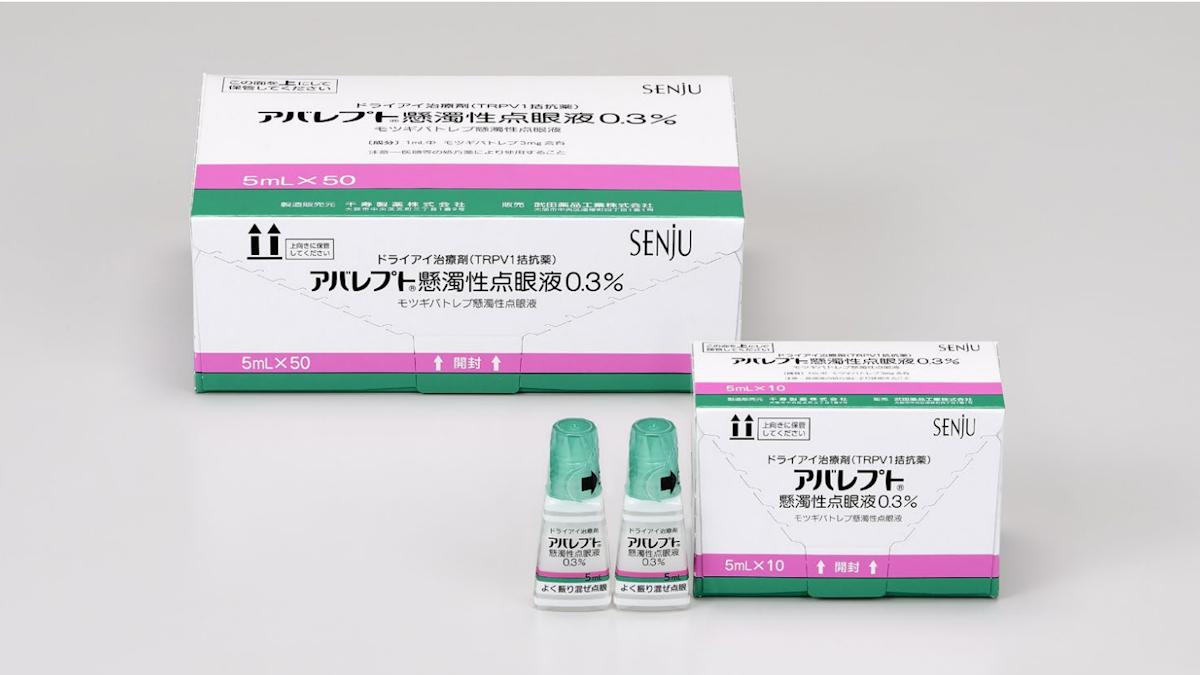
Senju Pharma has launched a new drug for dry eye disease (DED) in Japan, Avarept, which is the first drug in the TRPV1 antagonist class to reach the market.
Licensed from fellow Japanese drugmaker Mochida, Avarept (motugivatrep) ophthalmic suspension has been launched at a list price of JPY 577.50 ($3.63) per 5ml bottle and will be distributed in Japan by Takeda.
DED is a common inflammatory disorder estimated to affect over 20 million people in Japan and its incidence is rising with the country's ageing population, long-term use of contact lenses, and excessive screen time. It is characterised by insufficient moisture and lubrication in the anterior surface of the eye, leading to dryness, inflammation, pain, discomfort, irritation, diminished quality of life and, in severe cases, permanent visual impairment.
Existing therapy for dry eye disease – based on lubricating eyedrops and drugs to reduce inflammation and increase tear production – is generally regarded as inadequate and can take a long time to deliver improvements in symptoms.
Avarept's approval came on the back of the Japanese 3-02 clinical trial, which met its primary endpoint by showing a statistically significant improvement in dry eye symptom severity, as measured by the DEQS score, compared to placebo.
"We are very pleased that the TRPV1 antagonist, which has been researched over many years since its discovery, has now been launched through Senju's extensive development efforts as the world's first DED treatment with TRPV1 antagonistic activity," said Mochida's head of business development, Tomokazu Matsusue.
"We sincerely hope that Avarept will contribute to improving symptoms in the many patients suffering from DED," he added.
TRPV1 antagonism has been proposed as a therapeutic strategy for many years, but initial efforts focused on its potential as a systemic approach for pain relief. Early candidates from the likes of Amgen and AbbVie were held back by side effects, including hyperthermia, but newer candidates have been developed that reduce that risk.
Current drug candidates are being developed for a range of indications, and include AlzeCure's ACD440 for neuropathic pain, Pila Pharma's XEN-D0501 for obesity and type 2 diabetes, Serentrix's SER014 for DED, pain, and irritable bowel syndrome (IBS), and Sylentis' DED candidate tivanisiran (SYL1001).
Another novel treatment for DED, Aldeyra Therapeutics' RASP inhibitor reproxalap, was turned down by the US FDA for the third time in March for "a lack of substantial evidence" of its efficacy. The company has requested a meeting with the FDA to discuss the decision, but has said it will not carry out any further trials of the drug in DED.